


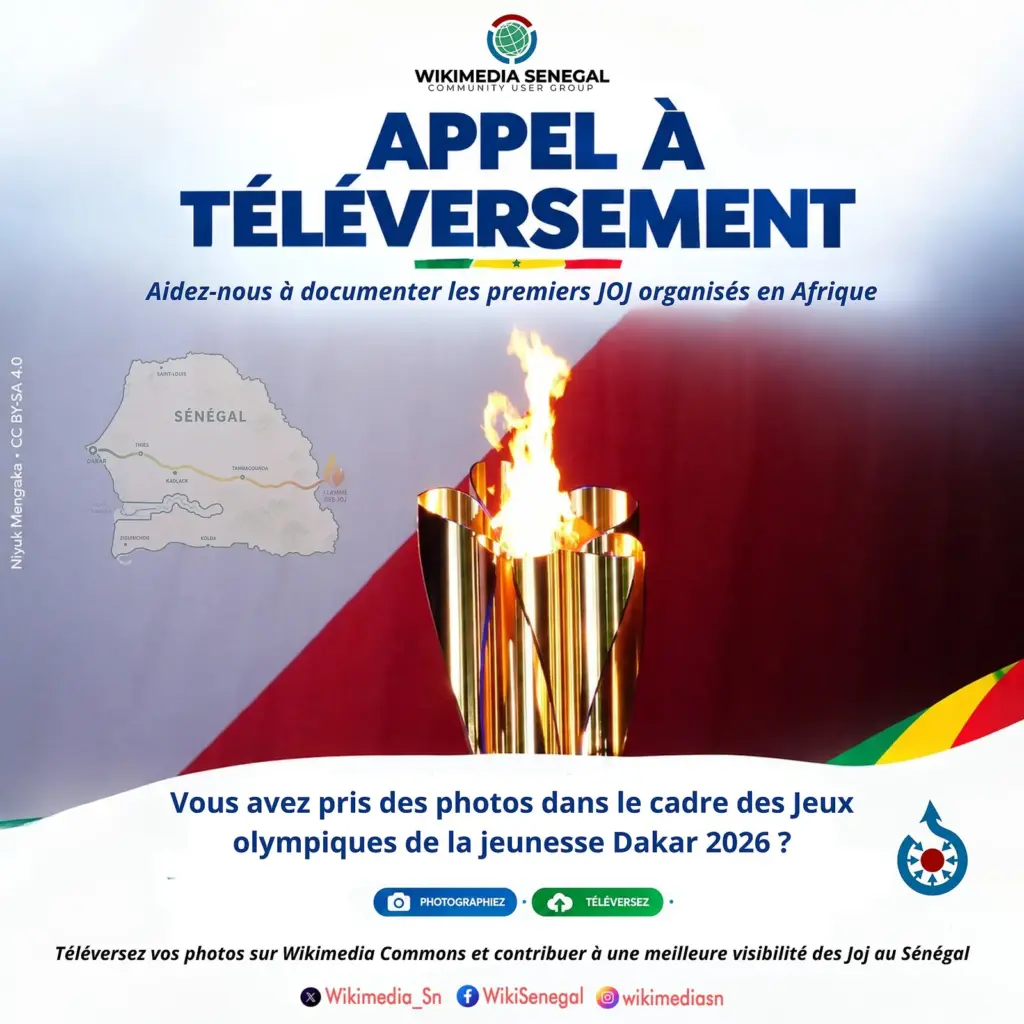
The world of sports is watching Dakar, and Africa is not just hosting: it is winning. For the first Olympic event ever held on the continent, the Youth Olympic Games Dakar 2026 has just experienced a weekend that changes the significance of this edition. Senegal has secured its first Olympic titles, Nigeria has achieved a spectacular double in the 100 meters, and Kenya has also piled up gold medals. At the same time, France has claimed its first individual title of these Games thanks to Maël Lamouret in archery.
These results go beyond mere medal counts. They tell a symbolic shift: for the first time, young African athletes can experience a major Olympic competition on their continent, in front of their audiences, with their cultures and traditions at the center of the stage. Until November 13, Dakar, Diamniadio, and Saly are hosting around 2,650 athletes from 204 National Olympic Committees, along with a refugee Olympic team.
The African Sprint Sends a Message to the World
The first day of athletics on November 8 provided one of the most powerful images of the Games. Nigerian Rosemary Nwankwo won the women’s 100 meters. Less than ten minutes later, her compatriot Gift Bright triumphed in the men’s final. This double victory, achieved on the same evening in the premier sprint event, gave Nigeria a moment of sporting and emotional power that was immediately recognizable to a global audience.
Kenya also secured two titles during this opening of athletics. Enock Tuitoek won the 3,000 meters in 8 minutes 07 seconds 69, after a close duel with Ethiopian Goytom Mekonen. France took bronze thanks to Meziane Benhammou. Beyond individual results, this day showcased the depth of Africa’s talent pool: sprints, middle-distance races, jumps, and throws placed several nations from the continent at the heart of the podiums.
Elisabeth Diatta, the First Gold that Transcends Sport
The most symbolic moment occurred the day before in Saly. Elisabeth Diatta, 16, gave Senegal its first gold medal in an Olympic event by winning the women’s under 55 kg category in beach wrestling. She defeated Japan’s Reisa Kojima with a spectacular throw, in front of an audience buoyed by sabar drums and the traditions of Senegalese wrestling.
The choice of discipline gives this victory a particular dimension. Wrestling is deeply rooted in Senegalese culture, yet its professional realm remains predominantly male. Hailing from Casamance, a region where women traditionally participate in wrestling, Diatta has transformed her success into a message for young girls. Moments later, 16-year-old Maguette Diop provided the country with a second title in the under 80 kg category.
Beach wrestling made its Olympic debut in Dakar. Thus, Senegal did not just win two medals; it witnessed a practice tied to its identity enter the program and immediately produce champions. This ability to connect local heritage with the international stage represents one of the strongest promises of Dakar 2026.
France Claims Historic Gold in Archery
African success does not overshadow the universal dimension of these Games. At the Abdoulaye-Wade Stadium, 17-year-old Maël Lamouret won the men’s individual final in classic archery against Chen Pin-An from Chinese Taipei. The Frenchman triumphed 6-4 and scored nine arrows at ten points during the final. He thus becomes the first French individual Olympic champion in youth in this discipline.
This title offers a strong entry point for the French public. It also illustrates the role of the Youth Games: to reveal still-unknown names, to confront the best global talents early with Olympic pressure, and to prepare the generation likely to appear at the Los Angeles 2028 or Brisbane 2032 Games. In Dakar, the sport of tomorrow is already being played out in front of today’s cameras.
Why Dakar 2026 is Already More than a Competition
Africa has hosted World Cups, continental championships, and major international events, but never an event bearing the Olympic rings. The opening of Dakar 2026 on October 31 ended this historical absence. The ceremony brought together over 1,100 artists and mobilized nearly 1,500 costumes made locally by a hundred artisans and creative professionals.
The program includes 25 competitive sports and ten participation or discovery disciplines. This combination allows for performance measurement while exposing young people to new practices. Surfing, for example, is not a competitive discipline in Dakar, but demonstrations featuring 25 African surfers have given rare visibility to a community that seeks more resources, recognition, and access to infrastructure.
The organization also represents a test for Senegal and for the Olympic movement. Transport, security, venue occupancy, legacy of facilities, and sustainable access for young people to the installations will be observed long after the closing ceremony. A credible success could strengthen the future candidacy of African cities for even larger sporting events.
A Laboratory for a New Generation
The athletes in Dakar are aged between 14 and 17. This fact changes the perspective on the results. It is not about reducing these Games to a miniature version of the Olympics, but about observing a laboratory where careers, national narratives, and habits of international competition are formed. The presence, for the first time at the Youth Olympic Games, of a refugee team also gives a human dimension to this event.
Judo athlete Arno Yafunga, who fled with his family from conflict in the Democratic Republic of the Congo, fought under the colors of this team with his father as coach. He narrowly missed out on the bronze medal, but his journey reminds us that the impact of Dakar cannot be read solely through podiums. For several participants, arriving on this stage is already a victory against exile, lack of resources, or invisibility.
The Signal That No One Can Ignore
Dakar 2026 does not resolve the inequalities of global sports. Many African federations still lack funding, coaching, equipment, and regular competitions. But these Games offer a showcase capable of altering priorities. When a Senegalese teenager becomes her country’s first Olympic champion, when two Nigerian sprinters dominate the 100 meters on the same night, and when African stands celebrate their heroes at home, the effect transcends the week of competition.
The promise of Dakar will be judged over time: the number of young licensees, the use of venues, the progress of coaches, and the place given to women. For now, one observation stands out. The first Olympic event organized in Africa is not a backdrop offered to the international sports movement. The continent is writing its own stories, winning its own titles, and showing that it can host the world without losing its identity.
Sources
- International Olympic Committee, historic opening of Dakar 2026, October 31, 2026.
- IOC Newsroom, African nations dominate the first day of athletics, November 8, 2026.
- IOC Newsroom, titles in taekwondo, archery, and fencing, November 8, 2026.
- Associated Press, Elisabeth Diatta gives Senegal its first Olympic gold, November 7, 2026.
- Associated Press, Senegalese surfers and the expected legacy of the Games, November 9, 2026.
- Athletics Africa, historic double by Nigeria in the 100 meters, November 9, 2026.