


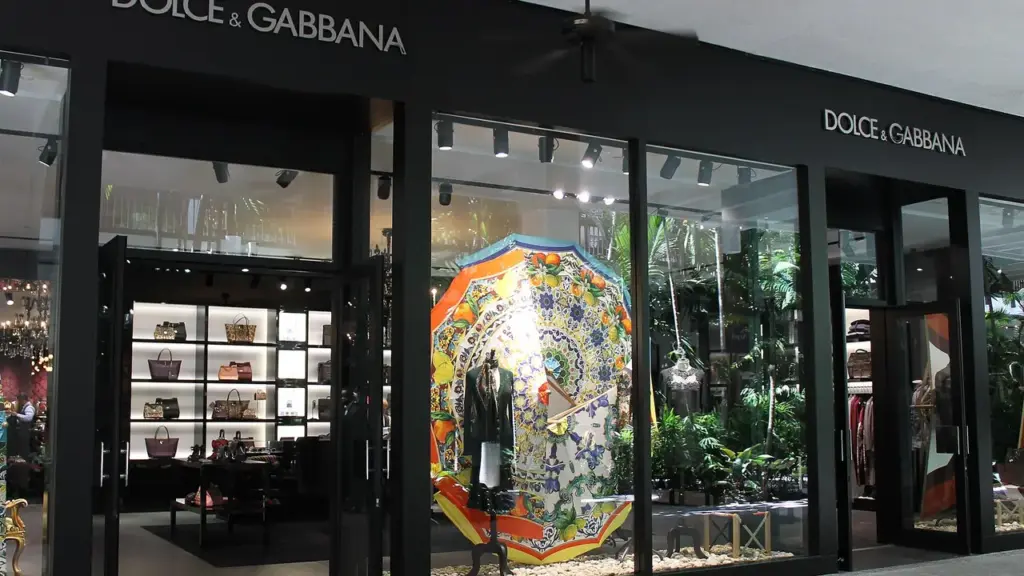
Luxury likes to tell the story of eternity. Workshops, archives, black dresses, jewels crossing seasons: everything in the language of the sector speaks of permanence. Yet behind the windows, a house remains a company with cash flow, contracts, rents, inventories, banks and maturities. Dolce & Gabbana’s latest news makes that reality unusually sharp. Reuters reported on August 25, 2026 that the Italian house had obtained waivers from its lenders after breaching certain thresholds included in its financing agreements.
The information does not mean the brand is collapsing. It says something else, and something more interesting: even a globally known house, embedded in the imagination of Mediterranean glamour, can be forced to negotiate with banks when the luxury cycle turns. The group, still controlled by its founders Domenico Dolce and Stefano Gabbana, represents a rare form of independence in an industry dominated by conglomerates. That freedom has value. It also has a cost.
The Number That Breaks the Varnish
According to Reuters, citing financial statements filed with the Italian chamber of commerce, Dolce & Gabbana recorded revenue of about 1.86 billion euros for the year ended in late March 2026, up a little more than 3%. Growth has therefore not disappeared. But the house also reportedly posted an operating loss of 100.4 million euros, after an operating profit the previous year. That divergence is what deserves attention: selling more is not enough when costs rise faster than desire.
In luxury, margin is as much a discipline as it is a form of prestige. Runway shows, campaigns, prime boutiques, branded hospitality, licenses, collaborations and global distribution are expensive before they become profitable. When demand slows, fixed costs immediately become more visible. The magic of a dress remains intact on the runway, but the income statement cannot be dressed up quite so easily.
Debt as a Revealer of Strategy
Reuters says banks granted waivers related to covenants, the financial commitments written into credit agreements. The word is technical, but the issue is simple: lenders monitor ratios, notably debt in relation to performance. If those thresholds are crossed, the company must obtain a waiver, renegotiate or face contractual consequences. In Dolce & Gabbana’s case, the banking conversation therefore becomes a signal of pressure, but also of relative confidence: lenders chose to accompany the house rather than trigger an open crisis.
That nuance matters. A waiver is not an aesthetic victory, but it is not a conviction either. It is a pause obtained by a house that now has to prove its model can return to a more comfortable path. The luxury market has enjoyed several years of euphoria, supported by the post-pandemic rebound, Asian appetite, price increases and carefully managed scarcity. Since then, customers have become less automatic, more comparative, and brands without the financial power of a large group must navigate with much stricter precision.
Independence, Romantic Myth and Financial Problem
Dolce & Gabbana is not LVMH, Kering or Richemont. That difference is part of its aura. It allows for a more personal voice, an aesthetic that can be provocative, and loyalty to the house’s own codes. But it also limits the shock absorbers. A conglomerate can offset weakness in one brand with strength in another, mutualize certain costs, negotiate harder with suppliers and attract talent with a very deep balance sheet. An independent house must absorb shocks with fewer cushions.
The paradox is harsh: independence feeds the brand story, but finance often rewards scale. Clients love the idea of a house still held by its creators, free in its gestures. Banks look at flows, guarantees, profitability and visibility. This is where contemporary luxury becomes less romantic: authenticity must be financed, hedged and refinanced. A strong identity is not enough if it does not convert fast enough into margin.
The Eyewear Deal as Breathing Room
One element, however, gives Dolce & Gabbana an important card. In May 2026, EssilorLuxottica announced the early renewal and extension until 2050 of its license agreement for Dolce & Gabbana eyewear. The Franco-Italian group also said it would pay the Italian house an upfront payment of 150 million euros, with the rest of the economic terms remaining confidential. At a time when debt becomes visible, this kind of partnership acts as strategic breathing room.
Licenses are sometimes viewed with suspicion by purists, who see a risk of dilution. But when managed well, they allow luxury to expand its territory without carrying the entire industrial burden alone. Eyewear is an ideal product: strong fashion imagery, a price point more accessible than couture, global distribution, frequent renewal and attractive margins. For Dolce & Gabbana, the extension until 2050 secures a source of revenue and confirms that the brand retains strong commercial value despite its financial tensions.
The Luxury Cycle Turns More Ruthless
The episode belongs to a broader movement. Luxury is not dead, but it is becoming selective again. The wealthiest consumers continue to buy, while aspirational customers, the ones who purchase a piece as an entry ticket into the dream, are arbitraging more carefully. Price increases protected revenue for a while, then created fatigue. Brands must now justify high prices through quality, service, real rarity and impeccable cultural coherence.
Dolce & Gabbana still has powerful assets: a recognizable signature, an immediately legible Italian imagination, and strong presence in menswear, couture, beauty and accessories. But the era no longer forgives approximate models. A brand can be known everywhere and vulnerable in its ratios. It can fill social networks and lack operating leverage. It can wear an aesthetic of power while quietly negotiating with creditors.
What the Case Says to the Rest of the Sector
The Dolce & Gabbana case sends a message to every independent house: the next luxury battle will not be fought only on image, but on financial structure. Brands that want to remain free will have to professionalize their management even further, reduce costs without damaging desire, choose licenses with rigor and accept that creativity now lives under the permanent gaze of capital.
There is something almost cinematic in the lesson. Luxury sells the idea that certain objects escape time. But the companies making those objects live in real time: interest rates, demand slowdowns, banks, contracts and deadlines. Dolce & Gabbana may well rebound. The brand has already crossed controversies, cycles and shifts in taste. But this sequence recalls a basic truth: in luxury too, the dream has to pay its interest.