


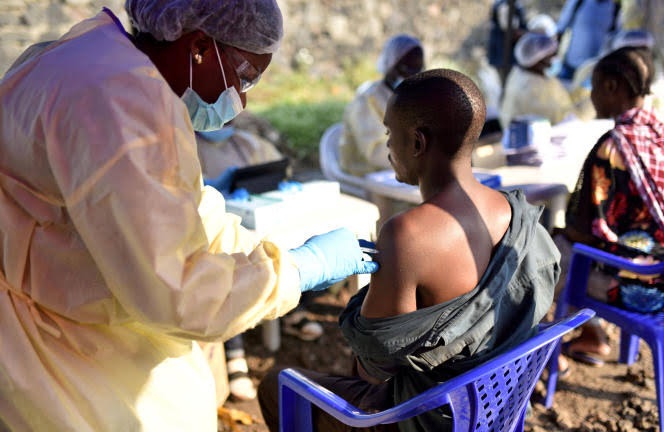
More than 1,500 people have died in the Democratic Republic of the Congo due to the Ebola epidemic affecting the eastern part of the country. Data released on Thursday, July 30, describes a staggering acceleration: 3,442 cases and 1,521 deaths reported as of July 28, marking an approximately 50% increase in the death toll within a week. Behind these numbers lies a global race against a virus that is advancing faster than the teams tasked with containing it.
This outbreak, caused by the Bundibugyo virus, is unlike previous crises. It was detected late, is developing in provinces marked by population displacements and violence, and lacks both an approved vaccine and a specific treatment. The official toll is evolving so rapidly that each new situational report renders the previous one almost obsolete.
1,521 Deaths: The Figure That Shifts the Crisis
According to the latest data from the Congolese government reported by the Associated Press, 3,442 cases had been recorded as of July 28, with 1,521 deaths. A few days earlier, the European Centre for Disease Prevention and Control reported 3,200 confirmed cases and 1,405 deaths as of July 25. This discrepancy is not a contradiction; it measures the speed at which the situation is deteriorating.
The epidemic was officially declared on May 15. In just over two months, it has reached a level that previous outbreaks took much longer to surpass. Congolese authorities describe it as the fastest-growing Ebola epidemic ever recorded. The cumulative toll remains lower than that of the West African catastrophe of 2014-2016, but the initial dynamics are more brutal.
The apparent case fatality rate, exceeding 40% in the available data, reflects both the virulence of the virus and delays in accessing care. Many patients still die in their communities rather than in a treatment center. This means that some infections may never be diagnosed, and relatives are exposed even before health teams can intervene.
Bundibugyo, a Strain Without an Approved Vaccine
The term Ebola encompasses several viruses. The one currently circulating is the Bundibugyo virus, first identified in Uganda in 2007. It is different from the Zaire Ebola virus, responsible for most major outbreaks, for which vaccines and treatments have been developed.
For Bundibugyo, no vaccine or specific treatment is currently approved. Care primarily relies on rehydration, support for vital functions, prevention of secondary infections, and rapid isolation. Experimental options may be evaluated, but the response does not benefit from the same arsenal as during outbreaks caused by the Zaire virus.
The World Health Organization declared a public health emergency of international concern as early as May 17. This designation does not mean that a pandemic is inevitable. It signals that coordination between countries, traveler surveillance, laboratories, funding, and information sharing must be strengthened without delay.
Why the Epidemic is Progressing So Quickly
Delayed Detection
The first signals emerged in the spring in the health zone of Mongbwalu, in Ituri. When the alert was formally triggered, transmission chains were already in existence. Tracing the initial case and reconstructing each contact becomes an immense task, especially when thousands of people circulate between villages, mines, markets, and displacement camps.
Violence Against Care Centers
Trust is an essential weapon against Ebola. However, treatment centers and hospitals have been attacked, while suspected patients have sometimes fled. In Nyakunde, international partners had to temporarily withdraw after an attack on July 15. Each interruption delays isolation, safe burials, screening, and contact tracing.
Exhausted and Sometimes Unpaid Caregivers
Healthcare personnel have gone on strike to demand payment of their salaries. More than a hundred caregivers have been infected since the beginning of the crisis, according to the WHO cited by the AP. When those who must identify, isolate, and treat patients are neither protected nor paid on time, the entire response chain becomes vulnerable.
From Health to Hunger, a Crisis That is Already Overflowing
The impact does not stop at hospital services. The World Food Programme warns of worsening hunger in eastern Congo. Families lose their income when a sick person can no longer work, markets operate at a slower pace, movements become more difficult, and isolation measures sometimes cut access to fields.
The humanitarian appeal of $2.1 billion for the DRC was only 45% funded, according to the UN’s senior coordinator for Ebola cited by the AP. This lack of resources translates concretely: fewer teams, rarer equipment, payment delays, and a reduced capacity to support communities that accept health constraints.
The disease thus thrives on multiple overlapping crises: insecurity, displacement, poverty, distrust, and a weak health system. It is not enough to open beds. Families must be convinced to report symptoms, ensure safe and dignified burials, feed isolated individuals, and protect teams that come into contact with the sick.
What Risk for France and Europe?
For the general European public, the risk remains low as Ebola is not transmitted through the air like the flu. Contamination requires direct contact with the blood or other bodily fluids of an infected person, or with contaminated surfaces and materials. An infected person generally does not transmit the virus before symptoms appear.
However, zero risk does not exist. Medical evacuations have already involved Europe, and France identified a case in June involving a humanitarian doctor returning from the DRC. Germany subsequently reported to the WHO a confirmed case involving an American humanitarian worker evacuated from Congo. These events have tested the isolation protocols and management procedures of European hospitals.
The appropriate response is therefore neither panic nor stigmatization of African travelers. It relies on targeted surveillance, informing healthcare professionals, diagnostic capacity, contact tracing, and immediately operational hospital procedures. The ECDC is monitoring the evolution of the epidemic, and European systems are preparing for imported cases.
The Global Signal That No One Can Ignore
The DRC has considerable experience with Ebola. However, experience does not replace resources, especially in the face of a different strain, in an unstable region, and after delayed detection. Surpassing 1,500 deaths is not just a statistical threshold: it shows that traditional control methods have not yet regained the upper hand.
The priorities are known: pay and protect caregivers, secure facilities, accelerate laboratories, trace contacts, fund food aid, and involve communities in decision-making. Research on vaccines and treatments against Bundibugyo must also accelerate, as the absence of an approved tool leaves teams with limited maneuvering room.
The world has learned from major health crises that an underfunded outbreak never remains a local problem. Helping the DRC to stop transmission primarily protects the Congolese, who bear the heaviest human cost. It is also the most effective strategy to reduce international risk. With 1,521 deaths and a toll that increases daily, waiting for another alert is no longer an option.
Sources
- Associated Press â over 1,500 deaths and record progression, July 30, 2026.
- ECDC â epidemiological situation in the DRC and Uganda, updated July 27, 2026.
- World Health Organization â Ebola Bundibugyo in the DRC and Uganda, July 2026.
- WHO â Ebola outbreak tracking portal in the DRC.
- Associated Press â food consequences and humanitarian funding, July 29, 2026.