


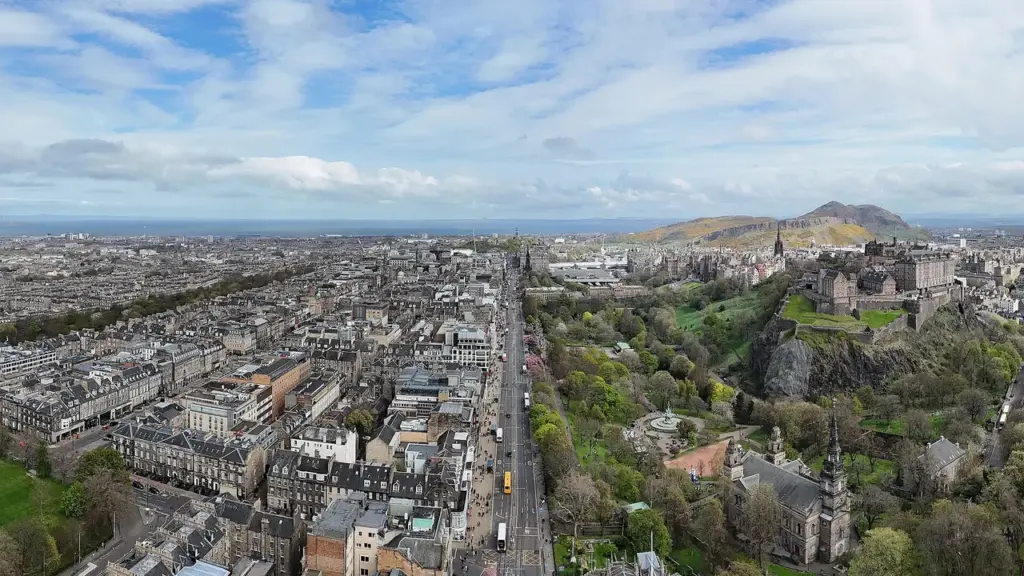
For twenty-five days, an entire city will become a stage. From August 7 to 31, 2026, the Edinburgh Festival Fringe will bring together 3,649 performances, 53,884 shows, and artists from 71 countries across 258 venues. Theater, comedy, dance, circus, music, cabaret, and hybrid creations will invade historic halls, pubs, cellars, and improvised spaces. Just days before the opening, Edinburgh is preparing to reclaim its title as the global capital of live performance.
The numbers are staggering, but they only tell part of the story. The Fringe remains one of the few cultural events capable of uniting established stars, independent companies, and unknown artists who sometimes play for their future in front of just a handful of people. Its strength lies in this mix: a vast international machine that retains the unpredictable energy of a laboratory.
3,649 Performances and 71 Countries: A City on a Global Scale
The 2026 program boasts exceptional diversity. Productions come from 71 countries, confirming that the Fringe far exceeds British borders. In a single day, a visitor can transition from a political solo performance to an experimental play, from an Asian dance show to an African proposal, and then end the evening in front of a comedian still unknown outside their home country.
This abundance is also the festival’s main challenge. With tens of thousands of performances, no one can claim to see it all. The audience constructs their own journey by following reviews, recommendations, street posters, or simply by chance. This constant circulation fuels virality: a little-known show can become, in just a few days, the event that all of Edinburgh is talking about.
The Festival That Can Launch a Career in One Night
Since its informal beginnings in 1947, when eight uninvited companies came to perform on the fringes of the International Festival, the Fringe has been built on a simple idea: to provide a platform for those whom the official programming overlooks. This philosophy has helped launch or solidify the careers of many artists, including Rowan Atkinson, Steve Coogan, and Judi Dench.
In 2026, this role as an accelerator is further amplified by social media. A clip of just a few seconds can now travel far beyond Scottish venues. Programmers, producers, agents, and international media watch the festival in search of new talent. For a young French or European company, a series of well-received performances can open the doors to a tour, an adaptation, or a platform.
The Creative Economy Facing the Price of Success
The Fringe is not just an artistic celebration. It is also a major economic driver for Edinburgh and Scotland. An impact study published in June 2026 presents all of Edinburgh’s festivals as a leading civic, cultural, and economic asset, capable of attracting visitors, investments, and talent while enhancing the city’s international image.
This success, however, creates a very real tension. The demand for housing, transportation, and performance spaces increases dramatically in August. Artists must finance their travel, accommodation, venue rental, and promotion, often without guaranteed revenue. The model remains a formidable showcase, but also a financial gamble. The support announced by the Scottish government aims precisely to help the Fringe remain accessible and to extend the international opportunities available to artists.
A Whole Season of Festivals, Not an Isolated Event
The Edinburgh effect extends beyond the Fringe. The International Festival also takes place from August 7 to 30, featuring major offerings in music, theater, opera, and dance. The Art Festival will take over the city from August 14 to 30, while the International Book Festival will develop the theme âChanging Your Mindâ in 2026 and host twenty festival leaders from seventeen countries as part of its Global Ink program.
This overlap transforms the Scottish capital into a global marketplace for ideas and artistic forms. The boundaries between disciplines blur: a writer can engage with a director, a musician can meet a dance company, a producer can discover a concept adaptable to film or television. The festival thus becomes a cultural circulation infrastructure as much as a succession of performances.
Why France Should Look to Edinburgh
For France, a country of festivals and live performance, Edinburgh serves as both a partner, a competitor, and a laboratory. Avignon holds a unique place for Francophone theater and European creation; Edinburgh offers a broader Anglophone and commercial showcase, with an unparalleled ability to quickly expose a work to professionals from around the world.
French artists would do well to observe the dissemination methods, short formats, and how performances build their visibility in a crowded program. The challenge is not to copy the model but to understand how a local creation can become a global conversation. In an attention economy dominated by platforms, the Fringe reminds us that live performance, proximity, and word-of-mouth can still create a phenomenon.
A Strong Signal of a Culture That Refuses to Stand Still
On August 7, the first curtains will officially rise, but the transformation of the city has already begun. Posters, rehearsals, previews, and the arrival of artists create a particular tension. Every street can become a place of discovery, and every tiny venue can host the show that will be talked about tomorrow.
In a context where cultural budgets are being debated across Europe, the Edinburgh Festival Fringe 2026 carries a powerful promise: creation remains an international language, an economic engine, and a collective experience that cannot be reduced to a digital flow. With 71 countries represented and over 53,000 performances, Edinburgh will not just host a festival. The city will showcase, for nearly a month, what the world invents when it takes the stage.
Sources
- Edinburgh Festival Fringe, official dates and presentation of the 2026 international program.
- The Week, July 15, 2026, program figures, venues, and performances.
- Edinburgh Festival City, impact study published June 29, 2026.
- Scottish Government, public support and international cultural reach of the Fringe.
- Edinburgh International Book Festival, 2026 program and Global Ink initiative.