


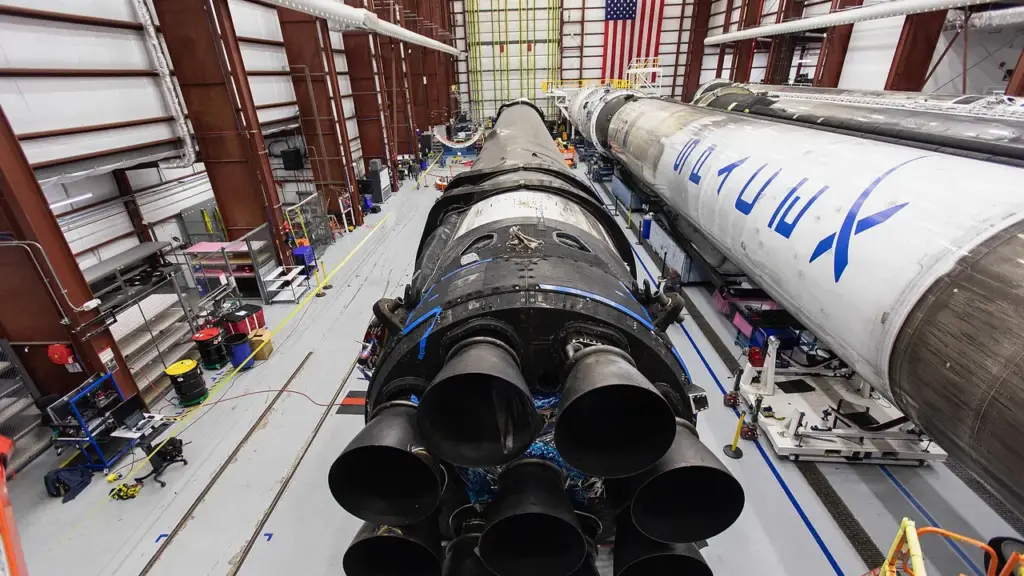
The Moon will receive an unexpected visitor this Wednesday, August 5, 2026: a discarded stage of SpaceX‘s Falcon 9 rocket. After more than eighteen months of wandering in the Earth-Moon space, this metallic mass is set to crash into the lunar surface at nearly 8,700 km/h, around 06:35 UTC. The event poses no threat to Earth or astronauts, but it encapsulates a potent mix of science, spectacle, and concern. This unintended impact also tells a much larger story: that of a deep space increasingly filled with human-made objects, without rules robust enough to govern their end of life.
Independent astronomers estimate the impact will occur near the Einstein crater, on the western limb of the Moon. The Associated Press reports a speed of about 5,400 miles per hour, which is nearly 8,700 km/h and approximately seven times the speed of sound in Earth’s atmosphere. Space.com estimates that the collision could create a new crater approximately 27 meters in diameter. On the scale of the Moon, this scar will be tiny. On the scale of human space activity, it represents a signal that cannot be ignored.
A Rocket Launched in 2025 Returns to Strike the Moon
The object is identified under the designation 2025-010D. It is the upper stage of a Falcon 9 launched on January 15, 2025, from Florida. The mission carried two private lunar landers: Blue Ghost from the American company Firefly Aerospace and Resilience from the Japanese company ispace. Once its work was completed, the stage did not have enough fuel to be directed towards a controlled re-entry or a stable storage orbit.
For months, the rocket body has followed a complex trajectory influenced by the gravitational pull of the Earth, Moon, and Sun. Minor perturbations gradually transformed this drift into a collision. This scenario illustrates why objects sent beyond low Earth orbit can become difficult to manage. In cislunar space, a seemingly tranquil trajectory can evolve long after the official end of a mission.
A Collision at 8,700 km/h and a New Crater
Researchers estimate that the stage is about 14 meters long and weighs several tons. At a speed close to 2.43 kilometers per second, its kinetic energy is sufficient to pulverize the vehicle, eject a large amount of regolith, and open a cavity several tens of meters wide. A study dedicated to ejecta dynamics predicts a potentially detectable dust plume, while emphasizing the difficulty of observation from Earth.
The impact point is located on a sunlit part of the lunar surface. This light reduces the contrast compared to a flash on the dark side. Therefore, the phenomenon will not be visible to the naked eye. Even with a good telescope, the conditions will be demanding. Professional observatories and probes positioned around the Moon have a better chance of spotting the plume or, later, photographing the fresh crater.
Why Scientists Want to Observe the Impact
This accidental impact offers a real-world experience. Researchers know approximately the mass, speed, composition, and angle of arrival of the projectile. By comparing these parameters to the size of the crater and the behavior of the dust cloud, they can improve impact formation models. This data is used to interpret the countless lunar craters, as well as to prepare for future robotic and human missions.
NASA had previously caused a deliberate impact in 2009 with the LCROSS mission to search for ice near the lunar South Pole. This time, it is not a planned experiment. The difference is fundamental: science is attempting to leverage an event it did not choose. American and South Korean orbiters may search for the new mark on the surface in the weeks or months following the collision.
The Real Issue: Debris Leaving Earth Orbit
For years, the debate over space debris has focused on defunct satellites and fragments orbiting Earth. These objects can damage active spacecraft, threaten crews, and trigger chain reactions. The Falcon 9 impact broadens the issue. Commercial activities are now multiplying around the Moon, with private landers, communication relays, and plans for stations or bases. Debris follows the same path.
The Moon has no atmosphere capable of burning up incoming objects, nor an international service tasked with retrieving them. Each discarded stage can remain on a chaotic trajectory for years before striking the Moon, returning to Earth, or heading into a solar orbit. Cislunar space is becoming an economic and strategic infrastructure, but its governance remains fragmented. Who should track these objects? Who pays for their monitoring? What fuel reserves should be mandated to ensure controlled disposal?
SpaceX at the Heart of a New Responsibility
SpaceX has significantly reduced the cost of access to space through the reuse of the Falcon 9 first stage. However, the upper stage is not recovered. For distant missions, energy constraints may prevent a rapid and controlled re-entry. The company’s industrial success makes this issue even more pressing: as launches increase, end-of-mission procedures become a central element of the sector’s credibility.
It would be misleading to present the collision as a lunar catastrophe. The Moon’s surface is constantly struck by meteoroids, and the impact will not disrupt its overall environment. The problem lies elsewhere: this object is traceable, its origin is known, and its collision was predictable. It thus becomes a concrete case to test the responsibility of operators and the ability of agencies to coordinate monitoring beyond Earth.
The Signal That the Space World Can No Longer Ignore
The new crater near Einstein will likely only be visible in specialized images. Yet, its symbolic reach far exceeds its dimensions. A commercial rocket launched to support lunar exploration ends its journey by inadvertently creating a new mark on the world it was helping to explore. This is both a scientific opportunity and a political warning.
The next step is not to halt exploration, but to organize it. Operators will need to plan fuel margins, share orbital data, and publish credible end-of-life plans. States will need to clarify responsibilities in cislunar space. And scientists will need sustainable tracking of distant objects. On August 5, 2026, the world will look to the Moon for a collision lasting a few seconds. What it must remember will last much longer: space is no longer empty enough to abandon machines without consequence.
Sources
- Associated Press â A discarded SpaceX rocket is on a high-speed collision course with the moon
- Space.com â A SpaceX rocket will crash into the moon this week
- Scientific Study â Observational planning for the 2026 August 5 Falcon 9 Upper Stage lunar impact
- Scientific Study â Predicted Ejecta Dynamics and Observability of the 2026 Falcon 9 Upper Stage Lunar Impact