


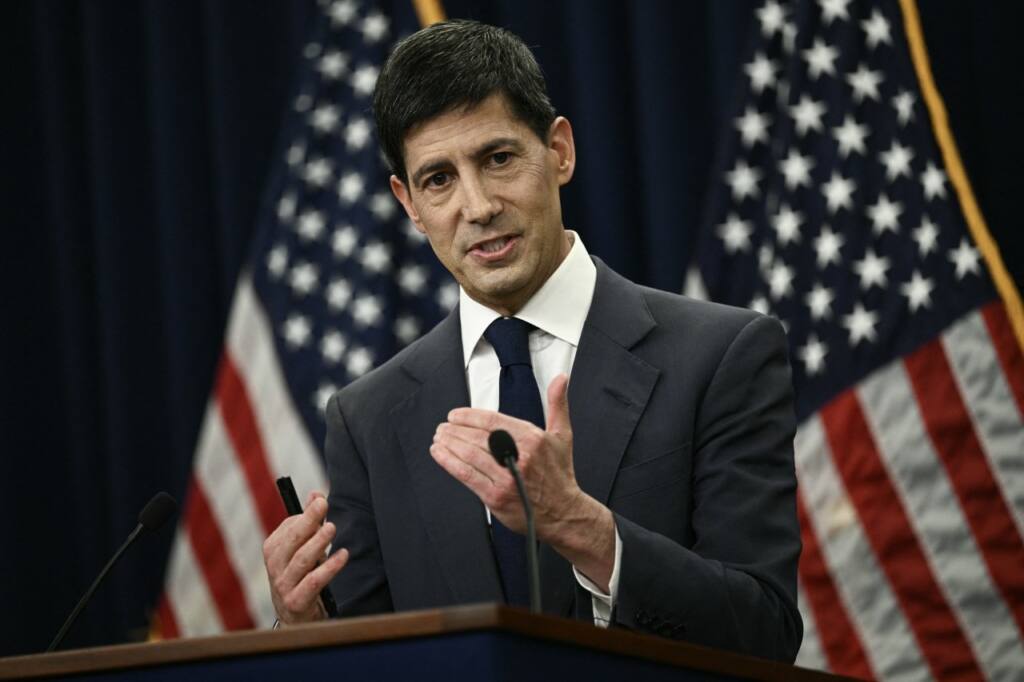
The Fed did not raise its rates, but its vote sent a much stronger warning than a mere status quo. On Wednesday, July 29, 2026, the American central bank kept its benchmark rate in a range of 3.50% to 3.75%. However, three of the twelve voters called for an immediate hike of a quarter point. This unusual rift now places inflation, oil, and the credibility of the new chairman Kevin Warsh at the center of the global economy.
The decision was adopted by a vote of nine to three. Beth Hammack, president of the Cleveland Fed, Neel Kashkari, president of the Minneapolis Fed, and Lorie Logan, president of the Dallas Fed, preferred to increase the cost of money. This trio believes that price pressures have become too persistent to continue waiting. The outcome is clear: the hike avoided in July remains fully possible in upcoming meetings.
A Status Quo That Feels Like a Final Warning
At first glance, the Fed has changed nothing. Its rate range has remained the same since December, marking the fifth consecutive meeting without movement. For American households, businesses, and markets, there is thus no immediate shock comparable to an actual hike.
But the vote tells another story. Three dissents in favor of tightening show that a significant part of the committee now considers the inflation risk more dangerous than the risk of slowing down. The Fed is no longer just debating when it might lower its rates: it is openly discussing the necessity of raising them.
This psychological shift is crucial. Investors base their decisions on the future trajectory of credit. If the next step becomes a hike rather than a cut, bonds, the dollar, real estate, and tech stocks must be reassessed.
Why Three Officials Wanted to Act Now
American inflation has remained above the 2% target for more than five years. The surge in energy prices caused by the war with Iran has added a new layer of uncertainty. Higher oil prices do not remain confined to gas stations: they increase transportation, production, agriculture, and delivery costs, then diffuse throughout much of the economy.
The three dissenters fear that waiting too long will allow this increase to become entrenched in wages, contracts, and consumer expectations. Anticipated inflation becomes more difficult to combat as companies raise their prices and employees demand higher wages to protect themselves.
The relative strength of the economy also gives them an argument. As long as employment and demand hold up, the Fed has room to tighten its policy without necessarily provoking a recession. The majority camp, however, prefers to observe more data before imposing a shock on the entire economy that could be temporary.
Kevin Warsh Claims a ‘Good Family Dispute’
For his second press conference at the helm of the Fed, Kevin Warsh chose not to mask the division. According to the Associated Press, he presented the internal debate as a âgood family dispute.â The phrase aims to reassure: a credible central bank must be able to confront opposing diagnoses without losing control of its message.
The challenge, however, is immense. Warsh must maintain the objective of price stability while the White House has exerted intense pressure for rate cuts. At the same time, he must avoid giving the impression that the Fed is reacting mechanically to every movement in oil. A too-rapid hike could penalize investment, employment, and indebted households.
His message thus engages the independence of the institution. The 9 to 3 decision proves that the committee does not obey a single political logic. It also shows that the Fed chairman will need to build a majority meeting after meeting in a much less predictable economic environment.
Wall Street Must Now Integrate the Risk of September
The July status quo had been widely anticipated. The surprise lies in the extent of the dissent. Markets will now scrutinize consumption, income, employment figures, and especially the PCE index, the inflation measure favored by the Fed. The data released on Thursday could strengthen or weaken the camp favoring a hike.
If inflation continues to rise and the economy holds up, the three dissenters could be joined by other officials. In this scenario, September would become a high-risk meeting. Conversely, a sustained decline in oil prices or a significant weakening of employment would give the waiting camp reasons to keep rates unchanged.
Tech companies are particularly sensitive to this debate. The AI boom requires gigantic investments in chips, data centers, and energy. More expensive capital reduces the value of future profits and makes the most ambitious projects harder to finance.
The Dollar, Europe, and France Directly Concerned
The Fed’s decisions immediately cross borders. The prospect of higher American rates can strengthen the dollar, as capital seeks the returns offered in the United States. For Europe, a strong dollar makes imports priced in that currency more expensive, particularly oil and certain raw materials.
The transmission also occurs through bond markets. When American yields rise, investors may demand higher compensation to finance European states and companies. In France, this could gradually weigh on the cost of public debt, mortgage credit, business loans, and stock valuations.
The European Central Bank must also manage the same energy dilemma. If the oil shock fuels inflation on both sides of the Atlantic, central banks could maintain restrictive policies for longer. French households will not see their bank rates change tomorrow due to Washington’s vote, but the global direction of credit will influence their daily lives sooner or later.
The Signal That No One Can Ignore
The Fed has chosen to buy time, not to declare victory over inflation. Maintaining rates protects the economy from a sudden tightening, while the three dissents prevent markets from concluding that hikes are off the table. It is a deliberately uncomfortable balance.
The next battle will be fought over data. If prices remain high, the vote of July 29 could be reread as the beginning of a new monetary phase. If inflation calms, it will appear as a warning without consequence. In either case, the rift is now public: three officials from the most influential central bank in the world believe that the cost of inaction is already too high.
Sources
- Associated Press â decision, vote 9 to 3 and Kevin Warsh’s conference, July 29, 2026.
- Axios â status quo, dissents, and inflation risks, July 29, 2026.
- Federal Reserve â FOMC calendar and official documents, accessed July 29, 2026.
- Reuters â economic context and debate preceding the decision, July 28, 2026.