


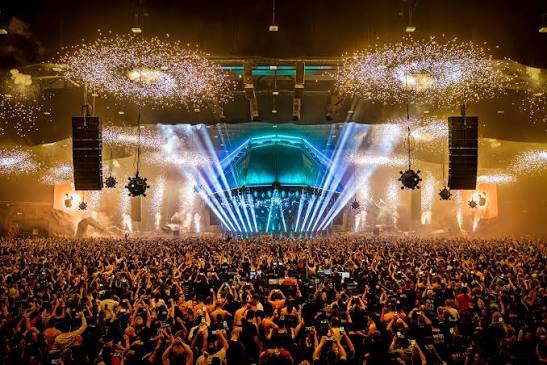
The stage is set, the artists are announced, and the tickets are sold. But a new expense has now entered the accounts of French festivals: the cost of heat. After a June 2026 described by Météo-France as the hottest ever recorded in the country, live performance can no longer treat the heatwave as an exceptional accident. Thermal audits, water points, rest areas, air conditioning, schedule changes, medical reinforcements, and cancellation risks are silently transforming an already fragile economic model.
A survey published this week by Le Monde describes festivals forced to rethink their organization in the face of buildings that accumulate heat, churches that no longer always play their role as cool refuges, and programming that cannot be suspended without financial losses. At the end of June, the France Festivals network had surveyed about a hundred of its members, at the request of the General Directorate of Artistic Creation of the Ministry of Culture, regarding the consequences of extreme heat episodes.
A Cultural Season Hit by Unusual Weather
The shock of 2026 is not abstract. Météo-France established that France experienced a prolonged and very intense early heatwave from June 17 to 30. The high temperatures persisted locally in the Southeast at the beginning of July, coinciding with the start of the major festival season. This simultaneity places organizers at the forefront of an adaptation that can no longer be postponed.
The health assessment confirms the severity of the episode. Public Health France indicates that nearly the entire population was exposed to very high temperatures during a period still dense with school and professional activities. Ãle-de-France recorded the highest excess mortality from all causes during this period, with 1,999 additional deaths, representing an increase of 81.2% compared to expected values. These data are not specific to festivals, but they explain why prevention can no longer be limited to a few bottles of water distributed near a stage.
The Hidden Cost Begins Long Before the Doors Open
For a festival, adapting means first investing without a guarantee of additional revenue. It is necessary to study the exposure of venues, measure temperatures in rooms and technical areas, install shade, multiply fountains, plan for air-conditioned or ventilated zones, and train teams to recognize the signs of heat stroke. Security personnel, technicians, artists, and volunteers are exposed for hours, often before the public arrives.
In addition, there are energy costs, insurance, medical equipment, and crisis communication expenses. A schedule change may seem simple on a poster; in reality, it can affect transportation, artist contracts, setup times, neighborhood regulations, and employee availability. A late cancellation can protect the public while leaving the organizer with most of their already incurred costs.
The 2025 barometer from the Ministry of Culture still showed a low cancellation rate of 1.4% and a lesser climate impact than in 2024. However, this snapshot should not create a false sense of security. The ministry surveyed several thousand events along with the National Music Center and professional organizations. The 2026 season shows that the frequency, duration, and intensity of episodes can abruptly change the situation from one year to the next.
Avignon Reveals the Limits of Cultural Buildings
The Avignon Festival and its âOffâ provide a full-scale laboratory. The Off programming includes about 1,800 shows in 2026, according to Le Monde. Even when venues are air-conditioned, queues, movements between locations, and working conditions remain exposed. Some old industrial buildings concentrate heat under their roofs, while their structure or the presence of asbestos complicates renovations.
Heritage is not automatically a protection. Churches, old theaters, and historic courtyards have long been associated with natural coolness. However, during prolonged heatwaves, the mass of the walls eventually stores energy and releases it. Air conditioning a listed or temporary site can be technically difficult, costly, and sometimes incompatible with heritage or environmental requirements.
The Public is Also Changing Its Habits
The heat affects demand even before causing a cancellation. Spectators may wait until the last moment to buy tickets, forgo a full day, or prefer an indoor venue. Families with young children, the elderly, and those with chronic conditions assess the risk more heavily. For festivals, this hesitation complicates attendance and cash flow forecasts.
Organizers must therefore sell a new promise: not only an attractive program but a safe experience in an extreme environment. Information about available water, shaded areas, access to medical assistance, and schedules becomes as important as the stage map. A poorly prepared festival risks immediate reputational damage, amplified by videos shared on social media.
Stricter Public Rules Are Being Implemented
Public authorities have begun to strengthen their doctrine. The Ministry of Culture has published specific recommendations for outdoor festivals, indoor shows, and cinemas. The Ministry of the Interior also released an ORSEC guide on âExtreme Heatâ in July, aimed at providing prefectures with a common framework for anticipation and management.
This guide reminds us of an essential reality: according to the adaptation trajectories chosen by France, the number of heatwave days could double or even triple by 2050. Cultural events will therefore need to integrate heat into their safety plans as they already incorporate the risks of fire, crowd movement, or severe storms.
This evolution raises a funding question. If obligations increase without targeted support, large groups will be able to absorb investments more easily than associative, rural, or specialized festivals. The risk is cultural as much as economic: the most fragile events may shorten their programming, raise their prices, or disappear, reducing artistic diversity in the regions.
France Sends a Signal to All of Europe
The problem extends beyond French borders. Spain, Italy, Greece, Portugal, and parts of Central Europe also host major summer events in increasingly exposed regions. International tours must already juggle different regulations, infrastructures, and weather conditions. Tomorrow, they may favor cities or venues capable of ensuring robust adaptation.
Cultural competition between territories will then change in nature. Having a prestigious stage or remarkable heritage will no longer suffice. It will be necessary to demonstrate the resilience of transportation, electrical networks, public spaces, and emergency services. Climate capacity will become a strategic advantage to attract artists, producers, partners, and visitors.
Live Performance Must Change Without Losing Its Soul
Several avenues are emerging: advancing part of the season, developing events in spring and autumn, moving shows to the evening, constructing better-ventilated reversible structures, and sharing audits between festivals. Tickets could also include clearer guarantees in case of climate-related postponements. However, no solution will be universal.
The challenge is to protect without distorting. A festival thrives on proximity, spontaneity, and the occupation of a place. Transforming it into a completely enclosed and air-conditioned pathway would erase part of its identity while increasing its energy consumption. The most credible adaptation will combine sobriety, organization, architecture, public information, and financial solidarity.
The invisible bill of the heatwave is now visible. It is reflected in budgets, schedules, contracts, buildings, and the very choice to maintain a performance. The 2026 season imposes a conclusion: for culture to remain alive in summer, climate adaptation must become a central component of production, not a last-minute addition.
Sources
- Le Monde â âFestivals: the hidden cost of heatwaves and extreme heatâ, published July 28, 2026.
- Météo-France â Climate report for June 2026, July 2026.
- Public Health France â Excess mortality during the heatwave from June 17 to July 2, 2026, July 2026.
- Ministry of Culture â Initial trends from the 2025 festivals barometer, October 2025.
- Civil Security â ORSEC guide on âExtreme Heatâ, July 2026.