


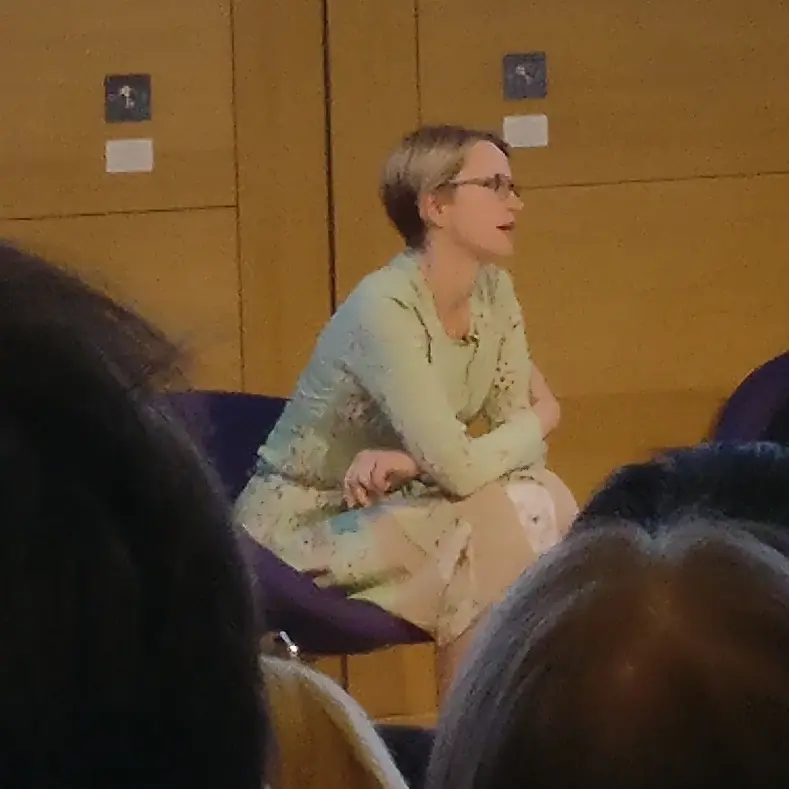
HP has chosen a leader from pharmaceuticals to run a computer maker in the midst of a reset. HP Inc.’s board appointed Emma Walmsley chief executive, with her start date set for January 4, 2027. She will succeed Bruce Broussard, interim CEO since February, who will become board chair in place of Chip Bergh. This is more than a change of personnel: HP is entrusting its next chapter to an executive known for transforming GSK just as the technology group seeks its place in the era of AI-powered PCs.
A leadership transition with a defined timetable
The planned handover is concentrated: Walmsley would take the CEO role in early January, while Broussard would become chair on the same date. Bergh, who has been chair since 2017 and a director since 2015, will remain in the role until the transition. HP says the appointment followed a global search conducted by the board. Additional members of the executive team and the future board will be announced later, so the company has not yet disclosed the complete governance structure that will accompany the change.
Walmsley is not entirely new to the company: she has served on Microsoft’s board for seven years. But leading a computer maker, its printing operations and services is not the same assignment as running a pharmaceutical group. HP presents her appointment as a choice grounded in experience transforming and managing large organizations. For investors and employees, the question will be how that experience translates into concrete decisions on products, costs, sales channels and hardware innovation.
What her experience offers, and what it cannot guarantee
Walmsley led GSK from 2017 through the end of 2025, after joining the company’s Consumer Healthcare business in 2010. Before that, she spent 17 years at L’Oréal leading major international consumer businesses. At GSK, HP highlights a sharper focus on specialty medicines and vaccines, a stronger research and development pipeline, and balance-sheet improvements following the separation of the consumer-health operation. Her background combines portfolio strategy, global brands, research and operational execution.
That experience may be useful at HP, whose business spans computers, printers, supplies and services. Management must navigate product-refresh cycles, different margin profiles and customers ranging from consumers to large enterprises. Yet transferable leadership skills do not replace the technical expertise of teams designing processors, systems, software and supply chains. An outside appointment does not, by itself, specify a product strategy or guarantee that HP will gain market share.
AI is changing the PC equation
HP identifies artificial intelligence as a major theme for its next cycle, particularly through devices and “edge” use cases in which some processing happens on the computer rather than in a distant data centre. That promise touches speed, privacy, operating costs and battery life. But users will not necessarily replace a computer just because it carries an “AI PC” label. Benefits must be visible in software, everyday tasks and performance, while the offer remains understandable to both companies and consumers.
The challenge is also industrial. Manufacturers rely on processors, memory, displays and other components whose prices and availability can shift quickly. Reuters reports that HP is facing pressure in memory-chip supply, driven in part by data-centre demand, as well as a difficult PC market. According to the report, HP’s computer shipments fell 16% in the third quarter while revenue from the business rose 18%, supported by a richer mix of higher-priced products. That combination makes the outlook more complicated than a straightforward demand rebound.
The trade-offs ahead
The CEO role will require balancing volume and profitability. A push toward premium configurations can support margins but may leave some buyers seeking affordable options behind. Protecting prices as component costs rise may preserve short-term profitability, yet hurt sales if customers delay purchases. Manufacturers must also decide how much to invest in AI features, device design and software partnerships at a time when value can shift among hardware, operating systems and services.
HP will also need to explain how its printing business fits into this strategy. Printer and supplies revenue follow different dynamics from PCs, even though the businesses share professional customers, sales channels and support costs. The challenge is not simply to add AI to an existing product line: it is to identify use cases that give customers a reason to buy, then deliver them at a coherent scale and cost. The new CEO will also have to maintain stable execution during the handover.
A leadership appointment that must earn its verdict
The board’s decision follows the departure of former CEO Enrique Lores in February 2026, when he left to lead PayPal, according to press reports. Broussard served as interim chief while the board searched for a permanent successor. By selecting an executive from outside the technology sector, HP signals that its next chapter will not be solely about technical specifications; it will also involve repositioning, investment discipline and portfolio coherence.
The appointment does not yet prove that AI will revive demand or that a playbook used in pharmaceuticals and consumer products will transfer directly to computing. More concrete indicators will matter: supply-chain stability, margin trends, PC sales, actual adoption of AI features and the ability to fund innovation without weakening the balance sheet. Starting January 4, Walmsley will have an opportunity to show whether her cross-industry experience can help HP turn a technology promise into durable value for customers and the company.