


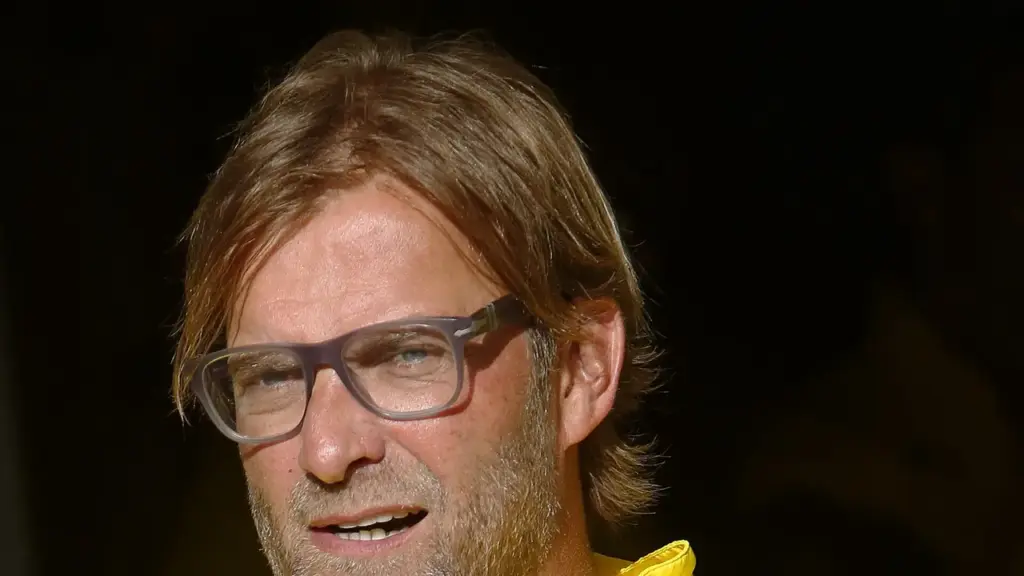
Germany has just handed over the keys to its future to one of the most charismatic coaches of his generation. Jürgen Klopp has been officially appointed head coach of the Mannschaft with a four-year contract, extending until the 2030 World Cup. At 59 years old, the former boss of Borussia Dortmund and Liverpool returns to the bench to take on a challenge that goes far beyond mere succession: to restore identity, confidence, and ambition to a wounded nation.
The German Football Association has confirmed that Klopp will take office on August 15, 2026. He succeeds Julian Nagelsmann, who left after Germany’s surprising elimination against Paraguay in the Round of 16 of the 2026 World Cup. The schedule already sets two major milestones: Euro 2028, hosted in the UK and Ireland, followed by the 2030 World Cup. For world football, the announcement primarily marks the return of a technician many had imagined would be permanently distanced from coaching.
A Return That Football Was Waiting For
Klopp had not managed a team since leaving Liverpool in 2024. After nine intense seasons in England, he explained that he lacked energy and wanted to step back. He then joined Red Bull as the global football head, a strategic role allowing him to observe several clubs without the daily pressure of the bench.
His decision to accept the German national team changes the scope of this hiatus. Klopp is not returning to replicate the rhythm of a club, with matches every three days and a permanent transfer market. He chooses a national mission, spaced out but laden with immense symbolic responsibility. The DFB is not only asking him to win matches: it is asking him to repair the bond between the Mannschaft, its supporters, and a history long associated with stability.
During his presentation in Frankfurt, Klopp spoke of a “great honor” and a responsibility he approaches with enthusiasm. The federation presents him as the ideal candidate to launch a new cycle, particularly due to his recognized ability to develop young players, build powerful collectives, and unite a public around a clear vision.
The Trauma of the 2026 World Cup
The appointment cannot be understood without revisiting the failure that precipitated it. Germany hoped that the World Cup held in the United States, Canada, and Mexico would confirm its recovery. Instead, it exited the competition very early, defeated by Paraguay in a penalty shootout. For a four-time world champion, this exit extended a series of disappointing tournaments and triggered an immediate reassessment.
Nagelsmann, in office since September 2023, requested to be released from his duties. The DFB then announced that it would turn to Klopp, a former wish of German football. Three weeks later, the matter became official. This speed indicates urgency: the institution wanted to avoid a prolonged period of uncertainty and immediately install a figure capable of leading the reconstruction.
However, Klopp’s name alone will not suffice. The elimination against Paraguay highlighted issues of realism, coherence, and renewal. Germany still possesses high-level players, but it no longer instills the fear or mastery that accompanied its great teams. Therefore, the new head coach’s first mission will be to transform a collection of talents into an identifiable collective.
What Klopp Can Change Immediately
Klopp’s football is associated with pressing, speed, and spectacular emotional intensity. At Dortmund and then at Liverpool, he built teams capable of recovering the ball very high, attacking quickly, and turning every stadium into a resonating chamber. His challenge will be to adapt these principles to the national team, where training time is limited and automatisms must be created in a few gatherings.
His first advantage is human. Klopp excels at formulating a common narrative. He protects his players, demands much from them, and knows how to provide a comprehensible direction to the public. For a Mannschaft weakened by several failures, this ability to recreate belief can count as much as tactical evolution.
The second challenge concerns youth. The DFB specifically highlights his aptitude for developing players. Germany must prepare for 2028 without sacrificing 2030: integrating a new generation, retaining experienced players capable of guiding the group, and restoring healthy competition. Klopp will need to choose fewer names based on their reputation and more profiles compatible with his intensity.
Euro 2028 as the First Verdict
The contract runs until 2030, but the first judgment will come much sooner. Euro 2028 will be the real test. Two years may seem comfortable; however, in the rhythm of a national team, they represent a limited number of training camps and competitive matches. Klopp will need to quickly establish a backbone, a hierarchy, and a style of play.
His entry into office on August 15 will leave little time before the first appointments. The Nations League must serve as a laboratory without becoming an excuse for constant experimentation. Germany needs results to regain confidence, but also a project solid enough to survive a defeat or a major injury.
The challenge will also be media-related. Klopp returns with a global popularity gained in the Bundesliga and the Premier League. Every selection, every captaincy choice, and every underperformance will be dissected in Germany, England, and far beyond. This attention can become a commercial and emotional strength, but it immediately raises the level of expectations.
A Shock for Europe and France
The appointment directly concerns other European powers, including France. A Germany that has become aggressive, coherent, and self-assured would alter the continental balance ahead of Euro 2028. The French, Spanish, English, Portuguese, and Italian teams now know that a historic rival has just entrusted its reconstruction to a coach who is a European champion and Premier League champion.
Klopp also knows French football perfectly. He has faced its clubs in European competitions and worked with numerous internationals. His arrival could enhance the attractiveness of Franco-German clashes, already among the most followed fixtures on the continent. It also creates a new battle of styles between the depth of the French squad and the collective intensity that the German will seek to instill.
The Promise Is Immense, the Risk Too
Choosing Klopp is a powerful decision, but it offers no guarantees. The qualities necessary to transform a club over several seasons do not automatically translate to international football. He will neither be able to recruit the profiles he lacks nor work daily with his group. He will need to convince, simplify, and decide quickly.
The DFB also risks concentrating all hope on a single personality. If the initial results are poor, the question will no longer be who could replace the miraculous coach, but why the German system no longer produces the expected dominance. Klopp will thus need to rebuild the team without masking the necessary reforms in training, coaching, and governance.
The world of football has been waiting for Jürgen Klopp’s return; Germany offers him the heaviest mission possible. Bringing the Mannschaft back to the top will require more than just pressing, speeches, and charisma. It will necessitate restoring a culture of victory while accepting to start almost from scratch. If Klopp succeeds, the announcement on July 24, 2026, could be seen as the beginning of a new era. If he fails, it will reveal that the German crisis was deeper than the choice of a head coach.
Reliable Sources
- German Football Association (DFB), July 24, 2026: official appointment, contract until 2030, and start date on August 15.
- DFB, July 24, 2026: presentation of Jürgen Klopp and statements from federation leaders.
- Bundesliga, July 24, 2026: Klopp’s journey, context of Nagelsmann’s succession, and objectives for 2028-2030.
- FIFA, July 24, 2026: confirmation of the appointment after the 2026 World Cup.
- Reuters Connect, July 24, 2026: international announcement and reconstruction mission entrusted to Klopp.