


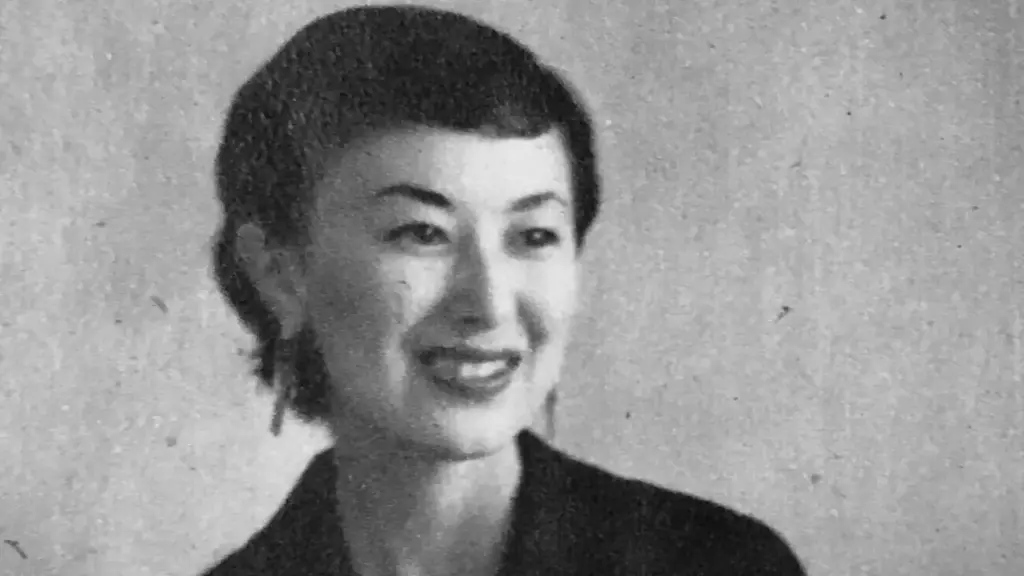
Japan loses a great actress, France a friend of forty years, and world cinema a woman who chose never to pick between countries, professions, or freedoms. Keiko Kishi passed away on August 7, 2026, in Yokohama, at the age of 93. Her agency only made the news public on August 19, following a family-only funeral.
Her name remains associated with the significant transformations of post-war Japan, with films by Yasujiro Ozu, Masaki Kobayashi, Kon Ichikawa, and Shiro Toyoda, but also with a Franco-Japanese cultural history of rare intensity. A popular actress, independent producer, writer, reporter, and ambassador, Keiko Kishi traversed more than six decades without allowing herself to be confined to a single image.
The Passing that Connects Tokyo and Paris
According to a statement from her agency, reported by Oricon and several Japanese media, Keiko Kishi died of old age. She was born on August 11, 1932, in Yokohama. As a child, she experienced the incendiary bombing of her city in May 1945, an experience that brutally confronted her with the fractures of History.
Her passing particularly affects France. After starring in the Franco-Japanese co-production Typhoon over Nagasaki, she married French director Yves Ciampi in 1957. She then lived in Paris for nearly forty years while continuing her career in Japan. This constant movement between two countries, at a time when international travel was still exceptional, already made her a global artist before the term became a career strategy.
A Star Born in Post-War Japan
Keiko Kishi began her career at Shochiku studio in the early 1950s. Success came with the trilogy Kimi no Na wa, known in French as What is Your Name?. The phenomenon transcended the cinema: the way her character wore her scarf became a national fashion, dubbed the “Machiko maki”.
This popular fame could have confined her to the role of a young starlet. Instead, she chose filmmakers who questioned social tensions, relationships, emancipation, and the country’s transformations. In Early Spring by Yasujiro Ozu, she plays a secretary caught in an affair with a married colleague. In Snow Country by Shiro Toyoda, she embodies a lovesick geisha. Her performance, both direct and mysterious, accompanies a new representation of Japanese women.
âKwaïdan,â the Image that Transcended Generations
For many European cinephiles, Keiko Kishi will remain Yuki, the snow woman from Kwaïdan, the fantastic masterpiece by Masaki Kobayashi released in 1964. Her face, deep voice, and almost ethereal presence dominate one of the film’s most famous episodes. The work received the Jury Special Prize at Cannes in 1965 and became a major gateway to Japanese cinema for Western audiences.
However, to reduce Keiko Kishi to this appearance would be to miss the essence. She worked eight times with Kon Ichikawa, from Teenage and Crazy to Mother. She also appeared in Yakuza by Sydney Pollack alongside Robert Mitchum, demonstrating that her journey could connect Japanese auteur cinema, European co-productions, and Hollywood.
The Revolutionary Gesture of the Ninjin Club
One of the most modern acts of her career occurred as early as 1954. Along with actresses Ineko Arima and Yoshiko Kuga, Keiko Kishi co-founded the Ninjin Club, an independent production company. At that time, the Japanese studio system tightly controlled careers, contracts, and artistic choices. Creating her own structure was a demand for the right to decide.
The Ninjin Club participated in significant works such as The Black River by Masaki Kobayashi and Miss Ogin by Kinuyo Tanaka. Long before the global industry began to discuss representation and the power of women behind the camera, Kishi understood that an actress’s freedom also depended on her ability to produce. This gesture gives her legacy a particularly strong resonance today.
France, Much More than a Parenthesis
Keiko Kishi’s relationship with France extends beyond her marriage. She starred with Jean Marais and Danielle Darrieux in Typhoon over Nagasaki, then appeared in Rififi in Tokyo by Jacques Deray and The Mechanical Pianos by Juan Antonio Bardem. Paris became an anchor point from which she observed Europe and continued to travel to Japan.
In 2011, the French government appointed her commander of the Order of Arts and Letters. This distinction recognizes an artist who did not merely export her image but built a lasting dialogue between two cultures. Her daughter, Delphine Ciampi, has become a musician and composer, extending this Franco-Japanese artistic link in her own way.
When the Actress Becomes a Writer and Reporter
From the 1980s onwards, Keiko Kishi opened a second professional life in writing. She published essays, travel narratives, reports, novels, and an autobiography. Her work dedicated to Belarus and conflict zones received the Japan Essayist Club award. This activity revealed a curiosity that extended far beyond the film sets.
She traveled to war-torn regions, observed societies, and narrated the ordinary lives caught in History. From 1996, she also served as a goodwill ambassador for the United Nations Population Fund. Her celebrity then became a tool to speak about women, dignity, and the realities often left off-screen by entertainment.
An Elegance that Refused to Obey
Keiko Kishi embodied an elegance far removed from mere socialite imagery. Coming from a vertical industry in a reconstructing country, she nonetheless imposed her autonomy. She could be a national star while supporting demanding cinema, live in Paris without severing ties with Yokohama, act, produce, write, and investigate without asking for permission to change paths.
This freedom explains why her journey still resonates with contemporary audiences. At a time when careers become international but often homogenized, she reminds us that being global does not mean erasing one’s origins. Her identity enriched itself through contact with languages, filmmakers, and countries without ever dissolving.
The Signal that World Cinema Must Not Forget
The death of Keiko Kishi closes a chapter of post-war cinema, but her legacy remains remarkably relevant. She proved that an actress could transform her popularity into creative power, that an Asian woman could build an international career without becoming a mere exotic symbol, and that culture could connect France and Japan throughout a lifetime.
Her films endure, from the intimate precision of Ozu to the icy visions of Kwaïdan. Above all, there remains a model: that of an artist capable of crossing borders without being defined by them. Japan and France do not just mourn a great actress. They lose one of their most beautiful bridges.
Sources
- Oricon News â statement from Keiko Kishi’s agency, August 19, 2026
- The Japan Times â Keiko Kishi dies at 93, August 19, 2026
- Nippon.com / Jiji Press â a great star of post-war Japanese cinema, August 19, 2026
- Le Monde â Keiko Kishi, actress, writer, and Japanese producer, August 20, 2026
- Bernama / Kyodo News â tribute to Keiko Kishi’s international career, August 19, 2026