


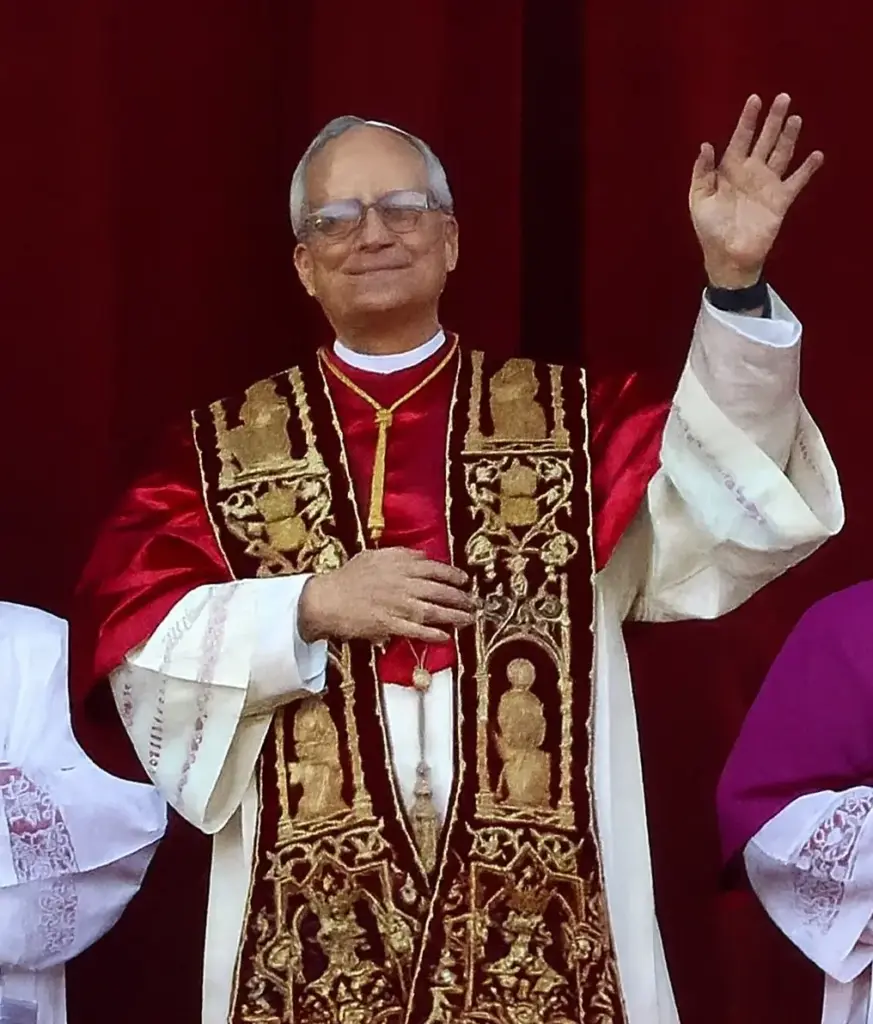
Pope Leo XIV returned to the Vatican on Saturday, October 17, four days after lung surgery, and is due to lead the Sunday Angelus from the Apostolic Palace. His return marks a visible step in the resumption of his activities, but it is not, by itself, a complete assessment of his health. The Holy See announced his discharge after his doctors reviewed blood tests, a chest X-ray, and his clinical condition.
The event immediately took on institutional significance. For the faithful, the Angelus is a regular gathering, a moment of prayer and public presence from a familiar window overlooking St. Peter’s Square. After several days at Gemelli Hospital, his return to this ritual makes the continuity of the papacy visible while leaving medicine to set the pace of recovery.
A Medical Discharge, Not a Final Health Report
The Vatican said Leo XIV had been judged fit to leave hospital after examinations on Saturday morning. According to information released by the Holy See and reported by Vatican News, the operation took place on Tuesday, and the Pope thanked surgeon Stefano Margaritora and the medical and nursing teams before leaving. He then returned to the papal apartments.
The Associated Press reports that the lower lobe of the right lung was removed and that the surgeon saw no clinical reason, at that point, to prevent the planned Latin American trip. That is the doctor’s assessment as quoted by the agency; it does not replace any examinations or decisions that may come in the weeks ahead. It is important to distinguish discharge from hospital, full recovery, and the ability to manage a demanding international schedule.
The Angelus: A Spiritual and Public Appointment
The first announced engagement after his return is the Angelus at noon from the Apostolic Palace. The moment is more than a brief appearance: it combines prayer, a short address, and regular contact with people gathered in the square. Holding it gives the Vatican a familiar point in its calendar without suggesting that the Pope is immediately resuming every obligation.
Images of his departure, his greetings to those waiting outside the hospital, and his return to the residence gave the episode a human dimension, followed closely by Catholic communities. The media attention also reflects the Pope’s place in world affairs: his public statements touch on peace, migration, inequality, and relations between states. His return to duties is therefore watched both as a religious moment and as a sign of diplomatic continuity.
A Latin American Trip Subject to Medical Follow-Up
The trip planned for November 6 to 17 is expected to take Leo XIV to Uruguay, Argentina, and Peru. According to the Associated Press, the proposed itinerary includes numerous flights and helicopter journeys to high-altitude locations. This gives the recovery a particular logistical dimension: a papal tour involves ceremonies, meetings, closely timed transfers, and long working days.
The surgeon quoted by AP said he saw no clinical reason not to proceed with the trip, while also giving an estimated recovery period. That does not mean every stop is definitively confirmed. Vatican officials may adjust the program if doctors advise them to do so. Any change would be more than a scheduling issue: the South American stops carry pastoral and symbolic importance, particularly in Peru, a country to which the Pope is closely connected.
Sharing Information Without Turning Health into Spectacle
Communicating about a Pope’s health is always delicate. The institution has to inform the faithful and public officials while protecting the patient’s privacy and avoiding the presentation of speculation as diagnosis. The information available this week describes an operation, follow-up examinations, and an authorized discharge. It does not allow outside observers to predict the next stage of treatment or the exact length of recovery.
This distinction matters at a time when images and commentary travel faster than official statements. The Pope’s return to his apartments and the announced Angelus are public facts; detailed medical information belongs to the doctors and the patient. Responsible coverage can follow the institutional consequences of the event without turning hospitalization into a suspense narrative.
A Gradual Return Watched Beyond the Vatican
The coming days will be assessed through ordinary actions: the Angelus appearance, official messages, the pace of audiences, and later decisions about the November trip. Each may offer an indication of how work is being organized, but no single moment should be treated as a complete medical update. Balancing visibility with rest will matter both for the Pope’s health and for the institution’s regular operations.
For Catholic communities in Latin America, the planned visit is eagerly awaited; for the Vatican, it is an important pastoral and diplomatic engagement. Whether it goes ahead will depend first on the clinical picture and then on the ability to arrange a realistic schedule. Leo XIV’s return to Rome therefore opens a period of resumption, not a conclusion. The institution has a calendar, but medicine has the final say.