


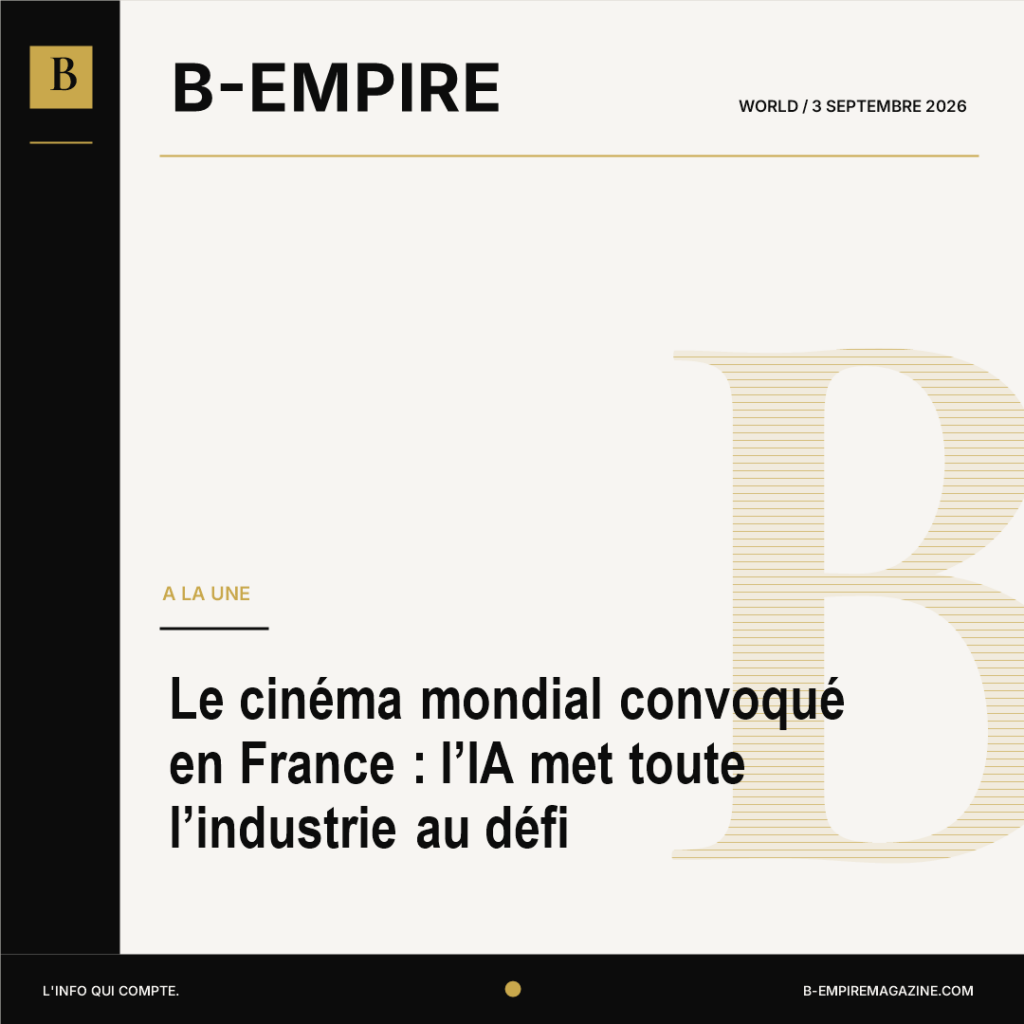
The global cinema industry is not short on films. It is lacking an agreement on its future. On September 7, 2026, in Saint-Paul-de-Vence, France and South Korea will co-chair the first Lumière Summit, an international gathering dedicated to cinema, series, animation, and video games. Behind the prestigious backdrop of the Maeght Foundation, the question is stark: how do we preserve human creativity, finance ambitious works, and win back audiences when artificial intelligence and platforms are disrupting the entire value chain?
According to Reuters, Presidents Emmanuel Macron and Lee Jae-myung will lead this day alongside representatives from major Hollywood studios, including Disney and Netflix, the CAA agency, and the tech sector. Organizers mention participation from over 50 countries. This lineup gives the Lumière Summit a rare significance: it will not merely be a French conference on culture, but an attempt to produce a global response to a global crisis.
An Industry at Its Moment of Truth
The cinema industry is undergoing multiple disruptions simultaneously. Habits acquired during the pandemic have reinforced home viewing. Strikes in Hollywood have revealed the anxieties of writers and performers regarding new economic models and the use of AI. The competition from social media fragments attention, while theaters must justify every outing with an experience that has become more expensive and exceptional.
The official summit website describes an industry facing weakened box office performance, consolidation of groups, changes in funding policies, and the rapid development of artificial intelligence. These phenomena are not separate. When financing tightens, the temptation to automate increases. When platforms concentrate distribution, the diversity of works may decline. When audiences discover images through algorithms, editorial power shifts hands.
The Lumière Summit thus aims to shift the debate. It is no longer a question of whether digital technology will change cinema: this transformation is already underway. The challenge is to decide who will benefit from this new productivity, how creators will be compensated, and what rules will ensure transparency when generative tools intervene in writing, visual effects, dubbing, or promotion.
Why the France-Korea Alliance Sends a Strong Signal
The Franco-Korean co-presidency is more than a diplomatic gesture. France embodies a model based on cultural exception, public support, a dense network of theaters, and a tradition of authorship. South Korea has demonstrated that a coherent national strategy can propel local works to the center of global popular culture, from Parasite to Korean series, not to mention the driving force of K-pop.
Bringing these two trajectories together allows for a departure from the usual face-off between Hollywood and Silicon Valley. France and Korea each advocate for national production capacity while collaborating with global platforms. They understand the benefits of international circulation but also the risk of becoming mere content suppliers in a market dominated by a few distributors and technological infrastructures.
The Ãlysée presents the summit as a platform intended to build concrete alliances. The choice of Saint-Paul-de-Vence and the Maeght Foundation connects this industrial agenda to a European cultural history. However, the program looks well beyond Europe: it addresses the difficulties of access to infrastructure in Sub-Saharan Africa and South Asia, two regions where the next generation of audiences can transform the global image economy.
AI at the Heart of the Value Battle
Artificial intelligence will be the most explosive topic. Generative tools promise to reduce certain costs, accelerate post-production, facilitate translation, and make sophisticated visual means accessible to more creators. However, they also raise questions of consent, copyright, employment, and traceability. Can a performance be reproduced without a new agreement? Can a work generate a model without compensating its authors? Who is accountable for a misleading image?
The answer cannot be solely legal. If AI allows for the production of an almost infinite quantity of images, scarcity will shift towards trust, signature, and relationship with the audience. Studios will need to prove why a work deserves time. Platforms will need to explain their recommendation systems more thoroughly. Creators will need tools to control the use of their identity and measure the value generated by their work.
The summit also aims to address funding and risk-sharing. This is essential: defending human creation without providing an economic model would remain an empty promise. International co-productions, public guarantees, private investments, new distribution windows, and better revenue circulation can be part of the solution. The challenge will be to avoid a response to the crisis that is limited to further consolidation and more uniform catalogs.
France Stakes Its Cultural Attractiveness
For France, the event also represents an influence operation. The country aims to attract film shoots, animation studios, visual effects, series productions, and investments in video games. These activities create skilled jobs and invigorate local economies. They also contribute to the country’s prominence in an economy where narratives, characters, and formats have become strategic assets.
This ambition must, however, be accompanied by tangible outcomes for professionals. Major cultural summits easily produce generous statements; they are judged by the mechanisms that follow. Commitments on AI transparency, remuneration, co-productions, image education, or market access would give the meeting lasting significance. Without a timeline or identifiable accountability, the momentum risks fading.
What the Public Should Watch for on September 7
Three signals will be particularly important. The first will be the level of precision in commitments regarding AI and the protection of creators. The second will concern money: who is willing to invest, share data, and better distribute value? The third will focus on the actual diversity of voices present, particularly those from emerging industries in Africa, South Asia, and Latin America.
The Lumière Summit arrives at a moment when cinema must choose between enduring transformation or organizing it. The announced presence of public decision-makers, studios, platforms, agencies, and talents creates an unusual opportunity to connect technology with a cultural vision. France and Korea position themselves at the center of this conversation, with the ambition to prove that the future of images should not be decided solely by the companies that own the largest servers.
The world will therefore look to Saint-Paul-de-Vence for a simple reason: the decisions made around AI, funding, and distribution will determine which stories can still be told, by whom, and for what audience. If the summit transforms these questions into actions, it could become more than a prestigious gathering. It could mark the moment when global cinema began to reclaim control over its own future.
Sources
- Reuters, September 3, 2026.
- Ãlysée, communiqué from the Lumière Summit, July 22, 2026.
- Lumière Summit / CNC, official program and presentation.
- France Diplomacy, joint statement France-Korea.