


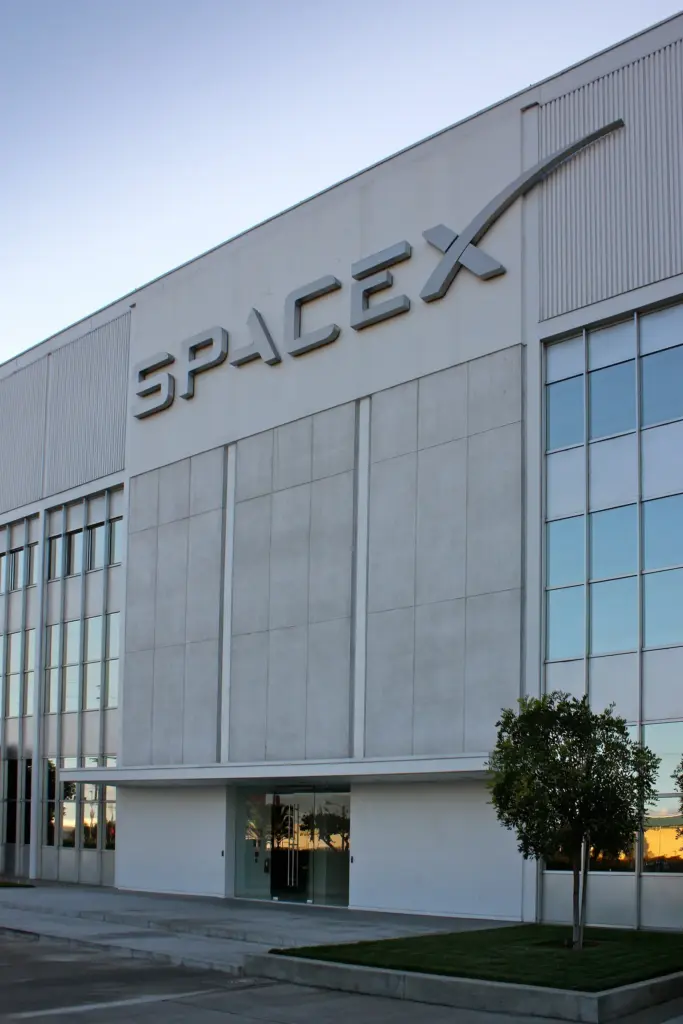
SpaceX no longer wants to just connect underserved areas from space: the company is now preparing an offensive on the ground against the historical mobile giants. Elon Musk‘s group has chosen Qualcomm to provide the technologies that will power the future ground 5G network of Starlink Mobile in the United States. Deployment is set to begin in 2027 and will involve, over several years, tens of thousands of sites. For global telecommunications, this is not just another technical agreement. It signals that a new player intends to merge satellites and ground antennas into a single ecosystem.
Qualcomm describes this contract as its most significant 5G agreement to date. The financial terms have not been disclosed, but the industrial ambition is clear: Starlink Mobile aims to build a national network capable of enhancing coverage, capacity, and spectrum efficiency. If the timeline is adhered to, SpaceX will enter a territory dominated for decades by Verizon, AT&T, and T-Mobile, with a formidable promise: to reduce dead zones by combining terrestrial infrastructure with the reach of its satellite constellation.
A Giant Agreement for Tens of Thousands of 5G Sites
The multi-year agreement plans to utilize Qualcomm’s Dragonwing Cellular Infrastructure platforms at Starlink Mobile’s base stations. Two key components are at the heart of the project: the QRU100 solutions for Massive MIMO radio units and the QDU100 for processing the physical layer of the network. In less technical terms, Qualcomm will provide part of the brain and muscles needed to quickly transmit data between antennas and devices.
The announced architecture is based on 64T64R equipment, featuring 64 transmit paths and 64 receive paths. This configuration is expected to serve more users, optimize frequency usage, and reduce energy consumption per unit of traffic. These gains are essential: a national network is not only judged by its maximum speed but by its ability to remain performant in dense urban areas, along major highways, and in rural zones.
The American deployment is set to begin in 2027, in successive waves. Qualcomm mentions tens of thousands of macro sites over the duration of the contract. This immediately places the project at an industrial scale, even though building a truly national network will require time, permits, frequencies, local agreements, and billions of dollars in investment.
Why SpaceX Wants to Unite Sky and Earth
Starlink has built its reputation on low Earth orbit satellite internet. The service can reach areas poorly served by fiber or mobile networks, but a space constellation does not automatically replace the density and capacity of a terrestrial network in metropolitan areas. The challenge for Starlink Mobile is therefore to unite both worlds: to use ground antennas when their capacity is optimal and satellites when traditional infrastructure fails.
Michael Nicolls, Senior Vice President of Starlink, presents this vision as that of a fully integrated national network, both satellite and terrestrial, designed to keep users connected wherever they are. The promise is simple to understand and commercially powerful. A customer should no longer have to wonder whether their phone relies on a nearby tower or a satellite: the network would choose the available path.
This convergence could also extend beyond smartphones. Connected vehicles, drones, industrial objects, robots, emergency services, and AI-powered devices will require more continuous and predictable connections. SpaceX is therefore not only targeting current mobile subscriptions. The company is positioning itself for the future explosion of connected machines.
The Decision That Shakes Verizon, AT&T, and T-Mobile
Established operators have significant advantages: millions of customers, thousands of stores, frequencies, towers, maintenance teams, and decades of regulatory experience. SpaceX cannot erase this lead with a single announcement. However, the company also possesses unusual strengths: a global brand, a constellation already in service, high investment capacity, and a culture of vertical integration that allows it to control more parts of its system.
The choice of Qualcomm makes the project more credible because it brings proven technology and core expertise in mobile communications. Qualcomm is best known to the public for smartphone chips, but the Starlink contract strengthens its expansion into telecom infrastructure, competing against Broadcom, Marvell, Intel, and traditional network equipment suppliers.
For competitors, the threat does not solely rest on pricing. SpaceX could offer a different experience: a plan that remains useful on an isolated road, in a disaster-stricken area, or in a zone where terrestrial networks are saturated. If this promise works, coverage will become a more significant argument than the mere amount of data included in a subscription.
A Colossal Bet Still Far from Being Won
However, the announcement does not guarantee an immediate revolution. The cost of a national network is measured in tens, if not hundreds, of billions of dollars. It requires leasing or purchasing locations, powering sites, connecting antennas to the core network, obtaining permits, and maintaining service quality. Frequencies represent another battle: they determine range, capacity, and device compatibility.
Analysts cited by Axios estimate that SpaceX’s satellite and terrestrial system could require at least $100 billion. Other industry players mention even higher amounts to fully compete with major American operators. These estimates are not official budgets, but they highlight the gap between announcing tens of thousands of sites and providing a stable experience everywhere.
The project will also need to convince phone manufacturers and regulators. A network has value only if devices can utilize its frequency bands without sacrificing battery life or simplicity. Authorities, for their part, will examine competition, security, spectrum usage, and the resilience of an infrastructure that could become strategic.
From 5G to a Future AI-Driven 6G
Qualcomm and SpaceX do not hide that 5G is just the first step. Their collaboration is also intended to prepare an “AI-native” infrastructure for 6G. This term refers to networks where artificial intelligence would be integrated from the design stage to optimize traffic, energy consumption, incident detection, and resource allocation.
This perspective explains why the agreement extends beyond the United States, even though the first announced network will be deployed there. The technical choices made by SpaceX and Qualcomm could influence standards, suppliers, and future partnerships in other regions. Starlink is already an international brand. If the hybrid model proves its worth, it could inspire agreements with local operators in Europe, Africa, the Middle East, Asia, and Latin America.
What This Battle Could Change for the Public
In the short term, consumers will not see any new network appear overnight. The launch is only set to begin in 2027, and construction will extend over several years. However, competitive pressure could produce effects even before national coverage: accelerated investments, new plans combining satellite and mobile, roaming agreements, and improved services in poorly covered areas.
The real test will be reliability. SpaceX will need to demonstrate that an ambitious integration between sky and ground works in everyday life, without complexity for the user. If Starlink Mobile succeeds, the phone could cease to depend on a single type of infrastructure. If the project fails, it will remain a demonstration of the cost and difficulty of challenging networks built over decades.
One thing is already certain: the agreement with Qualcomm transforms SpaceX’s ambition into a concrete industrial project. Tens of thousands of sites, a launch announced for 2027, and the largest 5G contract claimed by Qualcomm are enough to shake the established order. The battle has only just begun, but the world of telecommunications can no longer ignore it.
Sources
- Qualcomm, official statement on the Starlink Mobile agreement, Dragonwing platforms, and deployment timeline, November 4, 2026.
- Reuters, industrial details and competitive positioning of the contract, November 4, 2026.
- Axios, analysis of SpaceX’s national ambition and potential network costs, November 4, 2026.
- Axios, questions about frequencies, investments, and competition with established operators, November 5, 2026.