


The Sun has just revealed a face that no one has observed with such precision before. Images unveiled on Wednesday, August 5, 2026, obtained through the Daniel K. Inouye Solar Telescope located in Hawaii, reveal filaments and ripples in the plasma of our star’s visible surface. Behind their spectacular beauty lies a scientific discovery: a long-awaited physical mechanism finally appears directly at this scale.
The publication comes at a time when the Sun concerns much more than just astronomers. Its eruptions and coronal mass ejections can disrupt satellites, radio communications, GPS navigation, and certain electrical grids. Better understanding how energy and matter circulate on its surface is therefore a global issue, even for Europe and France, which are highly dependent on space infrastructures.
Images of the Sun at Record Resolution
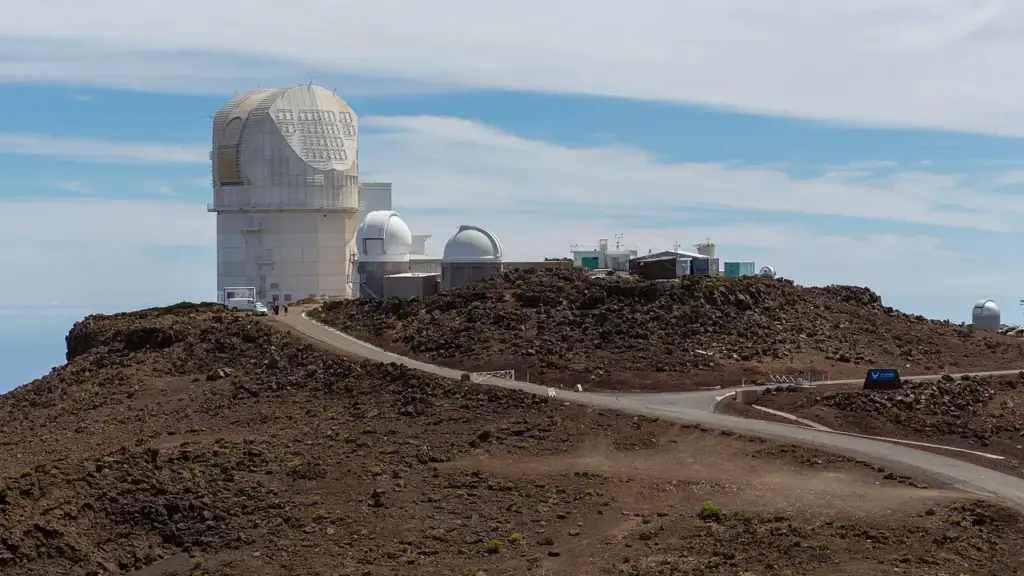
The observations were made with the Daniel K. Inouye Solar Telescope of the National Science Foundation. Located at the summit of HaleakalÄ on the island of Maui, this instrument has a four-meter primary mirror and is the most powerful solar telescope in the world. It is designed to distinguish extremely fine structures in the photosphere, the luminous layer we perceive as the surface of the Sun.
Initially, scientists were mainly looking to calibrate the instrument and test its limits. However, the analysis revealed observations of the photosphere that are more detailed than any obtained before. According to the Associated Press, each portion of the image highlights a dynamic facade, far from the yellow and uniform disk visible from Earth. Plume-like structures appear to twist and intermingle across the observed field.
The Hidden Phenomenon That Finally Appears
Researchers identify in these ripples Kelvin-Helmholtz instabilities. This phenomenon occurs when two layers of fluid move at different speeds. On Earth, it can form waves when the wind glides over water or create rolling clouds. On the Sun, the fluid is plasma: a burning gas, electrically charged and guided by magnetic fields.
The mechanism was known in physics and had already been spotted in the Earth’s atmosphere as well as on planets like Jupiter and Saturn. However, Friedrich Wöger, co-author of the study and a scientist at the National Solar Observatory, explains that it had never been observed with such detail on the solar surface. The telescope’s resolution now allows for the observation of areas where neighboring plasma flows rub against each other, deform, and begin to mix.
Why This Discovery Could Change Everything
The discovery does not instantly resolve all the mysteries of the Sun, but it provides a missing piece. Scientists are still trying to understand how energy moves between the photosphere, the upper layers of the atmosphere, and the solar corona. The latter reaches temperatures of several million degrees, much higher than those of the visible surface, a paradox that has fueled research for decades.
The observed instabilities could contribute to the mixing of plasma and the transfer of energy on a small scale. By tracking their birth, evolution, and disappearance, researchers can test models that had previously only been compared to less precise observations. The interest in these images is therefore not only aesthetic: they transform a theoretical mechanism into a measurable phenomenon.
Tiny Waves, Consequences Reaching Earth
Solar activity arises from complex interactions between plasma and magnetic fields. When this energy is released suddenly, the Sun can produce an eruption or eject a massive amount of matter into space. If this matter reaches Earth, it can trigger a geomagnetic storm, create auroras at unusual latitudes, and disrupt essential technical systems.
It would be excessive to claim that these new images will allow for the prediction of every solar storm starting tomorrow. The progress will be slower: scientists will need to accumulate sequences, compare different regions of the Sun, and link visible movements to magnetic field measurements. However, each identified mechanism improves the physical representation of our star, a necessary condition for better predictions.
France and Europe Are Directly Concerned
Europe has its own solar observation instruments, including Solar Orbiter and the Proba-3 mission from the European Space Agency. In June 2026, Proba-3 successfully performed a new artificial eclipse by flying two satellites in formation to study the corona. These space missions and the Inouye telescope are complementary: some observe vast regions and the outer atmosphere, while the other zooms in with exceptional finesse on the visible surface.
For France, the stakes involve research, telecommunications, aviation, and European space autonomy. Navigation services, weather satellites, and many synchronized networks depend on a sufficiently predictable space environment. Intense solar activity does not stop at borders: it can simultaneously affect multiple continents and forces agencies to share their data quickly.
A Viral Image That Tells a Scientific Revolution
The images strike with their almost artistic appearance. Solar physicist Ruizhu Chen from Stanford University compared their swirls to Van Gogh’s The Starry Night. This resemblance explains part of their viral potential: the public immediately recognizes a living, moving material, where traditional representations of the Sun often show an abstract disk or a ball of fire.
However, the spectacle should not overshadow caution. Looking directly at the Sun without certified protection can cause serious and irreversible damage. Scientific images are produced with specialized instruments, filters, and procedures that have nothing to do with naked-eye observation or a phone pointed at the star.
What Researchers Will Look for Next
The next step will be to determine how frequently these instabilities appear and how much energy they carry. Teams will also be able to compare calm regions, sunspots, and areas where magnetic fields are particularly intense. Repeated observations will help ascertain whether the phenomenon is ubiquitous or concentrated in specific configurations.
This discovery mainly illustrates a shift: structures too small or too fast to be distinguished are now accessible. The Sun has not changed, but our perspective has just crossed a threshold. Behind the luminous waves revealed in Hawaii lies a very concrete promise: to understand the solar machine more finely in order to better protect the technologies that the modern world can no longer do without.
Sources
- NSF National Solar Observatory, press release on the discovery and the Inouye telescope, August 5, 2026.
- Associated Press, independent presentation of the images and their implications, August 5, 2026.
- The Guardian, scientific analysis of the observations, August 5, 2026.
- European Space Agency, Proba-3 mission and corona observation, June 2026.