


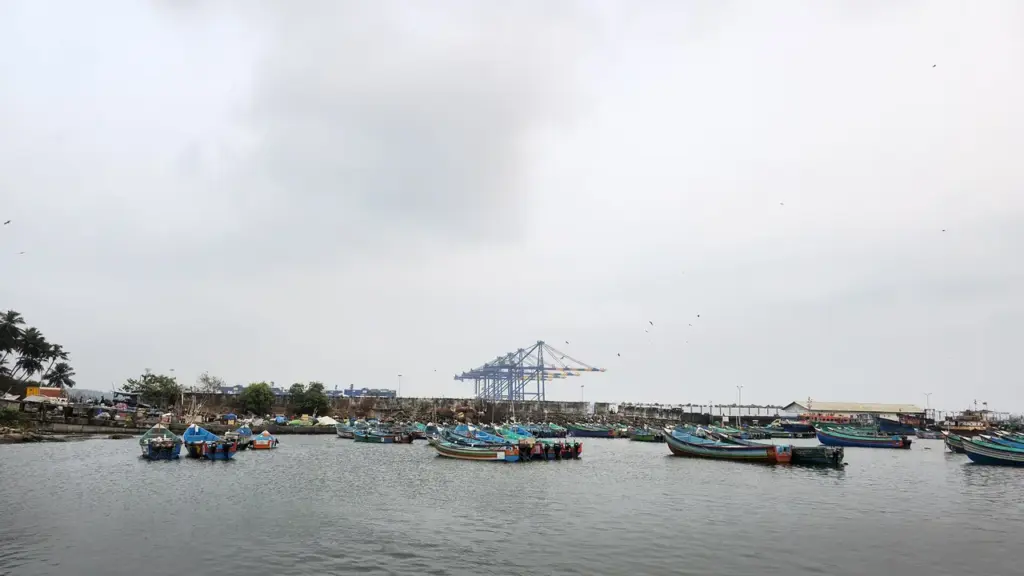
The Vizhinjam Logistics & Investment Summit 2026, held on August 12 in Trivandrum, arrives at the right moment: India no longer wants only to be a production and services economy, it wants to control more of the physical routes of its trade. In Vizhinjam, Kerala is trying to turn a transshipment port into a complete platform: logistics, industry, technology, storage, cold chain, customs, investors and export corridors.
The official summit site promises 300 to 500 delegates, more than 300 B2B meetings, over 100 investor meetings and around 20 strategic partnerships around the theme: Vizhinjam, gateway to India’s future logistics economy. This is not only a regional event. It is an attempt to capture the value that circulates around the port: shipping lines, 3PL, 4PL, manufacturers, infrastructure funds, port-tech, AI, IoT, warehouses, cold chain and customs services.
A port changing India’s map
Vizhinjam has a simple and powerful geographic advantage: natural depth and proximity to major international shipping lanes. India’s Press Information Bureau recalls that the port began Phase I commercial operations on December 3, 2024, with a capacity of 1 million TEUs, before quickly moving beyond that gauge. According to the January 2026 government release, it had already handled more than 1.43 million TEUs and was operating at more than 130 percent utilization.
That performance explains the political ambition: reduce India’s dependence on foreign transshipment hubs, especially in a region where every day gained in a logistics chain matters. The country wants more Indian containers handled on its own territory, with fewer detours, more control and better value capture. Vizhinjam therefore becomes a symbol of maritime sovereignty as much as a commercial asset.
The real issue: the ecosystem around the quay
A port alone is not enough. That is the summit’s implicit message. For Vizhinjam to become a complete gateway, it needs an economy around the quay: roads, rail, warehouses, logistics platforms, industrial zones, customs services, financing, skilled labor, data, traceability and the ability to connect South Indian producers to mother vessels. Without that ecosystem, the port can remain brilliant at transshipment while letting part of the value flow elsewhere.
Economic Times Supply Chain flagged this tension in July: the launch of export-import operations from August 18 is generating excitement, but experts still point to connectivity delays, a lack of local cargo and the risk that economic benefits could be captured by better-equipped neighboring states. That is exactly what the summit is trying to correct: bringing in the actors that build services, not only those who admire the cranes.
Adani, MSC and the question of power
The capital structure adds a sensitive layer. Indian Express reported that the Kerala government said it had not been consulted about a proposed 49 percent stake sale in Adani Vizhinjam Ports to Mediterranean Shipping Company through its terminal arm. Onmanorama later cited Adani Ports saying the agreement remains subject to required approvals, including those of the Kerala government and the Competition Commission of India, and would not give MSC exclusivity.
This debate is crucial. MSC is the world’s largest container carrier, and its potential entry into the capital could secure volumes, expertise and commercial power. But it also raises a classic question for modern ports: when a major customer becomes a shareholder, where does efficiency end and dependence begin? For Kerala, the issue is not only filling the port. It is maintaining governance capacity over a strategic public-private asset.
Expansion as a race against time
The Press Information Bureau says Phases II, III and IV are being implemented together in an accelerated program, with a December 2028 delivery target. The project is meant to push Vizhinjam’s ambition toward up to 5.7 million TEUs of potential operational capacity, with a continuous two-kilometer quay, an extended breakwater and equipment capable of handling next-generation vessels.
That acceleration tells the story of regional competition. Ports do not win only by their position on the map. They win by delivering before others, absorbing crises, offering predictable costs and convincing shipping lines that reliability will be there. In a world disrupted by Red Sea tensions, regional congestion and route reconfigurations, a well-located deep-water port can become a geopolitical asset.
Technology as a corridor promise
The summit does not talk only about concrete and containers. It also highlights port-tech actors, AI, IoT and smart logistics solutions. That is essential, because the next generation of ports no longer only unloads quickly. It orchestrates data: container location, flow prediction, digital documentation, automated customs, cold chain, truck optimization and integration with industrial zones.
For B-EMPIRE, this is the modern reading of Vizhinjam: a port becomes powerful when it stops being a point on a coast and becomes an information system connected to real trade. AI and automation do not replace ships, cranes and roads. They reduce the friction that turns good infrastructure into durable advantage.
Why this story matters
The Vizhinjam Summit matters because it shows an India that wants to capture more value inside physical globalization. For a long time, part of Indian trade depended on outside port intermediaries. Vizhinjam proposes another ambition: turning southern India into a direct connection point between manufacturing, shipping, technology, finance and export.
But success will not be decided only in investment speeches. It will be decided in roads, rail, logistics zones, governance with Adani and MSC, balance with local communities and Kerala’s ability to turn a spectacular port into a complete regional economy. In Trivandrum, the summit therefore asks the real question: will Vizhinjam be only a high-performing quay, or will it become a machine of commercial power for India?
Sources
- Vizhinjam Logistics & Investment Summit 2026 – official site
- Press Information Bureau – capacity augmentation works at Vizhinjam International Seaport
- ET Supply Chain – EXIM ambitions and connectivity challenges at Vizhinjam
- Economic Times – Vizhinjam to begin full EXIM operations from August 18
- Indian Express – Kerala response to Adani-MSC Vizhinjam stake deal
- Onmanorama – Adani Ports says MSC deal is subject to approvals