


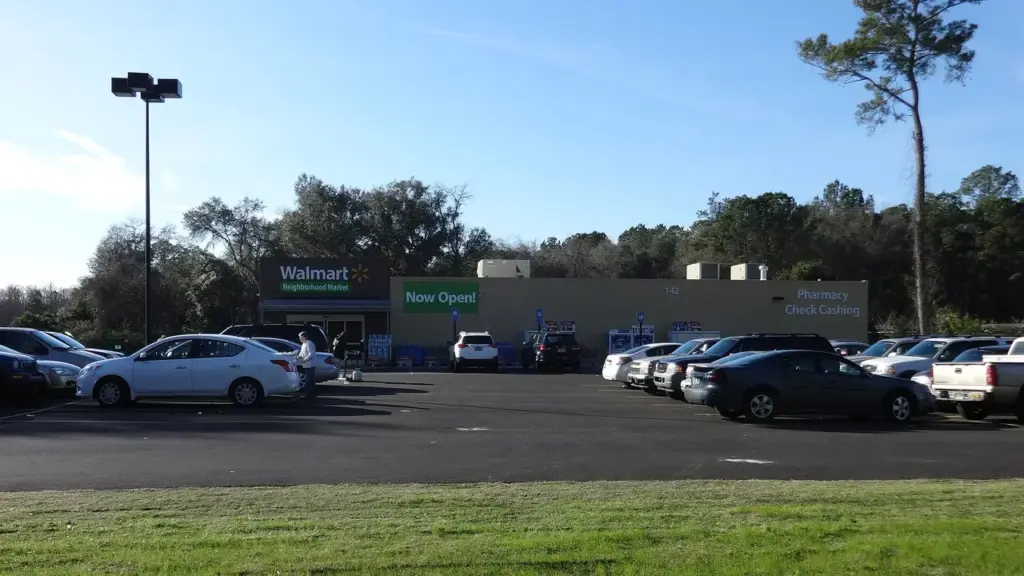
This is a small revolution at the checkout and a significant strategic admission. Starting this Monday, August 24, 2026, Walmart begins rolling out contactless payment in select Walmart and Sam’s Club stores across the United States. Apple Pay, Google Pay, compatible bank cards, smartphones, and smartwatches finally enter an ecosystem that has resisted them for over a decade. For millions of consumers, the gesture will be mundane: bringing a device close to the terminal. For global commerce, the message is much more spectacular.
The Last Major Barrier Has Fallen
Walmart was not an ordinary laggard. The American giant had made its refusal of NFC a genuine strategy. It pushed its customers toward Walmart Pay, a system integrated into its app and based on scanning a QR code. At Sam’s Club, Scan & Go already allowed customers to scan products and pay without going through a traditional checkout. These solutions remain available, but they will no longer be imposed as the preferred digital pathway.
According to the official announcement from the group, the rollout begins on August 24 at select locations. All Walmart and Sam’s Club stores in the U.S. must be equipped by the end of 2026, with an extension to gas stations by mid-2027. Customers will be able to use an eligible contactless card, phone, or smartwatch. They will also be able to add certain Walmart, Sam’s Club, and OnePay cards to their digital wallet.
Why Walmart Resisted for So Long
Controlling the customer relationship has become one of the most valuable assets in retail. By directing payments to its own app, Walmart could bring together purchases, receipts, loyalty, promotions, and financial services in one environment. This logic also reduced its dependence on external technology platforms, particularly Apple and Google, which had become essential intermediaries between banks, retailers, and consumers.
Walmart even participated in the 2010s in CurrentC, an initiative by major retailers designed as an alternative to dominant mobile wallets. The project ultimately disappeared, while phone payments became established in transportation, cafes, pharmacies, and nearly all major chains. Over the years, Walmart’s refusal transitioned from a strategic choice to an increasingly visible exception.
A Victory of Usability Over a Closed Ecosystem
Walmart’s statement emphasizes freedom of choice and simplicity. This phrasing reveals the essence: consumers no longer want to wonder which app to open depending on the store. They expect the same gesture everywhere, with the card and digital wallet they already use. A friction of a few seconds may seem trivial, but multiplied by millions of checkout experiences, it weighs on satisfaction, queue fluidity, and the brand’s image.
This shift does not mean Walmart is abandoning Walmart Pay, OnePay, or its financial strategy. The group adds a universal entry point while retaining its proprietary tools. This is precisely what makes the decision significant: even a company with exceptional commercial power recognizes that a closed ecosystem cannot always prevail against a habit that has become standard.
Apple and Google Strengthen Their Position at the Heart of Commerce
For Apple and Google, the arrival at Walmart represents a major symbolic victory. Each new compatible terminal increases the value of their digital wallets. The phone is no longer just a communication or entertainment tool: it becomes a daily banking interface, capable of absorbing the card, cash, key, coupon, and sometimes identification.
This change is also of interest to banks and card networks. Mobile wallets typically use tokenization mechanisms that avoid directly transmitting the physical card number to the merchant. This architecture can reduce certain fraud risks and facilitate authentication. However, it shifts an increasing part of the payment experience to mobile operating systems, a concern monitored by regulators in several regions worldwide.
A Global Signal, Even if the Launch is American
The announced rollout concerns the United States, but its implications are international. Walmart is one of the most powerful retailers on the planet, a laboratory observed by brands, fintechs, and banks. When an actor of this size acknowledges that contactless payment has become a fundamental expectation, the pressure increases on the last companies still favoring proprietary or fragmented pathways.
In Europe and France, where banking and mobile contactless payments are already widely established, the announcement may seem late. However, it illustrates a familiar trend: open standards across multiple devices often end up winning when they provide a simpler service. In Asia, Africa, and the Middle East, the battle remains more diverse, with NFC cards, super apps, QR codes, and local wallets. Walmart’s choice does not condemn these models but shows that a global brand must accept multiple uses rather than impose a single one.
What Really Changes for Customers
In the immediate term, not all stores will be compatible starting August 24. The launch is gradual and is expected to extend until the end of 2026. Gas stations will follow later. Customers will need to check for the contactless symbol on the terminal. Traditional payment methods, including cash, chip cards, and Walmart Pay, will continue to be accepted.
In the long term, the real change will be almost invisible: fewer decisions to make at the time of payment, a more consistent experience, and increased competition among wallets. Walmart will still be able to persuade its customers to use its services through benefits, savings, or better integration. But it will now have to entice them rather than lock them in.
The Decision Retail Cannot Ignore
This announcement is not just the arrival of Apple Pay in a new chain. It marks the end of a standoff between the power of a retailer and the preferences of its customers. Walmart long believed that its scale would allow it to set its own rules for mobile payment. By opening its checkouts to Tap to Pay, the group acknowledges that convenience has also become a form of power.
The world of commerce will primarily remember this signal: when a usage is simple, secure, and widely adopted, even giants eventually align. The beep heard today in a few American stores could very well resonate as the sound of an era closing.