


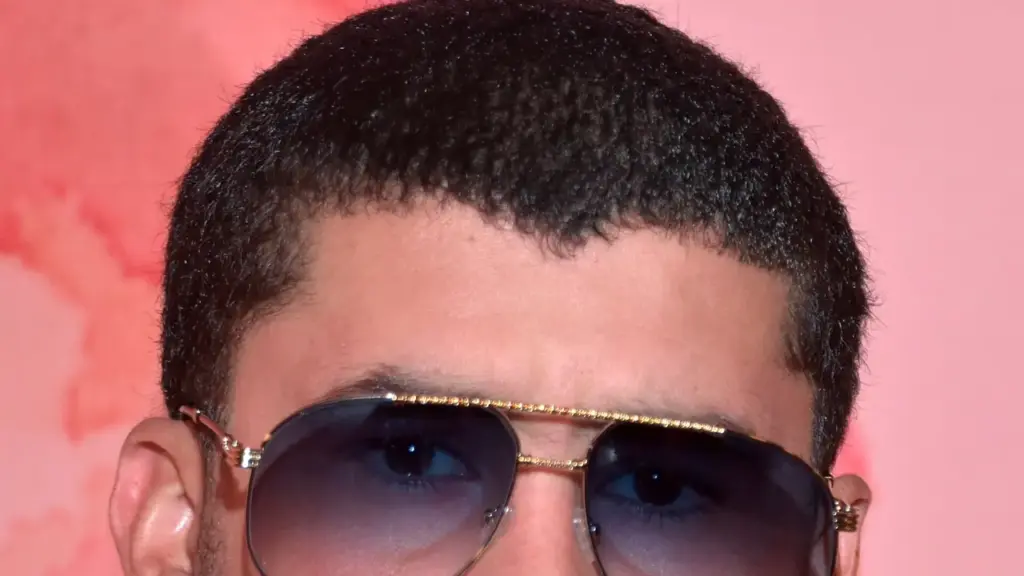
Bad Bunny is no longer just a massive global star. In this first week of July 2026, he is turning France into a stage of cultural validation for all of international Spanish-language pop. After an already highly noted first French concert in Marseille on July 1, 2026, the Puerto Rican artist arrives in Paris for two extremely high-tension dates on July 4 and 5, 2026. Seen from afar, this looks like a tour stop. Seen up close, it’s much bigger than that. It’s confirmation that an artist who refuses to smooth out his identity for the Anglo-Saxon market can still impose his law on the continent’s biggest cultural capitals. And for B-EMPIRE Magazine, the story sits at exactly the right crossroads: global, viral, musical, with a massive France angle.
The recent facts are solid. Le Monde reported on July 2, 2026 that the Marseille show drew a sold-out crowd at the Stade-Velodrome for Bad Bunny’s first performance in France, with staging conceived as a statement of Puerto Rican culture rather than a simple pop concert. Two days earlier, the same paper had published a guide to songs to know before his French concerts, spelling out the July 1 Marseille date followed by July 4 and 5 in Paris. The Guardian, for its part, wrote on June 28, 2026 that his show at London’s Tottenham Hotspur Stadium represented the biggest British concert ever headlined by a Latin American artist. The reasonable inference is clear: when an artist strings together London, Marseille and Paris under these conditions, this isn’t a passing trend. It’s a shift.
Why France matters so much in this sequence
For a long time, France watched global Latin pop with curiosity, sometimes admiration, but without always granting it the symbolic centrality reserved for the biggest Anglo-American machines. Bad Bunny’s week changes the scale. The Marseille stop already showed there’s a very large, highly visible audience ready to follow a show that betrays neither its language nor its codes. The Paris arrival pushes the demonstration further. Because Paris doesn’t just validate commercial success. Paris validates cultural status.
That’s what makes the story deeply French without ceasing to be global. When an artist of this stature fills France with a repertoire massively in Spanish, an ultra-Caribbean imagination and staging centred on Puerto Rico, he isn’t simply coming to entertain. He’s forcing the French market to acknowledge that a growing share of global pop no longer needs English’s permission to become central. In a country like France, where questions of language, prestige and cultural hierarchy still matter, the signal is enormous.
Marseille set the tone: not a concession, an affirmation
Le Monde’s report on Marseille matters because it shows the exact nature of the moment. The paper describes a concert where the crowd adopted the show’s aesthetic codes, from hats to bandanas, and where the Puerto Rican universe wasn’t diluted to reassure the French audience. On the contrary, it was displayed as the very heart of the spectacle. Bad Bunny doesn’t present himself as a Latin artist trying to make himself more palatable elsewhere. He presents himself as a global artist precisely because he arrives whole.
This nuance explains a lot. Real cultural power in 2026 isn’t always the kind that homogenises. It’s often the kind that exports a coherent world. In Bad Bunny’s case, that world blends reggaeton, plena, salsa, political imagery, popular nostalgia, star system and diasporic pride. Marseille therefore served as a French laboratory. Not in the sense of a fragile test, but as a first local proof that this cultural language can mobilise very broadly without losing its accent.
Paris becomes the moment of truth
The Paris dates of July 4 and 5, 2026 carry different weight. Marseille has the energy of the event. Paris carries the dimension of confirmation. In the imagination of world tours, a capital like Paris still serves as an observation point for media, live-industry professionals, brands, agents and the entire cultural ecosystem that measures what’s really rising. If Bad Bunny brings to Paris the same level of fervour, image and desire as in the other major stops of his tour, then France will stop being a simple European layover. It will become a strong link in his global narrative.
This reading is all the stronger because the artist arrives after a spring and early summer during which his name has already circulated well beyond pure music. Between the Grammys, his symbolic weight in the conversation about Latino culture, and his ability to make every date socially visible, Bad Bunny carries with him much more than a catalogue of hits. He carries an idea of pop power in 2026: power that can be global, extremely profitable, hyper-visual, and yet unaligned with the old reflexes of the American mainstream.
London had already sent a global message
The Guardian’s piece on London helps explain why France arrives at the right moment. The paper doesn’t just describe a good concert. It talks about a historic show by British standards for a Latin American artist, and highlights how Bad Bunny sustains long stretches in Spanish without trying to translate his persona for English-speaking audiences. That’s a key piece of information. It confirms his power doesn’t rest on constant adaptation, but on attraction.
In other words, audiences come to him as he is. That’s exactly what makes the French leg so important. France isn’t welcoming a watered-down version of Bad Bunny. It’s welcoming an artist who already proved in London he could break historic ceilings without giving up his cultural centre of gravity. Marseille has already absorbed that shock. Paris will now scale it up to a capital that loves measuring the real level of global phenomena.
What this weekend says about global music
The most interesting part, ultimately, may be the bigger picture. For years, the dominant narrative explained that musical globalisation happened through hybrid forms that were often steered back toward the Anglo-American centre. Bad Bunny’s case tells almost the opposite story. Global circulation can also happen through strong linguistic and cultural singularity, provided the world on offer is powerful enough to unite people. France becomes a fascinating mirror here, because it’s simultaneously a major concert market, a place of cultural validation, and a country sensitive to the question of exception.
If Bad Bunny holds Paris the way he held London and Marseille, that will mean something simple but massive: global pop has stopped being just an Anglo-Saxon empire that tolerates a few exceptions. It increasingly looks like a map where multiple centres impose their own imaginations. For French artists, live-industry players and labels, the signal matters. It’s a reminder that in 2026, the global cultural conversation is also won by owning a strong identity, not just by seeking maximum neutrality.
A perfect angle for B-EMPIRE: global, France, pop culture
Editorially, this story ticks every box. It’s neither a minor news item, nor a purely niche piece, nor a simple concert review. It connects global music, France, cultural dynamics, the live-event economy and the battle for prestige. It also breaks away from the era’s overly frequent zones — heatwaves, geopolitics, football — while staying strong enough for Google Discover thanks to a very readable image: Bad Bunny just came from Marseille and is about to take Paris in a weekend that looks like a European coronation.
The story of the moment, then, isn’t just another Paris date. It’s a French tipping point. After long watching the Latin wave from a distance, France finds itself at the centre of an episode where that wave is no longer exotic or secondary. It becomes a mass-scale given, visible in the venues, in the outfits, in the playlists and in the very language of pop prestige.
The real test is no longer whether he’s global
The question is no longer whether Bad Bunny is a global star. That point is already behind us. The real question this weekend is how far France is willing to let itself be reordered by that imagination. Marseille opened the door. Paris can now convert the try and durably inscribe this moment into the cultural landscape of summer 2026. If that happens, people won’t just be talking about two successful concerts. They’ll be talking about the moment France clearly acknowledged that the new global pop could arrive in Spanish, unfiltered, and leave even stronger.