
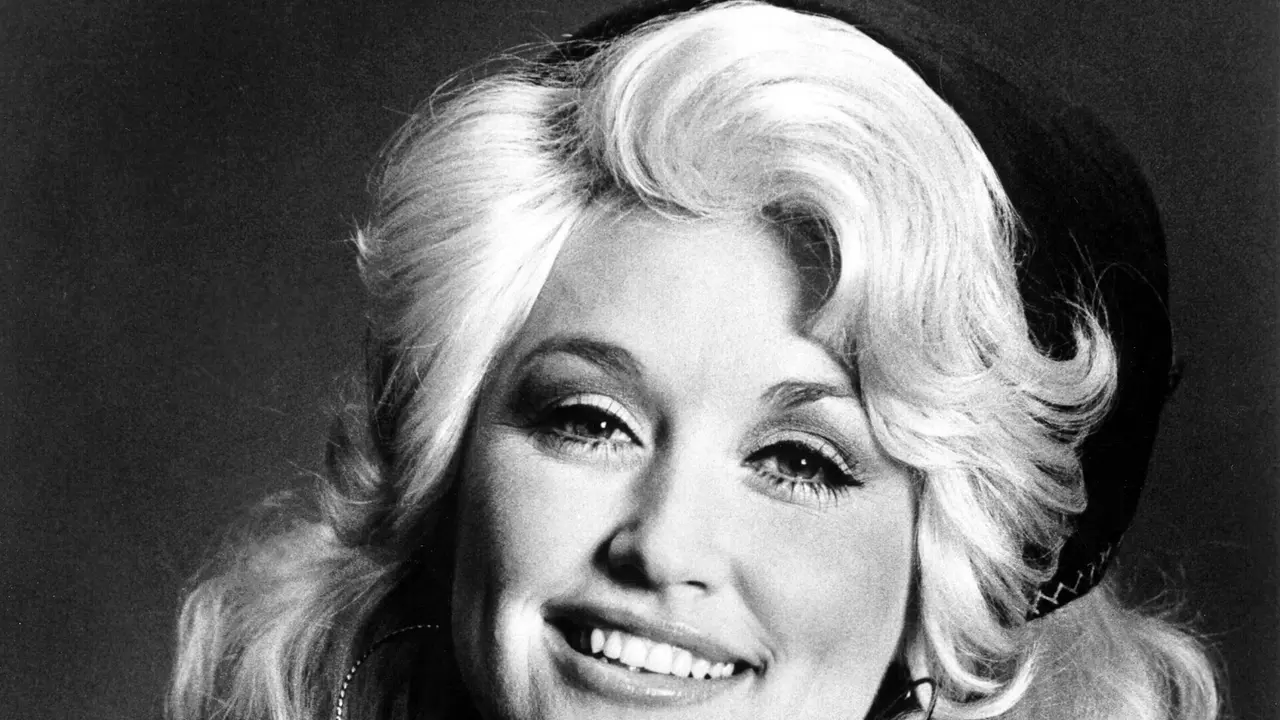
In an America rarely in agreement on anything, one name has brought together Republican and Democratic officials: Dolly Parton. Nashville is moving forward with the renaming of its international airport to honor the singer who passed away on August 25, 2026. This idea goes far beyond a plaque placed on a terminal. It transforms Tennessee’s main gateway into a living monument dedicated to an artist whose influence spans music, film, education, tourism, and the economy.
The initiative has reached a new political milestone following mobilization at multiple levels. Tennessee Governor Bill Lee announced at the end of August a partnership with the airport authority to advance the project. The Nashville Metropolitan Council subsequently adopted a resolution requesting an exception to naming rules. According to the Associated Press, elected officials from both parties now support this transformation, a rare consensus around a personality who has made kindness and the rejection of divisions a public hallmark.
A Vote That Changes Nashville’s Landscape
The project aims to rename Nashville International Airport to Dolly Parton International Airport. The final formula is yet to be determined by airport officials, but the direction is clear: the city wants to permanently associate its global image with that of the artist. The stakes are symbolic, administrative, and commercial. An airport name appears on tickets, signs, travel apps, and in conversations among millions of passengers.
The municipal resolution emphasizes that the airport constitutes the first impression of Nashville for many visitors. This is precisely what gives strength to the tribute. Dolly Parton is not only linked to Tennessee by her birthplace and repertoire. She has made the state visible far beyond the United States, carrying with her the imagery of the Appalachians, the country tradition, and a story of social ascent understood on all continents.
Why Dolly Parton Continues to Unite
American politics has turned many cultural symbols into battlegrounds. Dolly Parton has long escaped this logic. She did not hide her rural roots or her faith, but she refused to reduce her audience to a partisan identity. Her commitments spoke through actions: books given to children through the Imagination Library, aid after disasters, support for medical research, and job-creating investments in her region.
This capital of trust explains the current consensus. Elected officials are not merely celebrating a discography. They recognize a personality capable of simultaneously representing popular success, entrepreneurship, generosity, and local pride. In a polarized country, naming an international infrastructure after someone signifies that a common figure still exists.
From Jolene to Arrival Signs Worldwide
The international reach of the project is primarily based on songs that have transcended generations. Jolene, 9 to 5, and I Will Always Love You belong to the collective memory well beyond country music. Whitney Houston’s cover of the latter brought Dolly Parton’s songwriting into one of the greatest stories of global pop. Her compositions continue to circulate in films, TV series, talent shows, and streaming platforms.
An international airport naturally extends this circulation. Every traveler discovering the name, every flight announcement, and every post from the terminal become small rehearsals of her legacy. Thus, the tribute is not fixed like a statue. It accompanies movement, departures, and arrivalsâthree themes that precisely traverse American music.
A Powerful Lever for Musical Tourism
Nashville has long presented itself as Music City. The name change would reinforce this promise from the moment of landing. For foreign visitors, Dolly Parton is an immediately identifiable reference, sometimes stronger than the name of certain local institutions. Her image can connect Nashville’s musical center, the Grand Ole Opry, historic studios, and eastern Tennessee, where Dollywood is located.
This continuity has concrete economic value. Destinations compete to create memorable and shareable experiences. A terminal associated with Dolly Parton could host exhibitions, archives, musical installations, or educational programs, without transforming the airport into a theme park. Well-designed, the identity would offer a coherent narrative for the entire territory: music as an entrance, then as a journey.
BNA Should Retain Its Code
A name change does not necessarily mean the disappearance of the airport code BNA. These three letters come from the history of Berry Field and are used by airlines, reservation systems, and global logistics. Many airports bear the name of a personality while retaining an inherited code. For travelers, the transition would primarily concern the public designation, signage, and branding.
Officials will still need to clarify the timeline, costs, and official wording. This caution is important: political support and the announced intention do not replace operational steps. The airport authority remains at the center of the decision and its execution. The symbol seems secured, but its realization will require legal, graphic, and logistical work.
A Tribute Greater Than a Facade Change
The project comes a few weeks after Dolly Parton’s death at the age of 80. Emotion may accelerate decisions, but the proposal is not solely based on mourning. It reflects a reality built over decades: the artist has given Tennessee a cultural visibility that few institutional campaigns could have purchased. In return, the state inscribes her name in an infrastructure destined to last.
The gesture also narrates an evolution of public memory. Train stations, airports, and avenues are no longer reserved for political leaders or military heroes. A singer-songwriter, actress, entrepreneur, and philanthropist can embody the history of a territory with equal force. Popular culture here becomes a form of civic heritage.
A Signal the World Cannot Ignore
If the name Dolly Parton settles on the facade of Nashville’s airport, millions of passengers will read it each year. Some will think of a song, others of a movie, of Dollywood, or of the books received by a child. This is the uniqueness of this tribute: it does not celebrate a single work, but a network of memories and actions that connect entertainment, education, and local development.
In an era where reputations are fragile and consensus is rare, Nashville chooses a figure whose popularity has survived media cycles. The airport would then become more than a transit point. It would bear the name of a woman who left a cabin in the Smoky Mountains to become one of the most recognized voices on the planet. The world would enter Nashville under her gaze, and Tennessee would remind us that a song can sometimes build a territory.
Sources
- Associated Press â bipartisan support for the airport name change, September 11, 2026.
- Tennessee Governor â official announcement of the partnership, August 28, 2026.
- Metropolitan Council of Nashville â text and history of resolution RS2026-2261, September 2026.
- Axios Nashville â next steps in the process, September 11, 2026.


