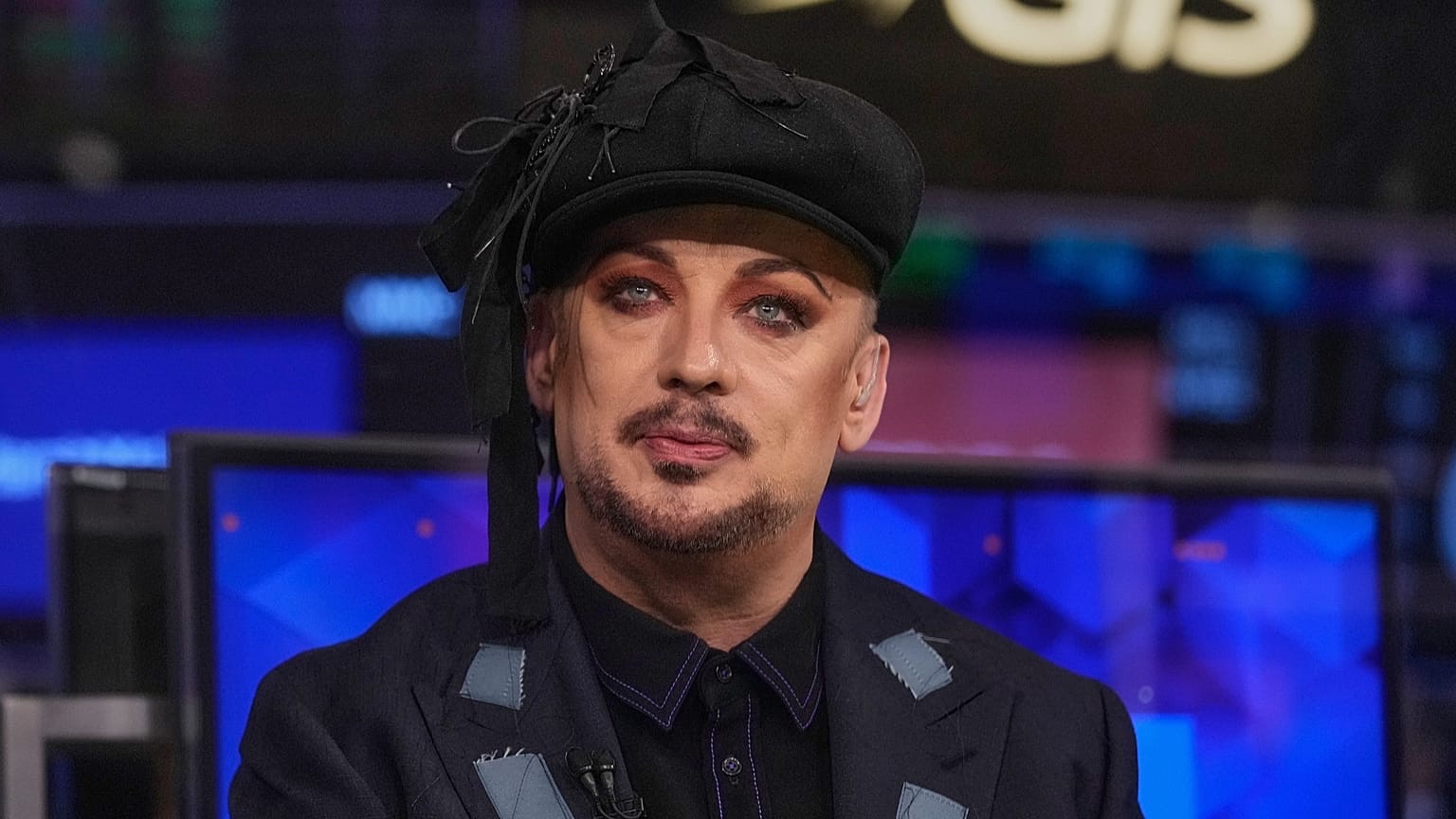
Boy George has just thrown a song into the midst of one of the most explosive debates of our time. The British singer has released ‘Od Nirkod (We Will Dance Again),’ an openly pro-Israel reggae track that references the attacks of October 7, 2023, and defends the Jewish community. Within hours, the song has generated messages of gratitude, accusations of propaganda, and an unavoidable question: what can a global star still say about war without turning their music into a battleground?
The track did not follow the classic launch of an international single. According to Euronews and The Guardian, Boy George first shared it on his X account with the word ‘Shalom,’ without immediate distribution on major streaming platforms. This direct choice placed the lyrics, more than its commercial performance, at the center of the conversation. The song quickly became a political object discussed well beyond the audience of Culture Club.
A Song That Clearly Chooses Its Side
‘We Will Dance Again’ does not present itself as an ambiguous statement. The title recalls a phrase associated with the memory of the Nova festival massacre, where hundreds were killed during the Hamas-led attack on October 7, 2023. The song also contains explicit lyrics supporting Jews and challenges how some artists speak about the war between Israel and Hamas.
The Jewish Telegraphic Agency reports that the official account of the Nova Music Festival responded positively to the announcement. Conversely, many internet users and commentators have criticized the singer for defending Israeli military action without giving sufficient space to Palestinian victims and the humanitarian catastrophe in Gaza. These two reactions do not tell the same story, but they explain why the track has emerged as a global topic.
The Unexpected Signal from a British Pop Icon
The significance of this release largely hinges on the identity of its author. Boy George is one of the most recognizable figures in British pop from the 1980s. With Culture Club, he built an image based on eccentricity, fluidity of gender codes, and catchy choruses capable of circulating everywhere. His voice is associated with an era when music television transformed artists into international symbols.
That a personality known for ‘Karma Chameleon’ releases such a straightforward piece today creates a powerful contrast. The public is not just receiving a song: they are witnessing a celebrity engage their legacy and reputation in a contemporary moral battle. For his supporters, this risk-taking is a sign of courage. For his detractors, the celebrity gives disproportionate power to a message deemed incomplete or dangerous.
Why Music Has Become a Permanent Political Test
Since the onset of the war, festivals, record labels, ceremonies, and tours have been permeated by demands for artists to take a stand. An artist’s silence can be denounced as a lack of solidarity. Conversely, a statement can trigger calls for boycotts. Social media accelerates this logic: a brief post travels faster than the nuances necessary to narrate a long, deadly, and deeply polarized conflict.
Boy George is clearly not seeking neutrality. His piece directly opposes several competing narratives about the war and the memory of October 7. This is precisely what makes it go viral. In the age of algorithms, music circulates not only because it is enjoyable; it also spreads because it divides, shocks, or confirms an already established belief.
A Non-Streaming Release That Changes the Battle
The initial absence of the track on Spotify, Apple Music, or other major platforms adds a unique dimension. The launch via X transforms each listen into a potential reaction. The title arrives accompanied by screenshots, comments, and excerpts taken out of context. The platform does not separate creation from the dispute it provokes.
This mode of distribution allows Boy George to speak immediately, without waiting for a traditional campaign. However, it also reduces the space available for artistic mediation. The user often encounters the controversy before the complete song. The debate then becomes the primary product, while the music serves as a trigger.
The Risk of Reducing Victims to Slogans
The context demands great precision. The attacks of October 7, 2023, killed approximately 1,200 people in Israel and led to hostage-taking, according to Israeli reports widely cited by international agencies. The subsequent war in Gaza has caused an immense number of Palestinian deaths, displaced a large portion of the population, and triggered a major humanitarian crisis. These realities must be articulated together without erasing the suffering of either side.
A pop song is not an investigative report and cannot bear the entire story alone. But when it intervenes in such a well-documented and painful conflict, every omission becomes visible. This is the main criticism leveled against ‘We Will Dance Again’: its emotional power relies on a precise memory, while part of the audience demands explicit recognition of Palestinian civilians.
From London to Paris, a Debate That Crosses Europe
The controversy directly interests France and Europe, where cultural institutions regularly attempt to reconcile freedom of expression, event security, and a refusal of both anti-Semitism and anti-Palestinian racism. International artists perform before very diverse audiences in societies where the conflict fuels intense political tensions.
For concert organizers and the media, this type of release creates a dilemma. Ignoring the track would underestimate its cultural impact. Treating it solely as a scandal risks amplifying the most aggressive positions. The challenge, therefore, is to describe the facts, distinguish support for a population from approval of a government, and then remind everyone of the human cost of the conflict.
What This Controversy Really Says About 2026
The commercial success or failure of the track will be almost secondary. Boy George has created an event because he chose a straightforward message at a time when many celebrities prefer general statements. His decision exposes the fracture between two contradictory expectations: asking artists to engage, then reproaching them for not carrying the world’s complexity in a few minutes of song.
‘We Will Dance Again’ may remain a peripheral piece in Boy George’s career. But the reaction it triggers is a major signal. Global pop is no longer an escape space separate from current events. It has become an arena where memory, identity, diplomacy, and collective pain clash. This time, the chorus does not just seek to make people dance: it compels everyone to decide what they hear behind the words.
Sources
- The Guardian â release of the track, lyrics and context of the controversy, July 27, 2026, updated July 28.
- Euronews Culture â broadcast on X and reactions to Boy George’s track, July 27, 2026.
- Jewish Telegraphic Agency â lyrics, reception and reaction from the Nova Music Festival, July 27, 2026.
- NME â publication and presentation of the new track, July 27, 2026.