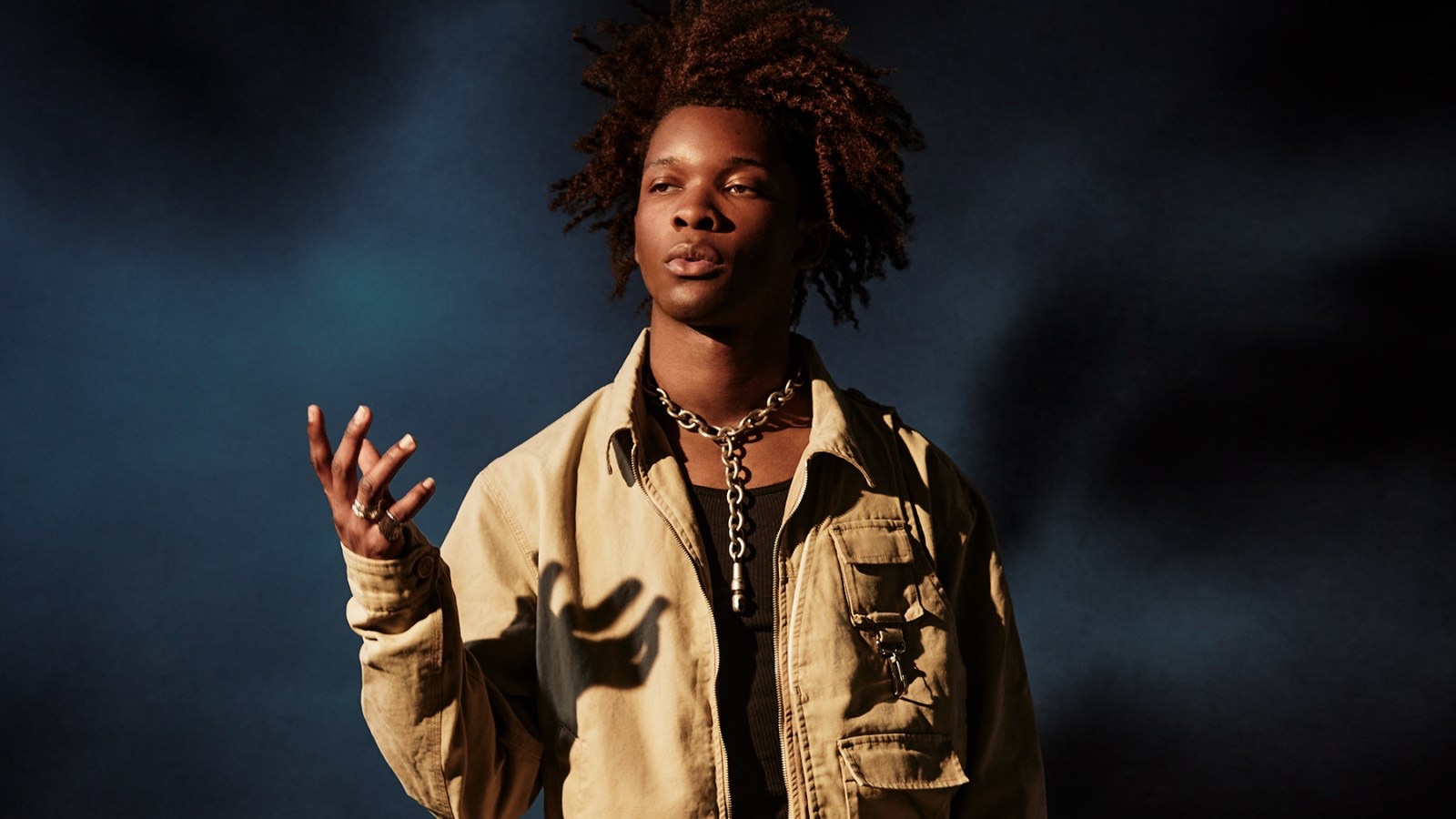
A career propelled by TikTok, hundreds of millions of streams, and now a murder trial: the story of D4vd has just crossed a major judicial threshold. A judge in Los Angeles has decided that the evidence presented over five days of hearings is sufficient to try the singer in the death of Celeste Rivas Hernandez, 14 years old. This decision does not constitute a conviction. However, it shifts an already global criminal case into a new phase and places the viral music ecosystem in front of questions it can no longer evade.
D4vd, whose real name is David Anthony Burke, pleads not guilty. His defense argues that the evidence does not demonstrate that he caused the death of the teenager. The principle of presumption of innocence remains essential: the charges must be proven at trial, and the final decision will belong to the justice system.
The Decision That Transforms the D4vd Case
On Monday, July 27, Judge Charlaine Olmedo concluded that there was probable cause sufficient to send the artist to trial. According to the Associated Press and the Los Angeles County District Attorney’s office, the charges include murder, continuous sexual abuse of a child under 14, and illegal mutilation of human remains.
At this stage of the American procedure, the judge was not required to decide whether the defendant was guilty beyond a reasonable doubt. She had to determine whether the prosecution had enough evidence for the case to be examined at trial. This nuance is fundamental: the referral validates the continuation of the procedure, not the final version of the facts.
The case concerns the death of Celeste Rivas Hernandez, whose dismembered and decomposed body was found in 2025 in the front trunk of a car registered in the singer’s name. The case immediately transcended local boundaries due to D4vd’s global popularity and the violence of the facts described by investigators.
Five Days of Hearings and Heavy Evidence
During the preliminary hearing, the prosecution presented messages, digital data, forensic findings, and purchases made after the teenager’s death. An investigator notably stated that electric saws, a body bag, an inflatable pool, and a shovel had been ordered online under another name but paid for with Burke’s cards and delivered to his home in Hollywood.
The prosecutors claim that these items were used to conceal the crime. They also presented exchanges between the singer and Celeste, as well as a timeline intended to show the existence of a relationship and a conflict in the hours leading up to the death. This is the prosecution’s thesis, which will have to withstand the defense’s contradiction before the jurors.
D4vd’s attorney challenged the strength of the inference. She argued that the medical conclusions regarding the cause of death were insufficiently precise to demonstrate a murder committed by her client. The defense had already stated that the actual evidence would show that Burke did not kill Celeste and was not responsible for her death.
From ‘Romantic Homicide’ to the Los Angeles Court
The contrast partly explains the cultural impact of the case. D4vd has emerged with a trajectory emblematic of the new music industry: home-recorded songs, algorithmic discovery, success on TikTok, and then massive streaming on platforms. ‘Romantic Homicide’ and ‘Here With Me’ have made him a figure in independent pop and lo-fi R&B among a very young audience.
His image relied on intense digital proximity. Unlike stars built through years of television or radio, artists born on platforms enter directly into the bedrooms, headphones, and news feeds of teenagers. The audience feels as if they are following an intimate progression: the first viral video, the first tour, the first album, and then global fame.
This mechanism creates extraordinary speed but also a blind spot. Fame, income, and access to underage fans can arrive before the professional entourage is structured to detect risks, set boundaries, and act. The D4vd case does not, by itself, condemn an entire model. However, it forces labels, managers, platforms, and organizers to ask what they knew, what they could verify, and what mechanisms truly protect young audiences.
A Shockwave for Global Music
When an artist faces such serious accusations, business decisions become immediate: to keep or withdraw songs from editorial playlists, suspend campaigns, cancel concerts, retain catalogs, and manage royalties. Each choice can be interpreted as a stance, even though the trial has not yet taken place.
The platforms must distinguish several levels. Keeping a work available does not necessarily equate to promoting its author. Conversely, placing their songs in highly visible playlists produces active algorithmic and financial support. This boundary between access, recommendation, and monetization has become central in the digital cultural economy.
For fans, the shock is also personal. Titles associated with intimate memories suddenly become linked to a judicial case. Some stop listening, others await the verdict, while many seek to separate the work from the artist. There is no universal answer, but the debate cannot erase the victim: Celeste Rivas Hernandez was a teenager, and her name must not disappear behind that of the accused celebrity.
What the Case Changes in France and Europe
The trial will take place in the United States, but its consequences will be international. D4vd’s songs have circulated without borders, particularly among young listeners in France and Europe. Global labels, platforms established in Europe, festivals, and media will need to adapt their treatment as new public elements emerge.
In France, this case resonates with debates on the protection of minors online, the responsibility of platforms, and the relationships between artists and fan communities. Social networks are no longer just promotional channels. They are places of contact, connection, and authority building. When a famous adult has direct access to a teenage audience, safeguards cannot rely solely on the individual caution of minors.
For the European industry, the lesson is concrete: reporting procedures must be accessible, touring teams must be trained, backstage interactions better regulated, and alerts documented. Protecting the public does not start after a scandal. It must exist at the very moment a career explodes.
The Next Step: A Trial Under Global Scrutiny
The referral to court opens a period during which the prosecution and defense will prepare their arguments, experts, and witnesses. Los Angeles County prosecutors have indicated that they continue to evaluate the sanctions they will seek. D4vd will be able to contest each element, present his own reading of the facts, and benefit from all procedural guarantees.
The media coverage must also adhere to a clear line: accurately describe the accusations without turning the public hearing into a spectacle, protect the dignity of the victim, avoid unnecessary details, and consistently remind that guilt has not yet been established. Virality rewards the most shocking headlines; justice requires context, time, and precision.
D4vd’s rise has thus far narrated the power of the Internet to create a global star from a bedroom. His trial will tell another story: how justice, platforms, and the industry react when this celebrity finds themselves at the center of extreme criminal accusations. The verdict is not written. But one certainty already imposes itself: viral music can no longer consider the protection of young audiences as a secondary issue.
Sources
- Associated Press â Judge’s decision sending D4vd to trial, July 27, 2026.
- Associated Press â Evidence presented during the preliminary hearing, July 21, 2026.
- Los Angeles County District Attorney’s Office â Official statement on the trial referral, July 27, 2026.
- Le Monde with AP and AFP â American singer sent to trial, July 28, 2026.