After Eight Nominations, Glenn Close Finally Holds Her Oscar : The Night That Rectifies an
After eight competitive nominations without a win, Glenn Close finally receives an Academy statuette. A long-awaited recognition, shared with Ridley Scott, Floyd Norman, and two figures from independent cinema.
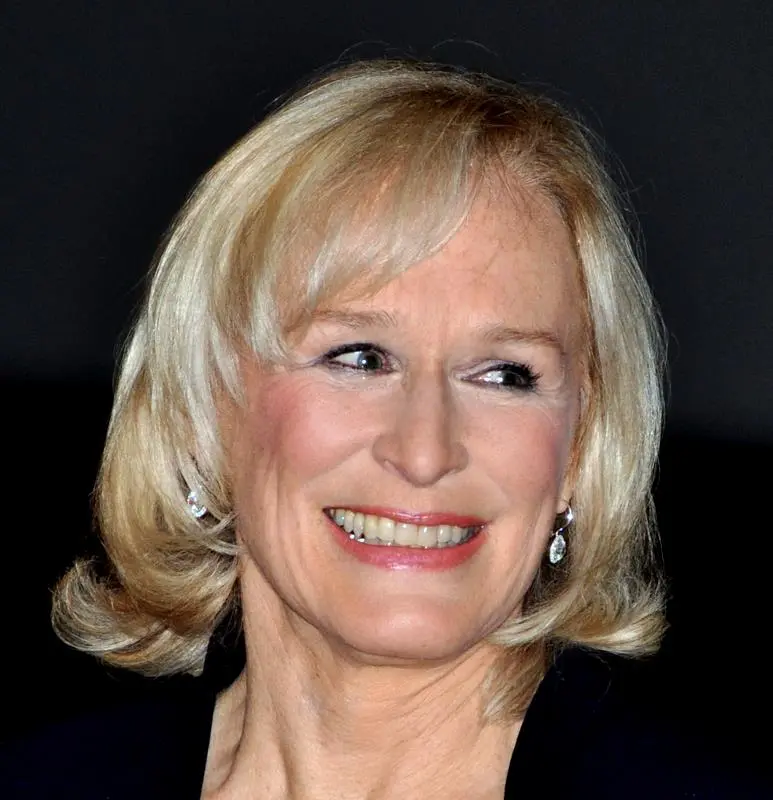
Eight nominations, forty-three years of waiting, and an already immense place in the history of cinema: Glenn Close will finally hold an Oscar. This Sunday, November 15, the American actress receives an honorary statuette at the Governors Awards in Hollywood. Technically, she does not end her series of defeats in competitive categories. However, the image possesses a rare strength: the Academy finally honors a performer whom several generations of film lovers consider one of the greatest never to have won the main race.
The evening also honors director Ridley Scott and animator Floyd Norman with honorary Oscars. Producers Christine Vachon and Pamela Koffler receive the Irving G. Thalberg Memorial Award. Behind these five names lies a common idea: to celebrate careers that have transformed popular cinema, animation, and independent production, sometimes without receiving the expected recognition at the right time.
Glenn Close, 43 Years After Her First Nomination
Glenn Close received her first Oscar nomination in 1983 for The World According to Garp, her first film role. Since then, the Academy has nominated her eight times, including for The Big Chill, Fatal Attraction, Dangerous Liaisons, Albert Nobbs, The Wife, and Hillbilly Elegy. She shares with Peter O’Toole the record for the most nominations in an acting category without a win.
This statistic has long summarized, almost unfairly, her relationship with the Oscars. Close has, however, won three Emmy Awards, three Tony Awards, and three Golden Globes. Her career spans theater, television, and film, from psychological dramas to mainstream productions. Her characters have often defied easy categorization: powerful women, wounded figures, memorable antagonists, or heroines whose complexity transcends the script.
In an interview with the Associated Press before the ceremony, the 79-year-old actress expressed being overwhelmed by this recognition. The emotion stems as much from the statuette as from the time elapsed. An honorary award does not erase the eight lost ballots, but it places her career above an annual tally. The Academy no longer crowns a single performance: it celebrates five decades of work.
An Honorary Oscar Is Not a Consolation Prize
The nuance is essential. The honorary Oscar is voted on by the Board of Governors of the Academy of Motion Picture Arts and Sciences. According to the official definition, it rewards extraordinary distinction over the entirety of a career, exceptional contributions to the arts and sciences of cinema, or remarkable service to the Academy. It does not result from the usual competitive voting on a specific film.
In Glenn Close’s case, this distinction also tells the limits of a system. A career can become indispensable while missing every opportunity for victory, depending on competition, campaigns, and the context of a given year. The honorary Oscar allows the institution to take a step back and recognize a lasting influence. The message sent to the public is clear: the absence of a competitive trophy does not define the value of a work.
The Governors Awards ceremony is not televised like the grand Oscar night, but it remains one of the most watched events of the Hollywood season. Actors, directors, producers, and future candidates gather in a more intimate atmosphere. The speeches are often more personal, as the winners do not have just a few seconds to summarize an entire life.
Ridley Scott, the Popular Giant Also Without a Win
Ridley Scott embodies another anomaly. The 88-year-old British filmmaker has directed Alien, Blade Runner, Thelma & Louise, Gladiator, and Black Hawk Down. Few directors have shaped the collective imagination while seamlessly transitioning from science fiction to epic, from thriller to war film.
Scott has received four Oscar nominations, including several for Best Director, without winning a competitive statuette. The Associated Press reports that he will accept his award via video message. His physical absence does not diminish the weight of the honor. The Academy recognizes an author capable of uniting visual ambition, global success, and influence over several generations of filmmakers.
Bringing Glenn Close and Ridley Scott together in the same ceremony gives the evening its most powerful narrative: two immensely famous artists, often nominated, never rewarded in competition, finally receive a statuette at the end of journeys that have long surpassed the results of a vote.
Floyd Norman, a Barrier Broken at Disney
The presence of Floyd Norman further expands the meaning of the ceremony. The first Black artist hired by Disney for a long-term position in animation, he worked on classics such as Sleeping Beauty, 101 Dalmatians, and The Jungle Book. His career intertwines creation, transmission, and the opening of an industry that has long left little room for diversity behind the screen.
By honoring Norman, the Academy does not only celebrate the films visible to the general public. It highlights the work of those who build images, design movements, and shape the next generations. His award reminds us that the history of cinema also unfolds in studios, far from the red carpets.
A First for Christine Vachon and Pamela Koffler
Christine Vachon and Pamela Koffler, founders of Killer Films, receive the Irving G. Thalberg Award, intended for producers whose work reflects consistent quality. Their company has championed bold independent cinema for decades, supporting authors and stories that major studios might deem too risky.
According to the Associated Press, they become the first female production team as well as the first independent producers to receive this distinction together. This symbol arrives at a time when Hollywood seeks new economic and creative models. Their award reminds us that influence is not only measured by box office success but also by the ability to bring unique films to life.
Why This Night Matters Beyond Hollywood
The 2026 Governors Awards tell the story of an industry trying to correct its oversights while defining what it wants to convey. Close represents the excellence of performance. Scott embodies global spectacle driven by an auteur’s vision. Norman symbolizes pioneering talent in animation. Vachon and Koffler advocate for independence and risk-taking.
For the audience, the most striking image will likely remain that of Glenn Close with a statuette. It will be immediately understood, even by those who do not follow every awards season. After eight nominations without a win, Hollywood finally officially recognizes what her films had already demonstrated.
This night does not rewrite past records. It does something more enduring: it reminds us that a great career is never summed up by the number of times an envelope has been opened at the right moment.
Sources
- Academy of Motion Picture Arts and Sciences, official announcement of the 2026 Governors Awards, June 10, 2026.
- Associated Press, Glenn Close and Ridley Scott honored at the Governors Awards, November 15, 2026.
- Associated Press, interview with Glenn Close before her honorary Oscar, November 13, 2026.
- Associated Press, Christine Vachon and Pamela Koffler make history, November 14, 2026.