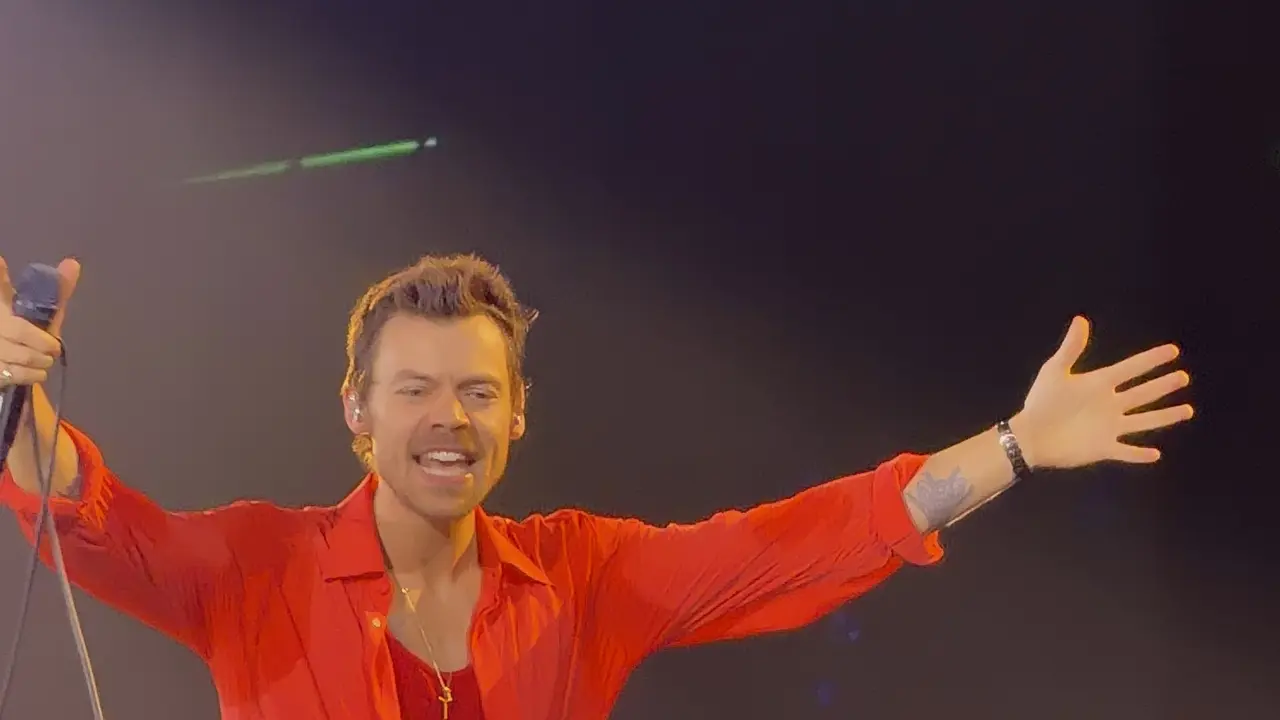
Harry Styles did not simply add New York to his world tour. He turned Madison Square Garden into a pop headquarters for more than two months. On August 28, 2026, the second New York date of Together, Together confirms the scale of the operation: thirty concerts at the Garden between August 26 and October 31, the artist’s only American dates this year, with Jamie xx listed in the official lineup. For a pop star, it is a residency. For the industry, it is a show of force.
MSG Entertainment presented the event as Styles’ thirty nights in “the world’s most famous arena,” with early merch access, customized concessions, photo experiences and dedicated fan activations. The venue also states that New York is the only American city where audiences can see the tour this year, and the city with the most shows of the entire international run. The message is clear: rarity is not reduced by repetition. It is organized.
The Pop Residency Replaces the Simple Tour Stop
The residency long belonged to Las Vegas, legacy singers and shows designed to be consumed by tourists. Styles moves the model into a more restless cultural capital. New York is not a neutral backdrop. It is a city that knows how to turn anticipation into lines, the concert into an urban ritual and the fan into a customer for an entire ecosystem: hotels, restaurants, transport, beauty, fashion, bars, merchandise and social content.
In this structure, the ticket is no longer the only product. It becomes access to a complete day. Eater New York even published a dining guide for Styles fans, highlighting restaurants near the Garden, inspired menus, bars and places where the experience can continue. This is exactly where contemporary pop becomes a local economy. The show begins before people enter the arena and continues after the encore, on sidewalks, in stories and around tables.
Merch as a Temporary Monument
Merch plays a central role here. MSG announced early sales on selected days, available without a ticket during a specific time window. That detail may seem logistical. It is strategic. Merchandising is no longer only a souvenir bought on the way out. It becomes a standalone destination, a reason to travel, a sign of belonging and sometimes a social currency. Buying the T-shirt before the concert already means entering the community.
Styles’ pop works because it blends sound, fashion and collective behavior. His fans do not come only to hear a catalog. They come to produce an image of themselves inside a shared universe: colors, boas, relaxed tailoring, seventies references, eccentric softness, hints of house and disco. The Garden residency amplifies that language by giving it a fixed location, almost a fan campus, where people can prepare, photograph themselves and recognize one another.
A Calendar That Manufactures the Event
The dates published by Madison Square Garden reveal a precise mechanism: concerts on Wednesdays, Fridays and Saturdays through Halloween. That rhythm creates a season, not a simple series. It allows fans to travel, media to return, partner brands to attach themselves to several moments, and the city to breathe around a recurring appointment. Repetition becomes a storytelling machine.
People placed the opening of the residency within a broader week of celebrity visibility, while Live Nation and Ticketmaster display the weekend dates, including August 28. The interest therefore extends beyond the already convinced audience. Styles produces a continuous presence in lifestyle news: concert, couple, fashion, musical tributes, restaurants, ticketing, fan photos. The star no longer appears only at showtime. He occupies a cultural cycle.
Why New York Wins Too
For Madison Square Garden, the operation consolidates a position few venues can claim: being at once a sports infrastructure, a musical temple, a tourist site and a media platform. Thirty dates by a global star animate the arena, sell food, merchandise, experiences and, above all, remind everyone that the Garden remains a stage of consecration. It is not only a rented venue. It is a brand fed by the aura of the artists it hosts.
For New York, the stakes are broader. In a cultural economy where cities compete for shoots, festivals, art fairs and major sporting events, a pop residency of this size functions like an attractiveness campaign. Fans do not come only for two hours of music. They consume the city, tell the city, photograph the city. Styles temporarily becomes an engine of cultural tourism.
Live Music as Accessible Luxury
The residency’s paradox is fascinating. Thirty dates increase supply, but American exclusivity preserves tension. The audience has more chances to get in, yet knows the event will not travel elsewhere in the United States. That combination turns live performance into accessible luxury: rare by geography, abundant by calendar, intense by experience. Luxury houses should watch this model closely.
Live music today sells what many brands seek: presence, community, social proof and memory. A successful concert is an immaterial object that nevertheless leaves visible traces: clothes, photos, wristbands, posters, playlists, videos, conversations. In a world saturated with content, the physical appointment becomes proof of value again. You have to be there, or accept watching others be there.
The B-EMPIRE Verdict
Harry Styles at Madison Square Garden is not only a musical performance. It is a commercial and emotional architecture. Thirty nights stretch the event, welcome several waves of fans, multiply content and turn a venue into a destination. Pop becomes less a tour than an installation.
The most interesting thing may not be the number of concerts, but what it reveals: the contemporary star no longer wins only through audience size, but through the ability to create temporary worlds. For two months, New York is not merely hosting Harry Styles. It is orbiting him, to the rhythm of an economy where song, style and city answer one another.
Sources
- Madison Square Garden Entertainment — 30 shows between August 26 and October 31, August 26, 2026
- Madison Square Garden — Harry Styles: Together, Together, August 28, 2026
- Live Nation — Harry Styles: Together, Together at Madison Square Garden, August 28, 2026
- Eater New York — A Harry Styles super fan’s dining guide in NYC, August 27, 2026
- People — Harry Styles brings Together, Together tour to New York, August 28, 2026