Paris Rectifies a Historical Oversight : Mary Cassatt Finally Takes Her Place at Orsay
The Musée d'Orsay gathers nearly 80 works by Mary Cassatt for the centenary of her death. An event exhibition that finally places the American artist at the heart of Impressionism.
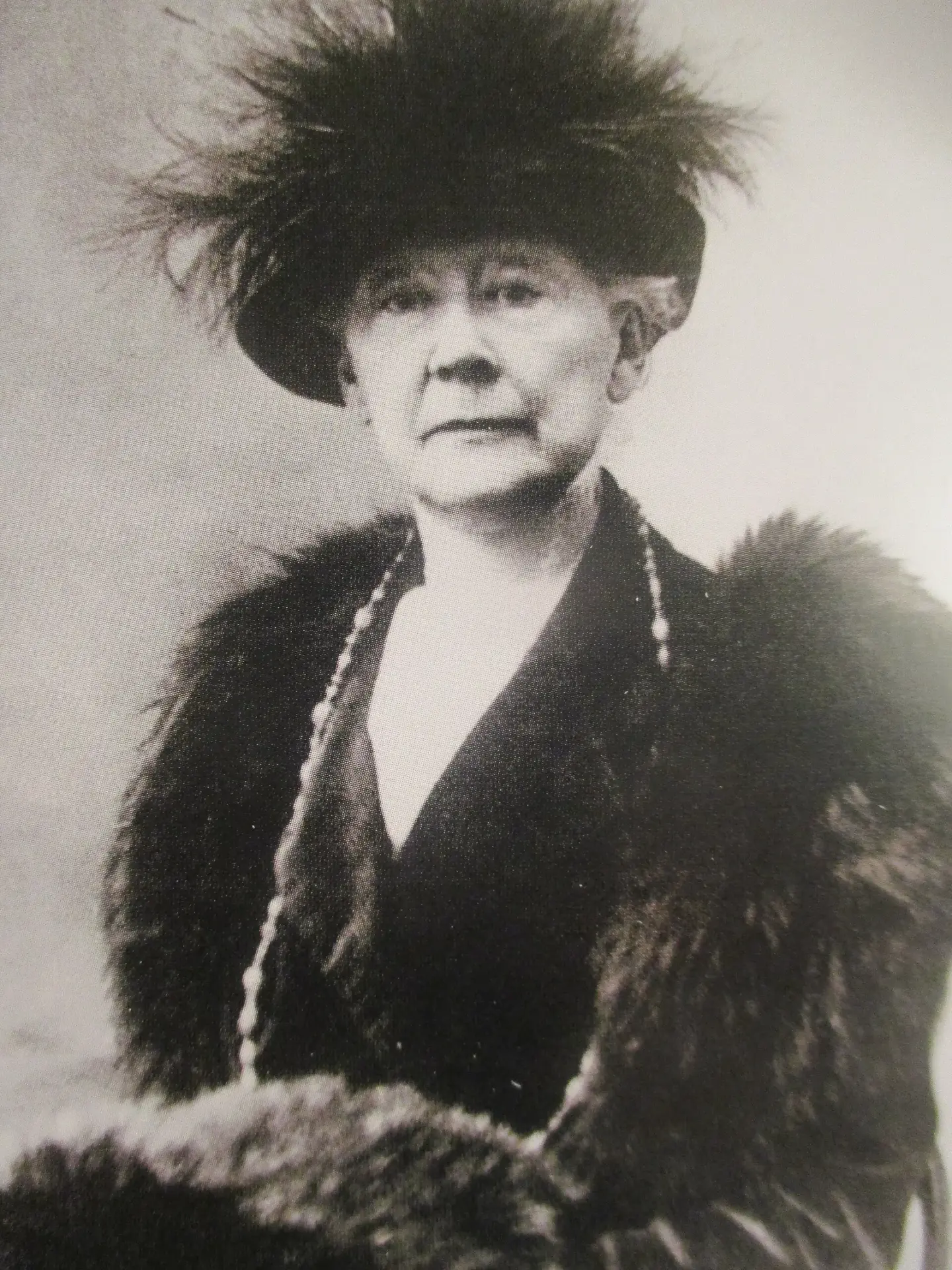
She lived nearly sixty years in France, exhibited with the Impressionists, and imposed a radically modern perspective on women. Yet, Mary Cassatt has long remained in the shadow of Monet, Renoir, or Degas. Today, in Paris, the Musée d’Orsay aims to rectify this oversight. For the centenary of the American artist’s death, the institution brings together nearly eighty paintings, pastels, and prints in a retrospective that challenges an art history still too often written from a male perspective.
Running until January 31, 2027, the exhibition “Mary Cassatt. The Independent” is a significant event: according to the Musée d’Orsay, never before have French national museums dedicated a major exhibition to this central figure of Impressionism. The exhibition spans her entire career and reminds us that her famous family scenes do not encapsulate either her ambition or her commitment.
Nearly 80 Works to Change Perception
The decision to gather nearly eighty works allows for a departure from the familiar image of the painter of mothers and children. Cassatt indeed explored familial intimacy with exceptional sensitivity, but she primarily observed the role of women in modern society: at the theater, in gardens, reading, working, or caring for others.
These scenes are not mere decorative images. They depict women with presence, will, and inner lives. Cassatt often rejects the seductive pose imposed by the male gaze. She is interested in real gestures, relationships, subtle tensions, and the spaces accessible to women of her time.
The Paris exhibition also highlights her technical mastery. Oil painting, pastel, drawing, and printmaking testify to an artist who constantly experiments. Her interest in Japanese prints informs bold compositions, color fields, and a novel way of organizing space. Her work engages in dialogue with the European avant-garde while maintaining a deeply personal identity.
An American at the Heart of French Impressionism
Born in Pennsylvania in 1844, Mary Cassatt chose an artistic career early on, an unusual decision for a woman of her background. She trained in the United States before traveling to Europe, eventually settling permanently in France. Edgar Degas noticed her work and invited her to join the Impressionist group. Cassatt participated in several of their exhibitions and became one of the few women fully associated with the movement.
This position makes her a cultural bridge between Paris and the United States. She advised American collectors, helped introduce Impressionists across the Atlantic, and played a role in the formation of major collections. Her influence thus extends beyond the paintings she signed: she contributed to the international circulation of a movement that would permanently transform the market and museums.
The Musée d’Orsay reminds us that Cassatt described herself as “American, distinctly and frankly American.” Her establishment in France does not erase this identity. On the contrary, she uses it to view Parisian society with a particular distance and to build a career between two continents at a time when traveling, negotiating, and exhibiting remained more challenging for an independent woman.
Why Her Name Remained Behind Those of Men
The delay in institutional recognition is not due to a lack of artistic importance. Le Monde highlights several factors: her status as a woman, her foreign origins in France, and the dispersion of part of her legacy have weighed on her place in the early narratives of Impressionism. Textbooks have long favored a handful of male figures who became global brands.
Her subjects have also been misinterpreted. Because she painted children and domestic scenes, her art has sometimes been reduced to maternal tenderness. This reading overlooks the fact that Cassatt never had children and that she observed these relationships with the rigor of a professional artist. She transforms a domain considered feminine and secondary into a laboratory of composition, psychology, and power.
The Orsay retrospective comes at a time when museums are reevaluating their collections and narratives. It is not about artificially adding a female name to an already established list. It is about understanding that the list itself was incomplete. Cassatt was not on the periphery of Impressionism: she contributed to its innovations, diffusion, and international success.
Artistic Independence Becomes Political
The title of the exhibition, “The Independent,” encapsulates both a personal trajectory and an aesthetic choice. Cassatt refuses marriage to preserve her freedom to work. She confronts familial and social resistance, builds her network, sells her works, and defends her decisions in a male-dominated artistic world.
Her independence also takes on a political dimension. The exhibition highlights her support for women’s voting rights. In 1915, along with her friend and collector Louisine Havemeyer, she participates in organizing an exhibition in New York aimed at supporting women’s suffrage. This commitment logically extends her work: making visible women capable of acting, choosing, and occupying public space.
This dimension gives the retrospective contemporary resonance. The debates surrounding the visibility of female creators, the value attributed to their works, and their presence in public collections remain open. A century after her death, Cassatt becomes an exemplary case of how a recognized artist during her lifetime can be progressively marginalized by historical narrative.
The Signal Sent by the Musée d’Orsay
For Orsay, this exhibition holds particular significance. The museum is celebrating its fortieth anniversary and seeks to renew the perspective on the period from 1848 to 1914. Dedicating a major event to Cassatt means presenting Impressionism not as a strictly French and masculine adventure, but as an international network traversed by artists with diverse experiences.
The institution also acquired in 2026 “Young Girl with a Banjo,” a pastel from 1894 highlighted in the programming. This gesture strengthens Cassatt’s presence in French public collections, where she remains underrepresented. The exhibition is organized in collaboration with the National Portrait Gallery in London and the Museum of Fine Arts in Boston, confirming the transatlantic dimension of the project.
For the public, the challenge is simple yet powerful: to discover a seemingly known work, but rarely understood in its entirety. The mothers, children, and readers in Cassatt’s art are not silent figures confined to a backdrop. They are the protagonists of a modern world undergoing change.
Paris Celebrates Not Just an Artist, but Corrects Her History
The success of a retrospective is not enough to erase a century of underestimation. However, the Orsay event can durably alter the perception of Mary Cassatt in France. By gathering the works, showcasing the experiments, and reintroducing political engagement into the narrative, the museum makes visible the coherence of an exceptional career.
The message extends beyond the museum walls: the history of art is never entirely complete. It evolves when institutions revisit their archives, acquisitions, and absences. Mary Cassatt does not need to be presented as a discovery. She needs to be recognized at the level of what she already was: a pioneer, a bridge between two continents, and one of the great forces of Impressionism.
Practical Information
“Mary Cassatt. The Independent” is presented at the Musée d’Orsay in Paris from October 6, 2026, to January 31, 2027. The exhibition gathers nearly eighty paintings, pastels, and prints covering the entirety of the artist’s career.