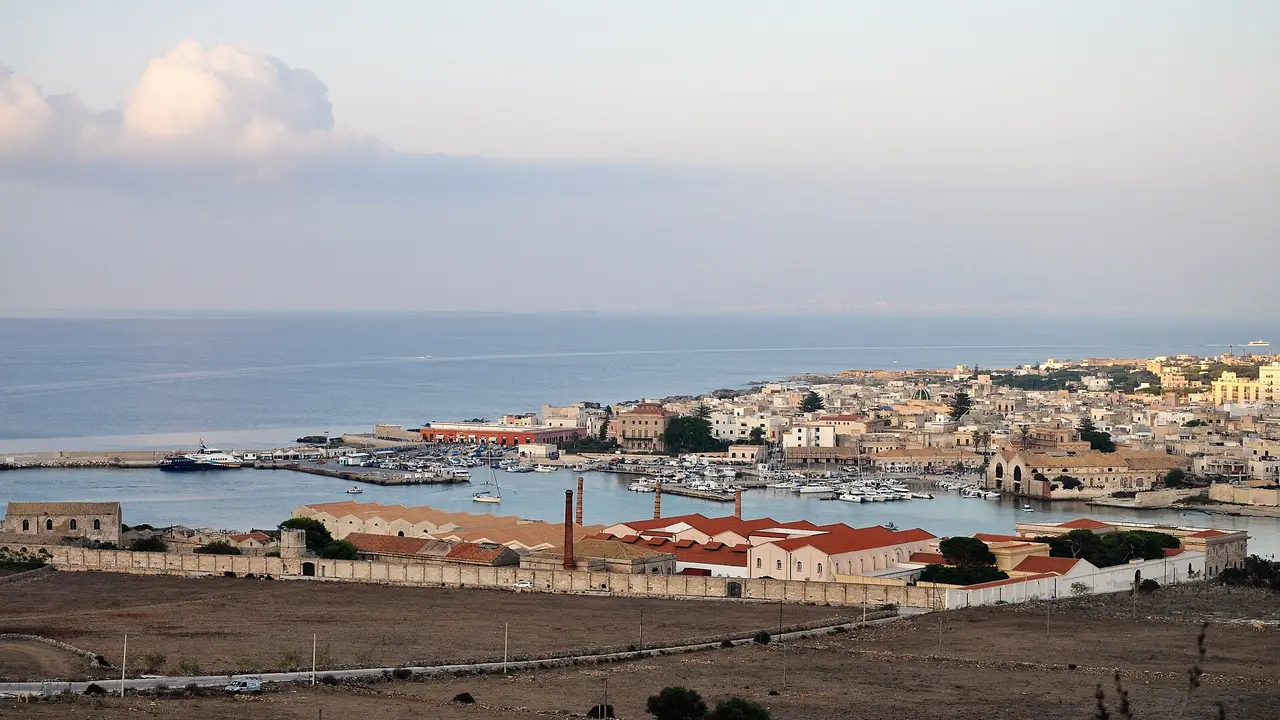
The success of The Odyssey no longer stops at the movie theater. After turning Imax into a destination, Christopher Nolan‘s film is now moving its power onto the tourist map. Favignana, the Sicilian island chosen to stand in for Ithaca, is already seeing what the Italian press calls the Nolan effect. According to estimates reported by Variety, the territory could attract about $287 million in tourism revenue over three years, and more than $500 million over the longer term if excitement converts into durable flows.
That figure says much more than a promotion campaign. It signals the new economic force of filming locations in an industry where movies no longer live only as cultural products, but as travel plans, social images, premium itineraries and promises of personal transformation. The viewer no longer wants only to see the world on screen. Sometimes the viewer wants to enter it, sleep there, have lunch there, post a photograph there and buy a piece of mythology.
When an island becomes a character
In The Odyssey, Favignana is not a simple backdrop. The Castello di Santa Caterina, the coves, the beaches and the sea lines give Odysseus’s return a physical substance. The viewer understands that the film is not selling only an ancient epic. It is selling a feeling of origin, a landscape that seems to have existed before cinema and that, through Nolan’s camera, enters the global imagination. It is precisely that alliance between antiquity and contemporary event that makes the place commercially usable for tourism.
The phenomenon is not new. Series, blockbusters and music videos have long transformed cities into destinations. But Favignana presents a rarer case. The island was not already a massive international product like Venice, Paris or New York. It arrives in the market of desire with a strong image, a precise identity and a story that is easy to tell: this is Nolan’s Ithaca. For a local economy, that formula is almost a brand.
Set-jetting becomes a mature industry
The term set-jetting, once amusing, now describes a real commercial mechanism. A fiction installs an image, social networks accelerate it, rental platforms turn it into inventory, tourism boards frame it, hotels move upmarket and restaurants become points of passage. Variety notes that Favignana was already being targeted in Airbnb listings after the trailer was released, before the film had even reached full speed at the box office.
The logic is clear. A global film lowers the storytelling cost of a destination. Instead of explaining at length why a place deserves a trip, it is enough to say that it belongs to a scene, a face, an emotion already shared. The destination saves years of storytelling. It borrows the story of a work that has already captured public attention, then converts it into bookings, excursions, longer stays, lifestyle press and influencer content.
The White Lotus comparison
The obvious precedent is The White Lotus. HBO’s series gave Taormina renewed international visibility and, according to estimates cited by Variety, generated a major tourism-revenue effect. But the Nolan case may be different. The Odyssey is not a hotel chronicle aimed at a premium-series audience. It is a global blockbuster, powered by a mythology several millennia old, a star-heavy cast and an event-theater strategy. Its audience is potentially broader, more family-oriented and more cross-generational.
That difference matters for local investors. A place associated with a series can benefit from a quick spike, often linked to a season. A place associated with a mythological work can extend desire, especially if local players know how to connect cinema with history, gastronomy, landscapes, ferry routes and cultural tourism. The Nolan effect then becomes less a wave than an infrastructure of reputation.
The risk of the image consuming the place
Success still has a fragile zone. An island is not an infinite platform. When a destination goes viral, it has to absorb expectations without losing what made it desirable. The danger is not only crowds. It is simplification. Favignana can be reduced to a film set, even though it is an inhabited territory, a maritime memory, a seasonal economy and a balance between protection and hospitality. Film tourism is powerful, but it can turn symbolic wealth into physical pressure.
This is where cultural luxury has a role to play. The right model is not necessarily maximum volume. It can be intelligent booking, limited routes, trained guides, partnerships with artisans and restaurateurs, and stays that tell the story of the place as much as the film. Cinema attracts. The destination must then teach. Otherwise, the global effect dissolves into queues, tense rents and interchangeable photographs.
Cinema as territorial capital
For B-EMPIRE, Favignana’s story shows how audiovisual production becomes territorial capital. A region does not gain only shooting expenses for a few weeks. It can gain a new place in the international imagination. The film acts as a reputational asset: it gives a place a form, an emotion and a legitimacy. Communities that understand this are no longer trying only to attract shoots. They are trying to organize what comes after the shoot.
What comes after is often the real business. It includes visitor circuits, multilingual content, agreements with travel platforms, collaborations with ferry companies, gastronomic experiences, exhibitions, editorial products and screening events. In the case of The Odyssey, the power of myth adds another layer. The visitor does not come only to find Christopher Nolan. The visitor comes to find an idea of return, waiting, travel and home.
A new geography of prestige
Hollywood long sold faces. It increasingly sells places. In an experience economy, landscapes become extensions of franchises, even when the work is not officially a franchise. The Odyssey proves that large-scale auteur cinema can create demand comparable to a branded universe. Favignana does not need a theme park. It has a cliff, a fortress, a sea and a story now tied to a global image.
The most interesting point may be the shift in power. Studios, platforms, tourism boards, luxury brands and accommodation owners suddenly share the same economy of aura. Each wants to capture part of the emotion created by the film. Favignana’s challenge will be not merely to be consumed by that aura, but to govern it. A place that becomes famous has to learn how to choose its own rhythm.
The journey after the credits
The Odyssey therefore confirms a shift in contemporary cinema. A major film no longer ends with the credits. It continues in search engines, booking platforms, travel reels, lifestyle articles and summer decisions. For Favignana, that continuity can become an immense opportunity if it remains controlled. For the industry, it is a reminder that box office is only part of the value. The other part plays out in the territories the film suddenly makes unavoidable.
In 2026, the Nolan effect is therefore not only proof of artistic power. It is a demonstration of cultural business. A camera can turn an island into a destination. A myth can again become an economic engine. And a blockbuster, when strong enough, can make the public travel twice: first toward the screen, then toward the real world that made it possible.
Sources
- Variety Australia, Favignana and tourism-revenue estimates linked to The Odyssey
- WestSicily TV, the Nolan effect in Favignana and local estimates
- The Guardian, The Odyssey filming locations and tourism pressures
- Variety Australia, The Odyssey global performance and Imax weight
- NBCUniversal, behind the scenes and production locations of The Odyssey