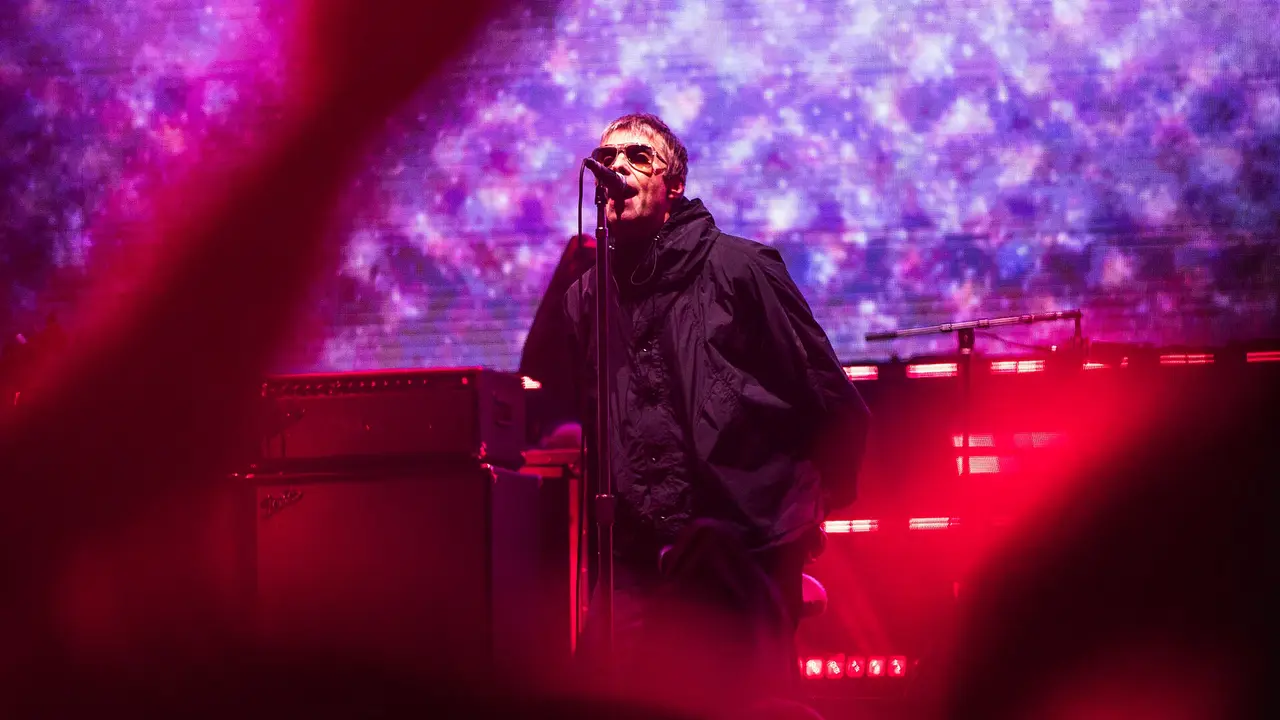
Oasis has announced nothing officially, yet a few seconds of footage have put Europe on alert. On September 10, the British band shared short videos featuring Amsterdam, Paris and Rome, accompanied by an acoustic version of Don’t Look Back in Anger. The choice of cities, just before the international release of the documentary about the reunion, feels like a carefully designed signal.
The immediate question is whether Liam and Noel Gallagher are preparing a European tour. No date has been confirmed, and an intriguing post is not a contract. Still, the timing, the geographic clues and Oasis’s renewed commercial power make the possibility credible. Paris is especially important because it connects the global campaign to the place most closely associated with the band’s 2009 collapse.
Three cities, one anthem and a global mystery
According to El País, Oasis’s clips show Amsterdam, Paris and Rome, plus a visual reference to Catalan painter Joan Miró. An acoustic performance of Don’t Look Back in Anger connects the posts with the film of the same name. The capitals suggest a continental route, while the song turns a marketing campaign into a story about forgiveness.
The method fits the modern stadium business. Before posters, ticket prices or venues appear, a handful of clues can generate millions of searches and conversations. Oasis possesses an unusual advantage: its silence attracts almost as much attention as a press conference. Every image becomes part of a puzzle assembled publicly by fans.
The documentary turns a comeback into legend
Oasis: Don’t Look Back in Anger, directed by Dylan Southern and Will Lovelace, follows the 2025 reunion tour. It premiered out of competition at the 83rd Venice Film Festival before an international cinema and IMAX release on September 11. The Associated Press describes a film about two brothers reconciling and about songs that retained their power through fifteen years of separation.
The film does more than record concerts. It captures the moment when a legendary feud stops, at least temporarily, defining the band. Liam and Noel had not performed together since the 2009 breakup following a backstage confrontation at Rock en Seine near Paris. That history makes the French capital’s appearance in the new campaign unusually symbolic.
Venice proves the phenomenon is bigger than music
At Venice, the film drew an ovation and reviews that ranged from enthusiastic to cautious about its sentimental tone. Variety called the portrait surprisingly polite for a famously chaotic band. The British Film Institute emphasized the Gallagher brothers and the documentary’s devotion to fans. The disagreement is revealing: Oasis is no longer merely touring but becoming cultural history while the cameras are still rolling.
The filmmakers followed rehearsals and concerts around the world, with Peaky Blinders creator Steven Knight writing the screenplay. The narrative is irresistible: two brothers, a public rupture, fifteen years of waiting and packed stadiums. Few music brands possess a story that translates so easily across borders and generations.
Paris would be more than another concert stop
For French audiences, a Paris show would carry exceptional weight. Rock en Seine remains linked to the 2009 split, when Oasis cancelled at the last minute. A return to the Paris region would close a perfect narrative circle: the scene of the fracture could become the setting for a reunion celebrated by both old followers and a younger crowd.
That explains why the mere appearance of Paris matters. It activates the memories of longtime fans and the curiosity of listeners who discovered Wonderwall, Live Forever and Champagne Supernova through streaming. Nineties Britpop now behaves like global heritage, passed on through playlists, social platforms and premium audiovisual productions.
An economic machine becomes irresistible again
The 2025 tour proved the demand was more than nostalgia. Disney’s official Japanese site says the production attracted more than two million people across five continents. That scale places Oasis among the few acts capable of turning a reunion into a global event and extending its value through cinemas, streaming, catalogue listening and potentially another run of live shows.
The strategy creates a powerful loop. The tour supplies images for the documentary. The film preserves the emotion after the stadiums empty. European clues then renew the promise of live experience. Disney gains an international event, cinemas gain a communal attraction and Oasis gets a platform for measuring demand without making an early promise.
What is known and what still needs confirmation
The established facts are straightforward: the documentary premiered at Venice, its wider release is imminent and the band has published material associated with several European cities. However, no tour, venue or Paris date has been officially announced in the sources reviewed. Fans should therefore follow official channels and avoid premature resale offers.
Even without confirmation, the message has already worked. Oasis has shown it can still interrupt the global cultural news cycle with a few images, one melody and two surnames. If a European tour follows, Paris will not be an ordinary stop. It will symbolize a story that the band once appeared to have broken forever.
Sources
- Associated Press, September 6, 2026 — Venice premiere, IMAX release and reconciliation story.
- El País, September 10, 2026 — Amsterdam, Paris and Rome clips and European speculation.
- British Film Institute, September 9, 2026 — review and official trailer.
- Disney Japan, August 27, 2026 — limited release and tour scale across five continents.