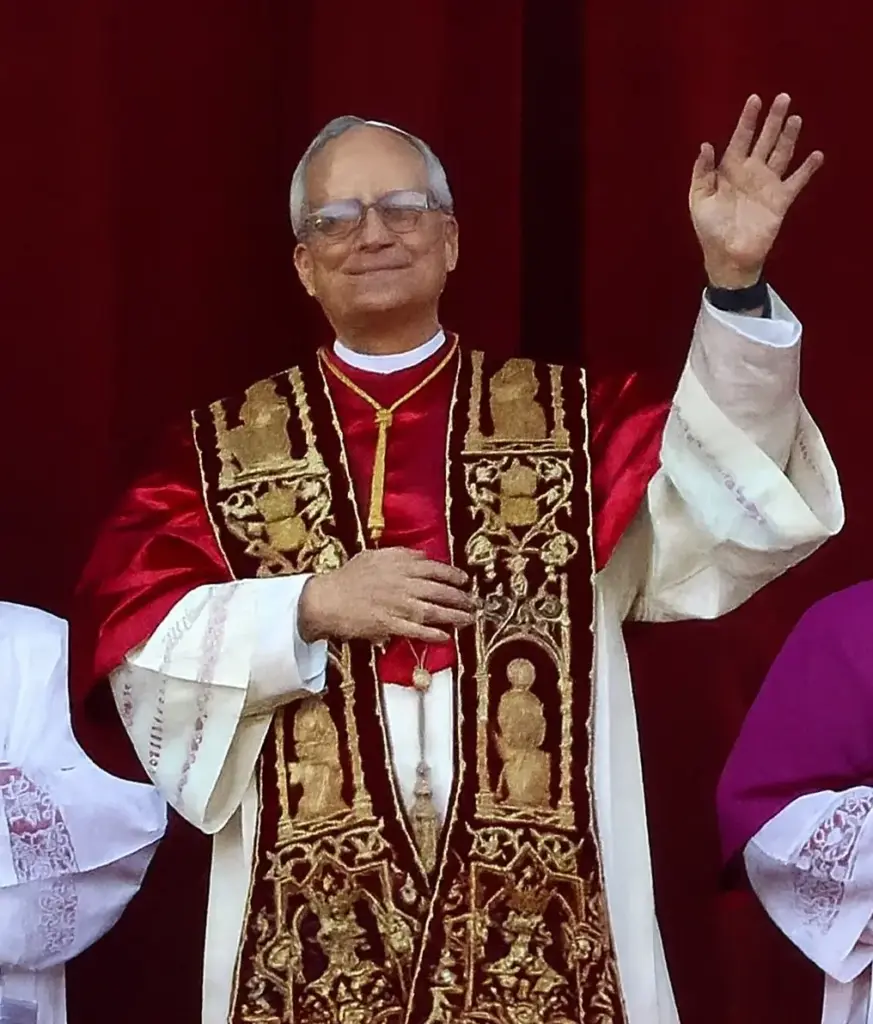
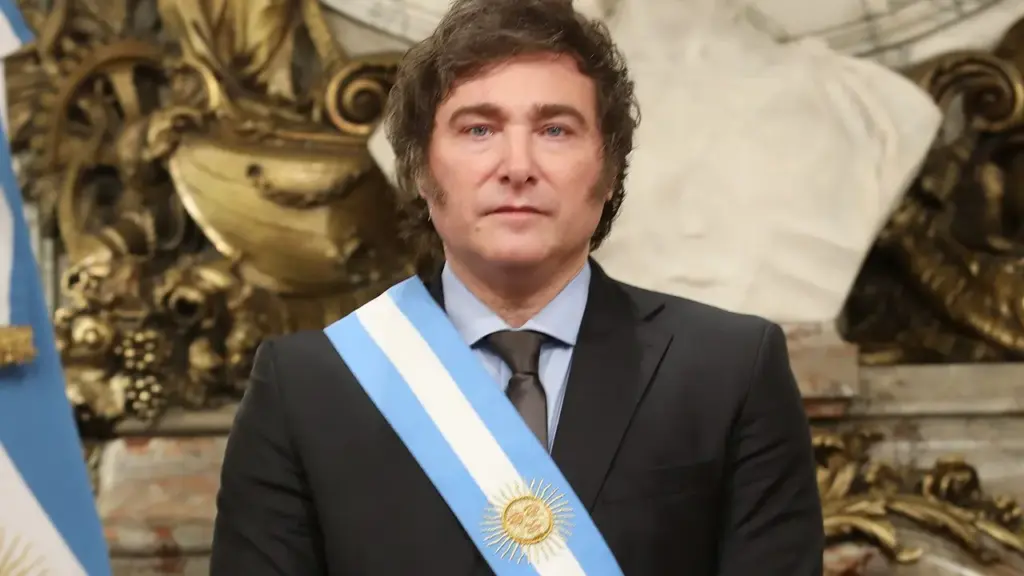
In the Face of Milei, Pope Leo XIV Issues a Warning the World Cannot Ignore
In Buenos Aires, Pope Leo XIV has placed vulnerable individuals at the center of his historic visit to Argentina. In the face of Javier Milei, his message on economy, democracy, and social justice resonates far beyond the country's borders.
This is not an official confrontation, but the message is impossible to miss. On the second day of his visit to Argentina, Pope Leo XIV chose to meet with disabled and vulnerable individuals at a time when Javier Milei‘s budget cuts are deeply dividing the country. Through his words, but also through the symbolism of his itinerary, the pontiff reminds us that an economy cannot be judged solely by the balance of its accounts: it must also be measured by how it treats those with the least power.
The scene transcends the religious framework. It pits two visions of society against each other. On one side, the Argentine president advocates for a shock therapy aimed at reducing public spending, containing inflation, and transforming the state. On the other, Leo XIV emphasizes human dignity, social cohesion, and the responsibility of leaders toward the most fragile. The pope does not deliver a partisan speech, but his warning resonates in all democracies facing the same dilemma: how far can spending be reduced without unraveling the social fabric?
A Historic Visit Charged with Political Tension
Leo XIV arrived in Argentina on Sunday, November 8, after a stop in Uruguay. His meeting with Javier Milei at the Casa Rosada followed protocol: official honors, gift exchanges, a private conversation, and speeches before the authorities. However, behind the institutional images, the contrast between the two men was already evident.
Before the president and the diplomatic corps, the pope defended a conception of power based on the common good, the strength of institutions, and cooperation. He also stressed the need to protect democracy against polarization, corruption, and social fractures. This speech comes at a time when austerity, wages, imports, and the future of public services are at the heart of the national debate.
The historical significance of the visit further amplifies its impact. According to Deutsche Welle, this is the first papal visit to Argentina in nearly forty years. The pope’s homeland had never hosted him during his pontificate. The arrival of his successor thus transforms each stop into a political, spiritual, and popular event.
Why the Choice of a Home for Disabled Individuals is So Powerful
On Monday, November 9, Leo XIV visited the Pequeño Cottolengo Don Orione in Claypole, south of Buenos Aires. This Catholic institution houses over 300 disabled individuals. The choice of location is not incidental. It brings to the forefront citizens who are directly suffering the consequences of reduced aid, care, and support structures.
Associated Press describes this visit as a particularly strong reminder to the government: the most vulnerable must not become a variable of adjustment. The pope extended the message he delivered the day before, calling for growth and public decisions to serve the entire population. By standing alongside disabled residents, he gives a concrete face to a debate often reduced to budget tables.
The gesture is also global. Many governments are seeking to reduce their deficits after years of crises, high debt, and rising living costs. Argentina thus becomes a political laboratory observed well beyond Latin America. The question posed by Leo XIV can apply to Europe, the United States, Africa, or Asia: is a reform sustainable if it improves indicators but abandons part of the population?
Milei Defends His Economic Shock, the Church Warns of Human Costs
Javier Milei has built his power on the promise of breaking with decades of imbalances. His government has cut spending, deregulated sectors, and opened the economy further. His supporters highlight the progress made against inflation and the need to restore the country’s financial credibility. His opponents emphasize the decline in purchasing power, threatened jobs, and the weakening of essential services.
Argentine bishops have regularly criticized the social effects of these policies. According to an analysis cited by Associated Press, 42 of the 44 public policy documents published by the episcopal conference between January 2024 and September 2026 have criticized the Milei administration, particularly regarding poverty and migration. This longstanding contention explains why the pope’s visit is scrutinized as a test of symbolic strength.
Social data lends weight to this concern. AP reports that in the first half of 2026, poverty affected 32.3% of the Argentine population, or about 15 million people. This figure alone does not summarize the economic record, but it illustrates the scale of the population exposed to every decision regarding wages, aid, prices, or health.
A Warning on Democracy and Artificial Intelligence
The disagreement is not limited to the budget. In his speech to the authorities, Leo XIV linked social justice, democratic quality, and new technologies. He reminded that innovation, including artificial intelligence, should not turn individuals into mere data or reinforce inequalities. This dimension gives his intervention a much broader significance than the Argentine political duel.
The pope defends a simple idea: efficiency is not a sufficient end. A high-performing technology, a stabilized economy, or a streamlined state can produce spectacular results, but they must remain at the service of the person. In a world where governments automate their services and companies use AI to decide faster, this reminder directly touches the global debate on responsibility.
Why This Visit Could Define Pope Leo XIV’s Pontificate
This trip is one of the first major international tests for Leo XIV in Latin America. He is traversing Uruguay, Argentina, and Peru from November 6 to 17. In Argentina, he is set to meet with representatives from the labor world, religious leaders, and youth, before continuing his program in Córdoba and Luján.
His method is already clear: avoid personal confrontation while choosing symbols that are impossible to neutralize. He shakes hands with the president, respects institutions, and speaks to the entire country. But he also reaches out to those whom the economic debate often leaves voiceless. This combination of diplomacy and firmness may become a hallmark of his pontificate.
For Milei, the visit offers international recognition, but it also imposes a mirror. The president can defend his results and his democratic mandate; he cannot ignore the question posed before the world: who pays the price of transformation? For Leo XIV, the stakes are equally significant. He must prove that the Church can intervene in major contemporary debates without reducing itself to a political camp.
The Signal Leaders Can No Longer Evade
The meeting between Leo XIV and Argentina’s Javier Milei will likely remain one of the most political moments of this trip. Not because the pope called for the overthrow of a specific policy, but because he shifted the center of the debate. Instead of merely asking whether austerity works, he compels everyone to ask for whom it works and at what cost.
In Buenos Aires, the duel is not one of two men seeking the same victory. Milei wants to demonstrate that his economic shock can save Argentina. Leo XIV wants to remind us that no rescue is complete if it leaves the most fragile by the wayside. It is this calm yet profound tension that transforms a papal visit into a global warning.
Sources
- Associated Press, Pope Leo XIV’s visit to the Don Orione home and Argentine social context, November 9, 2026.
- Holy See Press Office, official program and speech of the pope to Argentine authorities, November 8, 2026.
- Vatican News, itinerary of the visit to Argentina and stops from November 9 to 11, 2026.
- Deutsche Welle, economic and democratic significance of the message addressed to Argentina, November 9, 2026.