Vancouver Sets a New Standard : The Indigenous Fashion Stage the World Can No Longer Ignore
Over 30 Indigenous creators have made Vancouver a capital of fashion rooted in land, memory, and innovation. The message extends far beyond the runway.
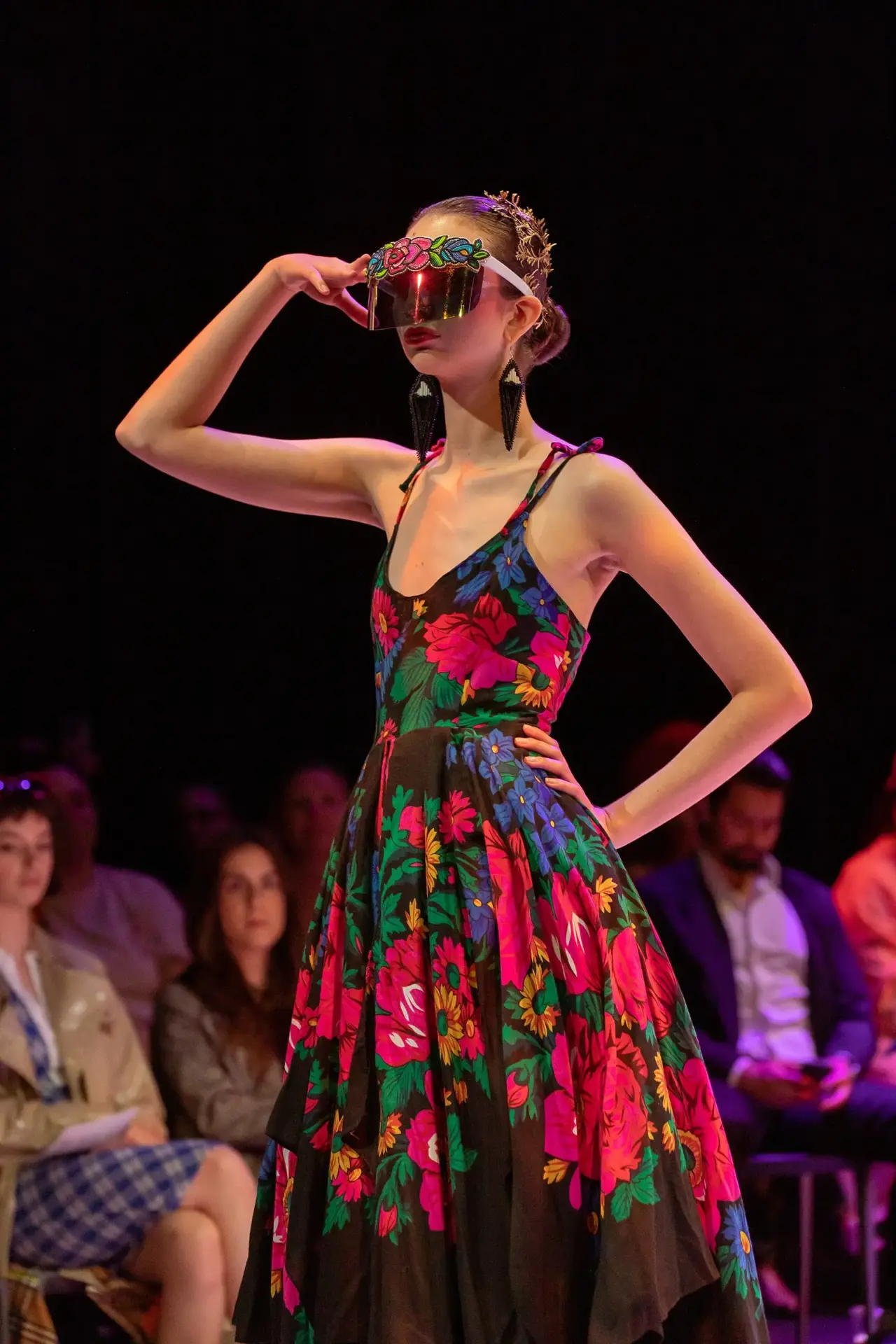
Vancouver has sent a message that major fashion capitals can no longer treat as a peripheral trend. For four evenings, over thirty Indigenous creators transformed the Queen Elizabeth Theatre into a space of memory, commerce, and future. The Vancouver Indigenous Fashion Week 2026 did not merely showcase clothing; it demonstrated who owns the narratives, who masters the craftsmanship, and who decides how a culture enters the global market.
Themed “Earth,” this edition concluded on November 21 with “Spirit of the West Coast,” an evening dedicated to coastal traditions, formline language, weaving, and contemporary creation. The official program brought together established and emerging names from various Indigenous nations of North America, often referred to as Turtle Island.
A Finale Where Earth Becomes the Language of Fashion
The word “Earth” was not mere marketing decor. It connected material, territory, family stories, and environmental responsibility. On the closing stage, clothing appeared as a living object: it could carry memory, signal belonging, transmit technique, or assert a political vision without losing its aesthetic power.
The Vancouver Civic Theatres describes the finale as a celebration of the land, water, and peoples of the West Coast. This formulation encapsulates the uniqueness of the event. While some Fashion Weeks still use Indigenous cultures as a reservoir of images, Vancouver gives voice and commercial space to the creators who are the rightful heirs and interpreters.
The programming for the final evening featured Chepximiya Siyam’ Janice George and Skwetsimeltxw Willard “Buddy” Joseph, co-founders of L’hen Awtxw Weaving House, along with Debra and Aleen Sparrow, Tierra Alysia with VIVIDUS, Troy Armstrong, and T.O.C. Legends House of Design. These names do not represent a single Indigenous style. They make visible a plurality of nations, techniques, and trajectories.
Four Nights, Four Narratives of Cultural Power
The architecture of the event avoided the catch-all fashion show. The opening night, Red Dress Night, paid tribute to missing or murdered Indigenous women, girls, men, Two-Spirit, and LGBTQ+ individuals. The red was not merely a spectacular color: it carried mourning, resistance, and the demand for justice.
The second evening, “All My Relations Couture,” placed haute couture under the sign of connections between generations, families, and communities. The third, “Indigenous Futures,” brought together streetwear, hip-hop, contemporary art, and Indigenous sovereignty. This choice is decisive: it refuses to confine creators to the past and asserts their right to imagine the future.
Finally, “Spirit of the West Coast” closed the week with the skills of the Pacific Coast. Together, the four acts tell a comprehensive story of fashion, capable of occupying ceremony, luxury, street, and market. They also show that tradition and innovation are not opposing forces. An inherited technique can become the starting point for a radically contemporary silhouette.
Why This Stage Goes Beyond Canada
The rise of Indigenous fashion is part of an international movement. In 2025, the Associated Press documented the collaboration between the Santa Fe Native Fashion Week and Vancouver, with creators circulating between Canada and the United States. The agency emphasized a crucial point: there is no uniform Indigenous aesthetic, but expressions tied to distinct nations, teachings, and histories.
This circulation is changing the geography of the industry. Paris, Milan, London, and New York remain major centers, but they no longer solely possess the power to designate what matters. Vancouver, Santa Fe, and other Indigenous platforms are building their own networks of models, media, buyers, and collaborations. They are not merely seeking an invitation: they are creating their institutions.
The economic potential is real. Pieces that blend weaving, beading, leather, fur obtained through regulated practices, graphics, and contemporary cuts attract a global audience in search of meaningful objects. However, this demand imposes vigilance: success must not become a new form of extraction where symbols are copied while communities remain excluded from revenues.
The Invisible Battle Against Appropriation
In fashion, an image can be reproduced in a matter of hours. A pattern seen on a runway circulates on social media, inspires a collection, and can end up on an ultra-fast fashion platform without its origin being cited. For Indigenous creators, the risk is not only about copyright. Some signs, materials, or techniques carry cultural significance that cannot be reduced to a trendy print.
An Indigenous-controlled Fashion Week changes the power dynamics. It allows creators to contextualize their pieces, name their nations, choose their partners, and meet the public directly. The stage becomes an infrastructure of cultural sovereignty: it organizes visibility instead of enduring it.
This issue concerns the entire global industry. Consumers want traceability, but it does not stop at the factory or carbon footprint. It also pertains to the provenance of a design, the legitimacy of its use, and how value returns to those who have preserved the knowledge.
A Different Definition of Sustainability
Sustainable fashion is often presented through numbers: recycled materials, emissions, water usage, or product lifespan. The 2026 edition of Vancouver adds a deeper dimension. A garment is sustainable when it maintains a relationship between generations, respects the territory, and allows a community to pass on a practice.
This approach does not exempt brands from measuring their environmental impact. Instead, it broadens the question. An eco-friendly material is not automatically just if it erases the people who worked it or transforms a sacred symbol into a disposable product. Conversely, small-scale production rooted in local know-how can offer a value that large chains struggle to replicate.
For international houses, the message is clear: collaboration requires more than an inspired mood board. It necessitates recognizing the author, negotiating rights, sharing revenues, and accepting that some references may not be available for commercial use. Creativity does not disappear with these rules. It becomes more precise and responsible.
True Luxury Might Be the Relationship
Global luxury speaks much about craftsmanship, heritage, and rarity. Indigenous fashion forces this discourse to confront a simple question: who has the right to tell the heritage? In Vancouver, the answer does not come from a marketing department. It comes from creators who connect the piece to a family, a territory, and a living story.
This may be where the Google Discover strength of this event lies: in the contrast between the immediate beauty of the runway and the depth of what it defends. The silhouettes may captivate in a second, but their true value emerges when one understands the relationships they contain.
Vancouver has not sought to become a copy of Paris or New York. The city has shown that a fashion capital can be built differently, starting from the place rather than erasing its roots. This model remains fragile, facing challenges of funding, distribution, and intellectual property protection. But it already possesses what many large events attempt to buy: an identity that cannot be artificially manufactured.
The Signal the Fashion World Can No Longer Ignore
The Vancouver Indigenous Fashion Week does not single-handedly overturn the hierarchies of the industry. However, it proves that another center of power exists. More than thirty creators, four coherent narratives, and a major municipal stage are enough to elevate Indigenous fashion from a curiosity to an organized cultural force.
The next challenge will be continuity: converting attention into orders, jobs, protected rights, and sustainable careers. If this infrastructure grows without losing control of its narratives, Vancouver could become one of the places where the future of truly global fashion is decided. The runway may have dimmed, but the message remains bright: Indigenous creators are no longer waiting for the industry to discover them. They are already building the world that the industry will need to join.
Sources
- Vancouver Indigenous Fashion Week — Official program and designers 2026
- Vancouver Civic Theatres — Spirit of the West Coast, closing night
- Associated Press — International rise of Indigenous fashion and Vancouver-Santa Fe collaboration
- Miss604 — Schedule and architecture of the four evenings of VIFW 2026