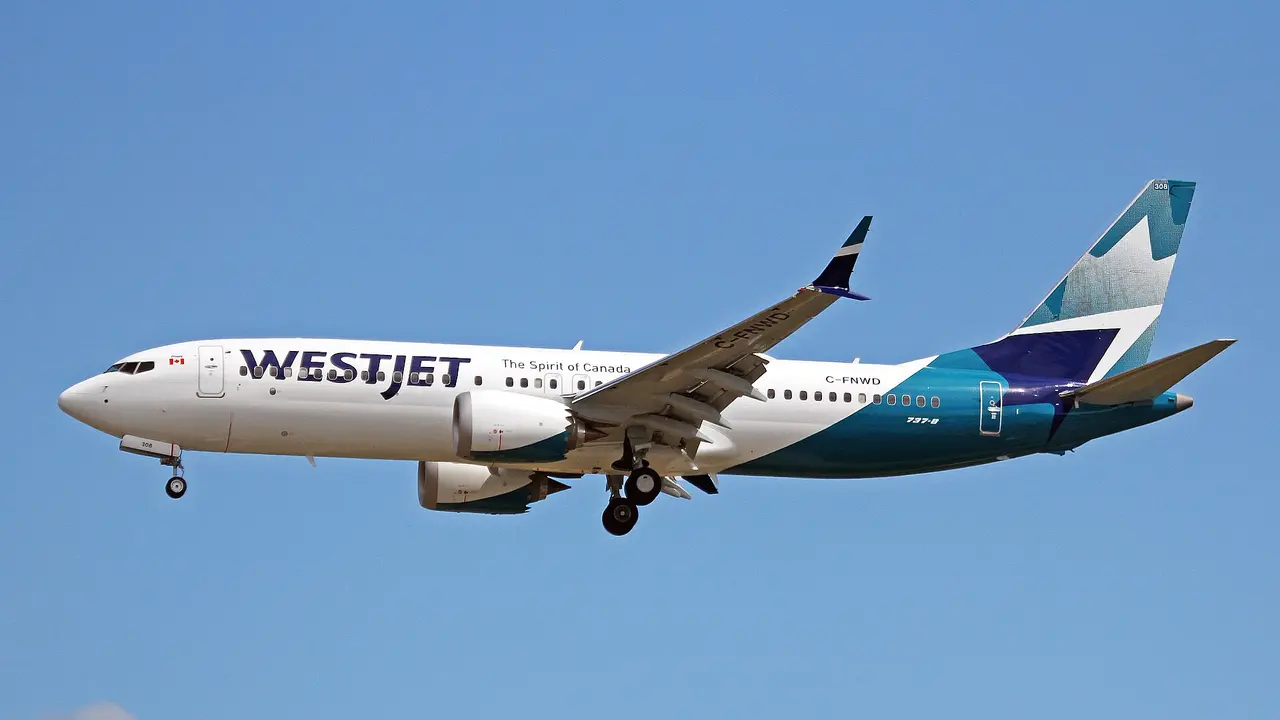
WestJet’s labor crisis is not only a story about cancelled flights during a busy travel weekend. It exposes the economic heart of modern travel: an airline can sell passengers a feeling of smoothness while leaving part of the work that creates that smoothness in the shadows. In early August 2026, cabin crews at Canada‘s second-largest airline walked out in a dispute centered on pay for time spent on the ground. Days later, WestJet and CUPE announced a tentative agreement. Traffic could resume, but the issue itself did not disappear.
According to the Associated Press, the strike began on August 2, with more than 300 flights cancelled at the start and severe disruption during a Canadian long weekend. CUPE represents roughly 4,400 cabin crew members at WestJet. The core of the dispute sits inside an almost technical phrase: the credit-hour system. The company argues that this model compensates a full range of duties; the union says key parts of the job before and after flights remain insufficiently recognized.
Ground Time Becomes a Strategic Asset
Air travel has long focused its imagination on the aircraft in flight: punctuality, seat, route, destination. But the passenger experience is also made in less spectacular minutes: boarding, safety checks, instructions, helping families, calming tense moments, preparing the cabin, missed connections and accumulated delays. This ground time is now becoming a strategic asset. Without it, the commercial promise of aviation starts to crack.
WestJet has publicly defended its model, explaining that credit hours combine several elements of the duty day rather than following a simple clock. In its bargaining material, the company said it wanted to remain competitive while making improvements. CUPE, for its part, described the August 3 tentative agreement as progress because it introduces a duty-period premium and recognizes more of the work cabin crews are required to perform. The important word is this: recognizes.
A Short Strike, a Long Signal
The duration of the stoppage therefore does not fully measure its impact. A strike lasting a few days can cost an airline money, but it can also change the grammar of an industry. In aviation, where margins depend on load factor, fuel, aircraft rotations and trust, every labor conflict quickly becomes a brand question. Passengers do not always read the details of a collective agreement; they see cancellations, lines, urgent emails and uncertainty around departure.
That is why WestJet’s response was double-sided: negotiate with the union and reassure the travel market. The company communicated about possible changes, affected flights, services that would not be disrupted and the gradual restoration of operations. It knew the battle was not taking place only at the bargaining table. It was also taking place inside perceptions of reliability, an essential form of capital for an airline carrying tens of thousands of passengers a day.
Invisible Work Is Becoming Visibly Expensive
The WestJet case connects to a wider question across service industries: who pays for invisible time? In hospitality, restaurants, delivery, health care and platforms, much of the customer value depends on actions that do not always appear clearly in the final price. Aviation adds a safety dimension. Cabin crews are not only present to smile, serve and reassure. They embody a function of safety, coordination and risk management.
That dimension makes the labor debate more sensitive. When a union talks about ground duties, it is not discussing a marginal part of the job. It is describing the space where commercial service meets a safety obligation. For airlines, recognizing more of that time means accepting higher costs in some areas. For workers, failing to recognize it devalues the part of the job that makes the flight possible before the aircraft even leaves the gate.
Reputation Is Also a Financial Risk
The context is heavier because WestJet also agreed, according to The Guardian, to a 4.5 million Canadian dollar settlement in a sexual harassment class action involving female flight attendants. The agreement, approved in British Columbia, includes no admission of wrongdoing, but it provides for a third-party investigation into harassment and reporting systems. That case is separate from the pay dispute, but it reinforces the same reading: airlines can no longer treat workforce governance as a secondary subject.
In a service economy, internal reputation becomes visible outside the company. Travelers can compare prices, but they also compare trust. Investors watch costs, but they also watch litigation risk, strike risk, governance risk and employer brand. Post-pandemic aviation has not only rebuilt routes; it must rebuild a clearer social contract among airlines, employees and passengers.
A Precedent for North American Aviation
The WestJet case is not isolated. AP notes that Air Canada flight attendants had recently carried out a strike involving a comparable issue of ground work. That points to sector-wide pressure. Cabin crews are not only challenging one line of pay; they are challenging an architecture of recognition. And when several carriers confront the same problem, it is no longer a local incident. It is a model adjustment.
For B-EMPIRE, the signal is clear: aviation is entering a phase in which the battle over costs can no longer ignore the battle over time. The value of travel is not found only in the ticket, the fare algorithm or the destination network. It also lives in the minutes before takeoff, in the gestures that prevent chaos, in the crews who absorb complexity. WestJet has found a tentative agreement. The sector has received a reminder: the ultimate luxury of modern transport is labor that is recognized before it becomes invisible.
Sources
- Associated Press via LMT Online, report on the WestJet cabin crew strike published on August 2, 2026.
- WestJet via CNW/Yahoo Finance, announcement of the August 3, 2026 tentative agreement.
- CUPE 8125 via Business Wire/Yahoo Finance, union statement on the August 3, 2026 tentative agreement.
- WestJet, official explanation of cabin crew compensation.
- The Guardian, report on the sexual harassment class action settlement published on August 12, 2026.