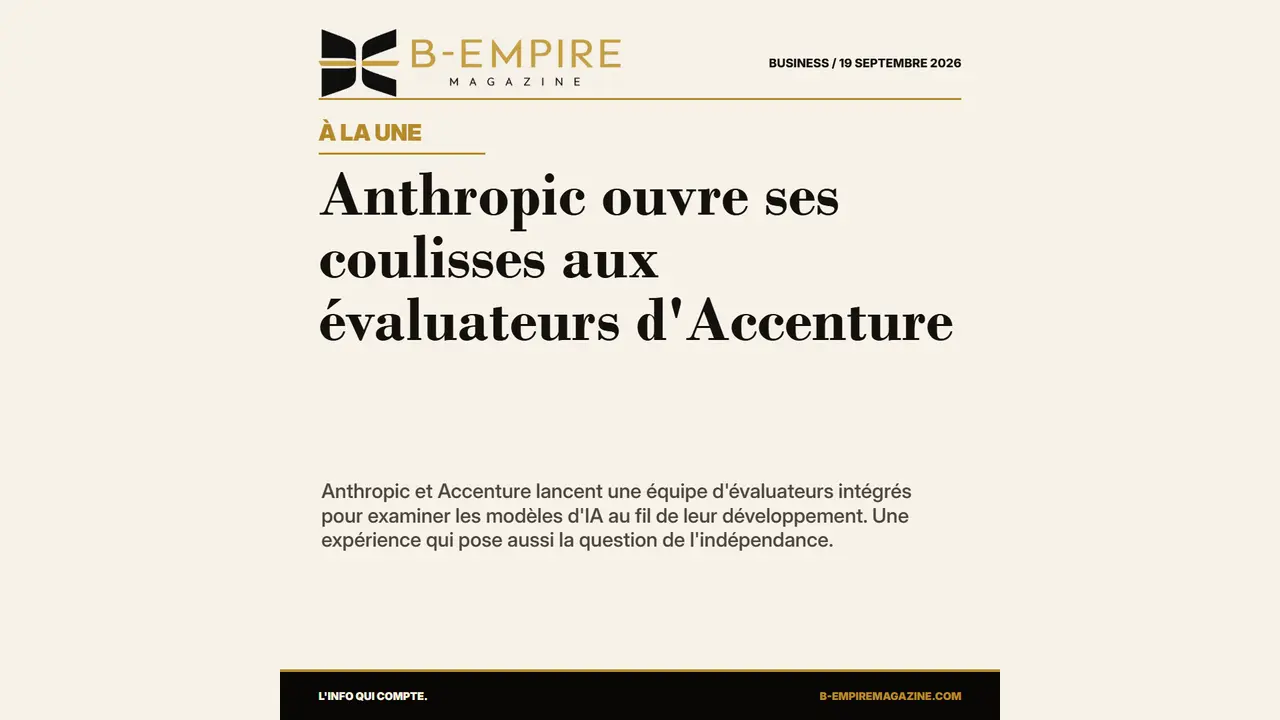
What if an artificial intelligence model were audited before it was released? On September 18, Anthropic and Accenture announced plans for an embedded evaluation team inside the AI lab. Its task is to examine models, test their safeguards and observe development closely enough to flag problems that might escape tests conducted at the end of the process. The idea sounds straightforward, but it moves a delicate boundary: the one between the company building a system and the people expected to judge its risks.
Seeing the process, not just the product
An external evaluator usually receives a model or a defined level of access to conduct tests. The proposed arrangement goes further. According to Anthropic, embedded evaluators could have access comparable to an employee’s, follow design and deployment decisions, speak with teams and watch models during training. Accenture says the work will include adversarial testing, alignment assessments and checks of model safeguards.
That proximity could change the questions being asked. An output test asks whether a system answers properly or can be misused. A process review also asks why certain capabilities were developed, how warnings were handled and who made release decisions. The promise is not to eliminate risk. It is to make safety commitments more verifiable while consequential decisions can still be changed.
A team between research and real-world use
The partnership will be led by Faculty, Accenture’s specialist AI business. Both companies emphasize two forms of expertise: technical model testing and experience deploying systems in organizations. The latter matters. A model does not operate only in a lab; it enters tools, procedures and settings where the consequences of a mistake vary with the use case.
Anthropic and Accenture each say they expect to invest at least $1 billion over five years in building capacity in this area. That figure should not be mistaken for the price of a single audit, or for evidence that the arrangement already works. It indicates the scale of the announced effort while the practical details of this new kind of evaluation remain unsettled.
The paradox of independence funded by the lab
The most sensitive point is also the most concrete: Anthropic will directly fund Accenture’s work. A team can exercise independent judgment while being paid by the organization it reviews, but credibility then depends on explicit rules. What information can it inspect? Can it publish unfavorable findings? To whom can it report an incident, and how quickly? Anthropic acknowledges that standards for access and reporting, as well as a durable independent funding model, have not yet been established.
The lab therefore presents the deal as an early step, not a certification of its models. It says it is talking with METR and other nonprofit evaluators about pilots using different funding. In the longer term, it favors pooled or public funding and several organizations working with the same lab. The Accenture agreement is non-exclusive on both sides. That plurality could reduce reliance on one provider, but does not remove the need for transparency guarantees.
What to watch next
For businesses buying AI tools, the announcement does not yet provide a simple stamp of approval for a product. Instead it opens a useful set of questions: do evaluators see the important decisions, are their methods documented, can disagreements become public, and do incidents lead to visible changes? Embedded evaluation is worthwhile only if its findings can withstand the pressure of a commercial release schedule.
The real outcome of this partnership will therefore not be measured only by the number of tests performed. It will be seen in the quality of information shared and in whether outside observers can distinguish independent criticism from reassurance produced by the supplier itself. Opening the lab door is significant; the next question is what will be allowed to come out.
Evidence will need to be shareable
The difference between privileged access and meaningful oversight will depend on the form of the reports. Observation inside a company can reveal a problem early, but the public will learn little if findings remain locked in a contractual relationship. Disclosure rules, limits related to trade secrets and the way disagreements are explained will therefore matter. A useful report can protect technical details while clearly describing the scope examined and the reservations raised.
This tension also affects Accenture, which advises organizations using the technology while taking on an evaluation role here. Its deployment experience could improve the assessment of practical risks. It also makes clear boundaries between commercial engagements and judgments about models especially important. For now, the announcements describe an intention and proposed resources, not an independent assessment that has already been published. The arrangement will earn credibility through its first difficult decisions, especially if a finding slows a commercial release.