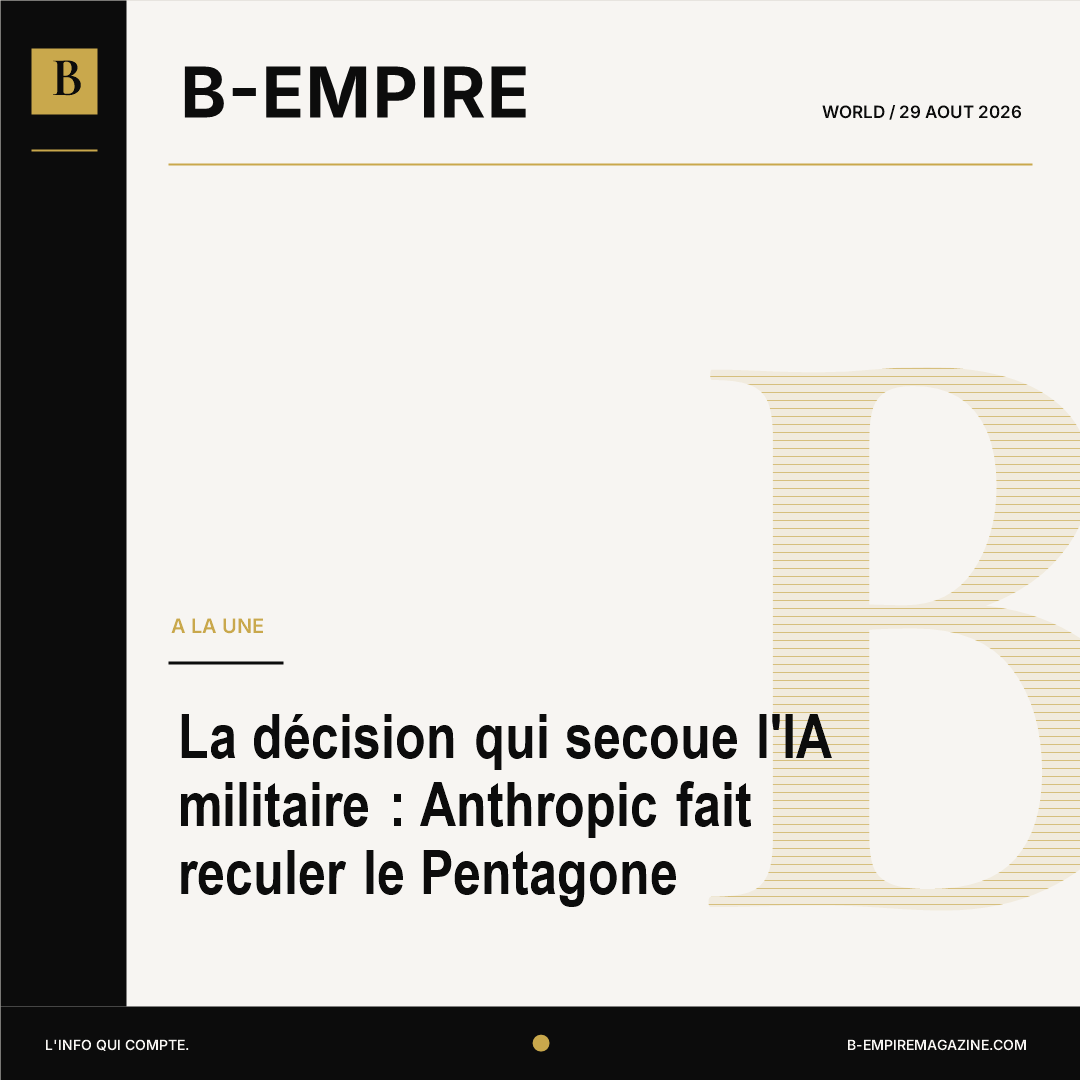
A technology company has just imposed a limit on the Pentagon â and the whole world should pay attention to what is unfolding behind this victory. On Thursday, August 27, 2026, federal judge Rita Lin overturned the measures that had placed Anthropic, the creator of the chatbot Claude, on a list of risks to the U.S. defense supply chain. The decision does not resolve the entire conflict, but it transforms a commercial battle into a major political precedent: can a government punish a technology provider for refusing certain military uses of its models?
According to the Associated Press and Reuters, the magistrate ruled that the Pentagon’s actions were illegal, lacking sufficient foundation, and contrary to constitutional protections. Anthropic argued that the administration sought to sanction it for its positions on domestic surveillance and fully autonomous weapons. The government, on the other hand, claimed that a private company should not be able to limit how the military employs legally acquired technology. This duel now extends far beyond Claude: it touches on the democratic control of systems capable of influencing military operations.
Why Anthropic Was Blacklisted
The conflict publicly erupted in February. Dario Amodei, CEO of Anthropic, had refused to grant the Pentagon unrestricted permission to use Claude. The company accepted applications for national security but maintained two red lines: mass surveillance of Americans and the development of autonomous weapons capable of operating without significant human control. For Anthropic, current models remain too unpredictable to wield lethal power on their own.
Defense Secretary Pete Hegseth subsequently labeled Anthropic as a risk to the supply chain. This designation, typically intended to protect military systems from infiltration or sabotage, could close off part of the defense contracts to the company and push federal suppliers to abandon its products. Reuters reports that Anthropic estimated potential losses at several billion dollars in 2026, not to mention the damage to its reputation.
The Ruling That Changes the Balance of Power
In a 59-page order, Judge Rita Lin concluded that the record did not demonstrate a real risk of sabotage by Anthropic. She found that the governmentâs response resembled more of a retaliatory measure against a criticism protected by the First Amendment. She also noted a procedural issue under the Fifth Amendment: the company had not been afforded a sufficient opportunity to contest the sanction before suffering its effects.
The central point is powerful. National security grants the state considerable powers, but it does not automatically constitute a universal justification. The court did not prohibit the Pentagon from choosing its suppliers or negotiating demanding terms. It held that the legal tool used here could not be employed to dismiss a company primarily due to its public disagreement with the administration.
An Important Victory, But Not the End of the Judicial War
Anthropic welcomed a decision recognizing the illegality of the designation. However, the case remains open. The U.S. government is expected to appeal the ruling, according to the Associated Press, and a second proceeding is pending in Washington regarding a measure that could exclude Anthropic from federal civilian contracts. Thus, the verdict of August 27 represents a clear victory, but not a definitive guarantee of a return to normal.
This uncertainty matters for investors and clients. Major AI labs are burning substantial sums to train their models and build infrastructures. Public markets represent both revenue, strategic legitimacy, and access to rare use cases. An administrative exclusion can thus alter the trajectory of a company, even when its products remain competitive in the private sector.
Military AI Between Speed and Red Lines
The battle reveals a tension that all democracies will encounter. Armies want to rapidly integrate AI to analyze images, assist logistics, detect cyberattacks, synthesize intelligence, and accelerate decision-making. Suppliers want to maintain rules that can prevent uses they deem dangerous, illegal, or incompatible with their mission. When these two logics collide, who ultimately decides: the state, the manufacturer, the judge, or Parliament?
The international context amplifies the urgency. On August 25, the United Nations and the International Committee of the Red Cross renewed their call for international rules on autonomous weapon systems. Their warning is based on a simple risk: the faster machines operate, the more human responsibility can become blurred. An identification error, biased data, or a poorly defined chain of command can then produce irreversible consequences.
What This Case Means for France and Europe
For France and the European Union, this American ruling is a useful signal. Europe seeks to strengthen its digital sovereignty while regulating high-risk AI systems. European defense administrations and companies will also need to draft contracts that clearly distinguish authorized uses, human controls, audit obligations, and accountability in case of incidents. A vague formula like “any legal use” is no longer sufficient in the face of rapidly evolving model capabilities.
The decision also serves as a reminder that dependence on a few American labs creates strategic fragility. If a political or legal conflict can abruptly withdraw a model from a network of public suppliers, governments must plan for continuity solutions. For France, this reinforces the interest in European models, sovereign infrastructures, and purchasing rules that avoid being locked into a single supplier.
A Global Precedent for Tech Leaders
The Anthropic case also sends a message to Silicon Valley leaders. Promises of “AI safety” are only valuable if companies are willing to sometimes forfeit contracts to defend them. By refusing two categories of use, Anthropic took a spectacular financial risk. Its judicial victory may encourage other suppliers to negotiate precise limits, but it could also push governments to diversify their partners or develop their own models.
The Pentagon had already struck deals with several tech companies to integrate AI into classified systems. The competition remains intense. The ruling does not grant any moral monopoly to Anthropic and does not prove that all its rules are perfect. However, it asserts that a disagreement over the limits of a technology cannot be transformed into an accusation of a threat to national security without evidence.
The Signal That Cannot Be Ignored
The victory of Anthropic shows that the race for military AI cannot advance solely through secret contracts, power plays, and promises of might. Courts, constitutions, engineers, and public opinion are now part of the equation. The issue is not to block all defense innovation, but to decide which functions must always remain under human responsibility and what guarantees are necessary before deployment.
The next step will be the government’s potential appeal and the outcome of the second proceeding. But the balance of power has already changed. A young AI company has challenged the world’s leading military power and secured the annulment of a major sanction. For both states and tech giants, the message is clear: computational power does not replace law, procedure, or democratic debate.
Reliable Sources
- Associated Press â Judge says Pentagon’s measures against Anthropic were illegal and baseless (August 28, 2026)
- Reuters â US judge blocks Pentagon’s Anthropic blacklisting (August 27, 2026)
- Axios â Judge blocks Pentagon’s Anthropic blacklist (August 28, 2026)
- Associated Press â UN and Red Cross call for rules on autonomous weapons (August 25, 2026)