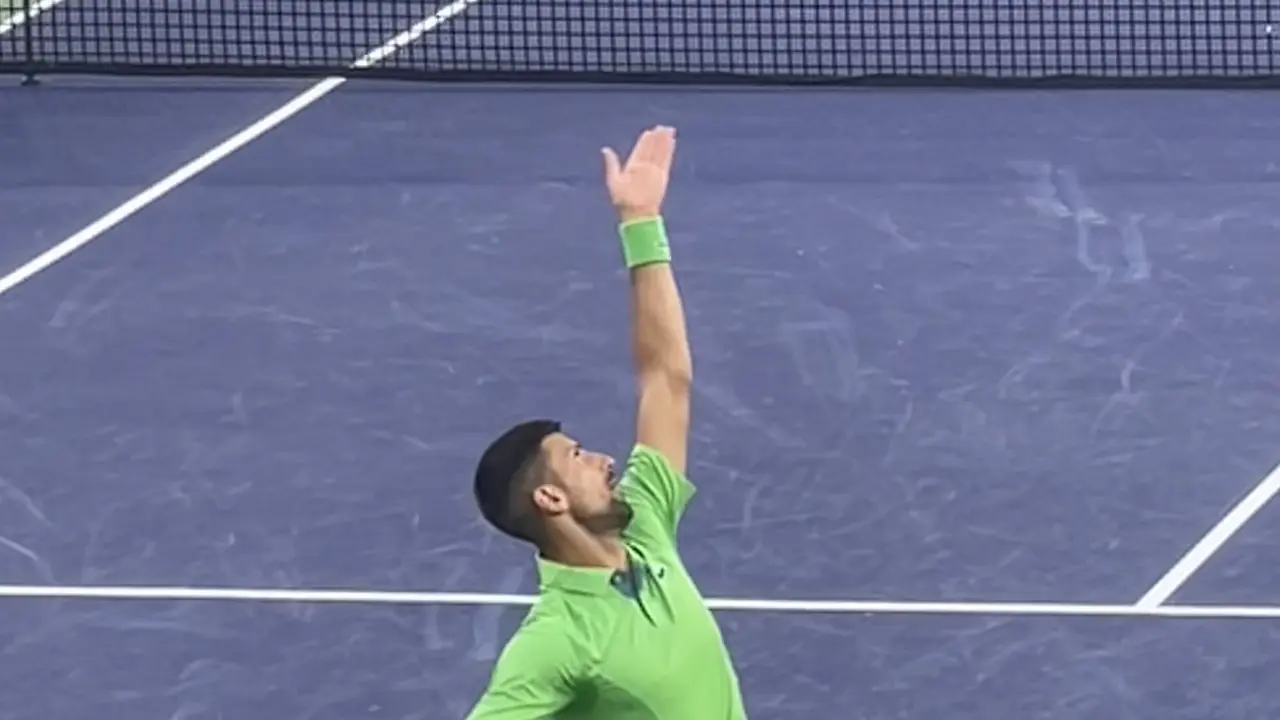
Prime Video launches Novak Djokovic: The Wolf in Winter on August 20, 2026, and the move is bigger than a sports documentary. Amazon is promoting a feature-length film about one of the most decorated and debated champions in modern tennis, with a worldwide release in more than 240 countries and territories. In a streaming economy where every platform is trying to hold attention without exhausting its fiction franchises too quickly, sport is becoming a major narrative asset.
The film arrives with powerful ingredients: 24 Grand Slam titles, an Olympic gold medal, 428 weeks as world No. 1 and intimate access to an athlete the public often knows through finals, controversies and records. Prime Video frames the documentary as the portrait of a champion forged by a childhood in wartime Serbia, then by a career built against polarization, the Federer-Nadal rivalry and the erosion of time.
Sport Is No Longer Only Live, It Is a Library
The platform strategy was long clear: buy live rights to create urgency and subscriptions. Live sport remains a major weapon because it resists replay, attracts advertisers and gives the calendar regularity. But Prime Video is showing a second layer: turning athletes, clubs and competitions into catalogue content that can be watched long after match day.
This logic is obvious in Amazon’s August offering. In the same month, Prime Video lines up Reacher, catalogue films, WNBA, NWSL, Yankees, ONE Championship, a preseason NFL game and the Djokovic documentary. The message is simple: sport is not a silo. It is becoming an entry point into a global platform where the subscriber can move from live events to documentary, from thriller to archive, from event to intimacy.
Why Djokovic Is a Perfect Streaming Subject
Djokovic is a rare character for a platform. He is at once a record book, an enigma and a cultural tension. The numbers place him at the top: 24 Grand Slams, 101 singles titles according to his official statistics, 40 Masters 1000 titles and a longevity that has defied the usual logic of professional tennis. But the narrative interest also comes from what resists numbers: public perception, championship solitude, mental discipline, family and faith in a method.
A champion who is too consensual can produce a smooth tribute. Djokovic allows for a more complex story. He has been admired, contested, applauded and sometimes rejected. He won in an era when two other giants already occupied the global imagination. The documentary can therefore work with a richer question than records alone: what does it mean to dominate when recognition never arrives simply?
Jason Hehir and the Grammar of Sports Prestige
The choice of Jason Hehir matters. The director of The Last Dance knows the grammar of the champion at twilight: archives, rivalries, prestigious witnesses, invisible pain and the making of a legend. Prime Video announces interviews with Rafael Nadal, Andre Agassi, Pete Sampras, Boris Becker, Jim Courier, Mary Carillo and Patrick McEnroe, alongside Djokovic and his family. That places the film in a tradition of prestige documentary, not just promotional content.
The risk in this format is always to turn the athlete into an overcontrolled monument. The best sports documentary does not merely celebrate. It reveals a contradiction. In Djokovic’s case, the contradiction is almost already written: the man who has won everything continues to search for something, even when records should have been enough. That gap can give the film its strength.
A Global Release, Multiple Audiences
Amazon says the film will premiere exclusively on Prime Video in more than 240 countries and territories. That scale changes the nature of the documentary. It is not aimed only at tennis fans. It also targets biography viewers, sports business audiences, followers of major rivalries and international publics who see Djokovic as a figure of national, social or family resilience.
Tennis is well suited to this internationalization. It is an individual, visual sport, easy to understand in its decisive moments but rich in subtext: etiquette, class, travel, solitude, body, silence, psychological duel. A documentary about Djokovic can therefore move beyond sports borders because it tells a story of obsession as much as ATP ranking.
The Business Hidden Behind the Emotion
For Prime Video, the documentary also serves a commercial architecture. Amazon reminds viewers that Prime Video includes films, series, Amazon MGM Studios, subscription content, FAST channels, rentals and purchases. Sport is therefore a value accelerator inside a broader ecosystem. A subscriber can come for Djokovic, stay for Reacher, watch a WNBA game, then rent a film. The documentary becomes an entry point, not an isolated destination.
This strategy illustrates the evolution of streaming. Platforms no longer only want to publish content. They want to organize habits. Sport is useful because it provides appointments, heroes and communities. Documentary extends those appointments into long-form emotion. That is the difference between watching a score and understanding a trajectory.
The End of a Career as a Narrative Genre
The Wolf in Winter arrives at a moment when the late career of great champions has become a genre of its own. Federer: Twelve Final Days, cited by Prime Video among its other sports documentaries, already showed the audience appetite for final chapters. But Djokovic is not only in farewell mode. He is still competing, still refusing closure, still inhabiting that troubled zone where a champion has nothing left to prove but continues to seek the next proof.
That is precisely what makes the subject contemporary. Our era loves performance trajectories, but it increasingly questions their cost. How much must be sacrificed to stay at the top? What happens to an identity built around victory when the body slows down? How does a champion negotiate family, fatigue and the desire to last? The sports documentary then becomes almost a social mirror.
What to Remember
Novak Djokovic: The Wolf in Winter is not just a new title in the Prime Video catalogue. It is a sign of maturity in sports streaming. Live events attract, but narrative builds loyalty. Records impress, but contradictions hold attention. By choosing Djokovic, Amazon is betting on a champion whose greatness is undeniable enough to draw viewers, and complex enough to sustain a conversation.
The documentary also reminds us that sport has become one of the great cultural materials of the twenty-first century. It produces numbers, icons, image conflicts, family mythologies and global economies. In 2026, a platform is no longer simply streaming a match or a film. It is building a world where performance becomes memory, where the athlete becomes a character, and where competition continues long after match point.
Sources
- Amazon – Everything to know about Novak Djokovic: The Wolf in Winter, July 2026.
- Amazon – What’s new on Prime Video in August 2026, August 2026.
- ATP Tour – Djokovic documentary premiere, July 20, 2026.
- Novak Djokovic official site – Career statistics, accessed August 20, 2026.