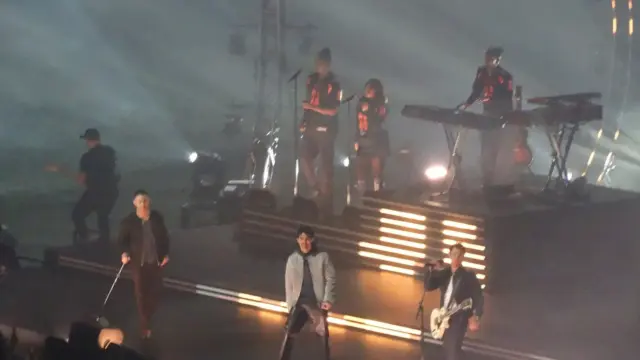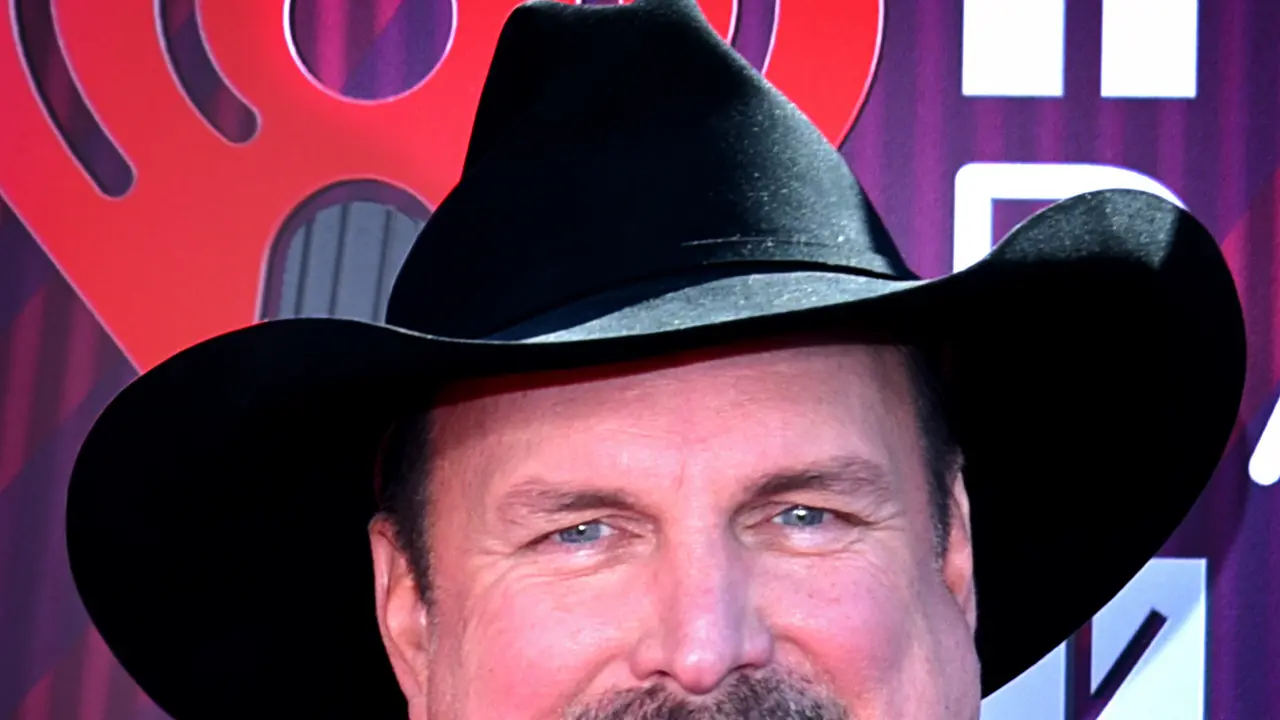
On August 20, 2026, Garth Brooks opens a tour in Indianapolis that looks less like a nostalgic return than a demonstration of live power. Blame It All On My Roots starts at Gainbridge Fieldhouse with four consecutive concerts, from August 20 to 23, after two extra dates were added because of massive demand. The artist’s official site says more than 380,000 fans entered the virtual queue when tickets went on sale. For an artist associated with country music’s 1990s explosion, the signal is clear: the past is not only sellable, it can still saturate ticketing infrastructure.
The promise is not discreet. Garth Brooks is announcing the return of the arena era, the Drum Pod, the hits that built his popular domination and a live recording logic designed to feed Killer Live, his new stage-recorded album project. The concert becomes spectacle, archive, future product and proof that audiences have not replaced physical presence with streaming. In an industry obsessed with data, country music’s biggest live machine reminds everyone of something simple: a community willing to move remains the strongest asset.
Why the Arena Becomes Modern Again
For several years, stadiums have dominated the imagination of large-scale live music. They allow massive revenues, spectacular images and a narrative of the artist at the summit. Brooks is taking the opposite road: returning to arenas means reducing apparent scale in order to increase emotional density. Gainbridge Fieldhouse sells a closeness that the stadium cannot promise. The artist says as much in the official announcements: he wants to put the stadium show in a box, multiplying excitement by intimacy.
That sentence sums up a contemporary strategy. The public still wants scale, but it also wants to feel that it is attending something personal. The arena allows that highly profitable illusion: large capacity, but a feeling of visibility; heavy production, but acoustic control; local scarcity, but national repeatability. For an artist like Brooks, whose mythology was built on room energy, the arena is not a reduced format. It is a language.
The Drum Pod, or Nostalgia as Technology
The return of the Drum Pod is more than a stage-design wink. In the 1990s, that production helped make Brooks a country artist able to compete with rock codes. Official announcements recall that the 1996 tour fed Double Live, certified at 25 million by the RIAA and presented as the biggest-selling live album in recorded music history. Thirty years later, the device returns with double value: memory for historic fans, spectacular novelty for those who never saw it.
In cultural business, that is a rare combination. Many retro returns merely replay the poster. Brooks is putting a show technology back into circulation. The Drum Pod becomes a brand inside the brand, an object spectators can identify, photograph and describe. Nostalgia works better when it has a form. Here, that form is a stage machine, a physical symbol of a period when country live music stopped being polite.
Four Nights in Indianapolis, a Test City
The choice of Indianapolis is strategic. Gainbridge Fieldhouse confirms four dates, opening Thursday, August 20 at 7:30 p.m., followed by two nights and a Sunday matinee. This is not only a first stop. It is a stress test. If one city can absorb four concerts by the same artist over four days, it proves the regional depth of demand and the solidity of the fan base. Brooks thanked Indianapolis after adding the two shows, saying he was shocked by the response.
In the touring economy, the first city matters. It sets the tone for media, promoters, other markets and ticketing partners. A weak launch creates doubt. A crowded launch tells a scarcity story. Here, the narrative is already written: the virtual queue, the added dates, the official tickets, the promise of fair pricing on future releases. Demand becomes promotional content.
Ticketing at the Heart of Trust
Brooks’s discourse around Ticketmaster is notable. His official site encourages fans to check official pages and insists that future released tickets will be priced the same as every other seat. In a market where resale, fees and algorithmic scarcity often create frustration, that promise of readability matters. It turns ticketing into an image issue, not only a sales channel.
That trust relationship is an asset. Brooks’s fans have aged with him, but they have not disappeared. They have precise expectations: clear access, defensible pricing, generous spectacle, respect for shared memory. An artist able to bring hundreds of thousands of people into a virtual queue has to protect that trust. At this level, a tour is not sold only with songs. It is sold with an idea of commercial fairness.
Killer Live, the Concert as Raw Material
Blame It All On My Roots also serves as the foundation for Killer Live. That is essential. Brooks is not going back on tour only to replay his catalogue. He is turning concert nights into recording material, in the continuity of Double Live. The music industry has talked endlessly about streaming, catalogues and rights. Brooks points to another economy: capturing a room, then selling the sonic proof of that communion.
The live album may seem old in a platform-dominated world. Yet it has special power for artists whose identity rests on performance. A studio album documents an intention. A live album documents a relationship. If Killer Live works, it will extend the tour beyond the cities visited and offer those who did not get a ticket an official trace. The show becomes content, but content charged with presence.
Retro Is Not the Opposite of the Future
This return points to a broader trend: the 1990s have become a reservoir of premium value. Audiences who grew up with that period now have purchasing power, active nostalgia and a desire to transmit. But the difference between a lazy operation and a strong one lies in the update. Brooks is not simply selling lost youth. He is selling a rereading of his own live system, adapted to the age of virtual queues, social networks and extended content.
Retro becomes modern when it is treated as cultural technology. The songs are old, but the organization is current. The production points to a period, but the tools of distribution, promotion and verification are contemporary. That hybridization makes Blame It All On My Roots more than an anniversary tour. It shows how a heritage artist can remain offensive.
What to Remember
Garth Brooks opens in Indianapolis a tour that condenses several major dynamics of live music: the return of arena proximity, the economic power of nostalgia, the importance of ticketing trust, the transformation of the concert into a future album and the ability of a historic artist to still generate massive demand. The four nights at Gainbridge Fieldhouse are not only dates. They are the first chapters of a demonstration.
In 2026, premium live music does not need to look futuristic to be powerful. It can be retro, if it knows how to be precise. Brooks understands that memory becomes profitable when it returns with a device, a promise and a community ready to validate it. Blame It All On My Roots carries the right name. It does not only look at roots. It turns them into an economic model.
Sources
- GarthBrooks.com – Blame It All On My Roots Tour makes history in its opening city, accessed August 20, 2026.
- GarthBrooks.com – Garth Brooks announces the Blame It All On My Roots Tour, accessed August 20, 2026.
- Gainbridge Fieldhouse – Garth Brooks Blame It All On My Roots Arena Tour, accessed August 20, 2026.
- Ticketmaster – Garth Brooks Indianapolis dates, accessed August 20, 2026.
- Live Nation – Garth Brooks at Gainbridge Fieldhouse, accessed August 20, 2026.