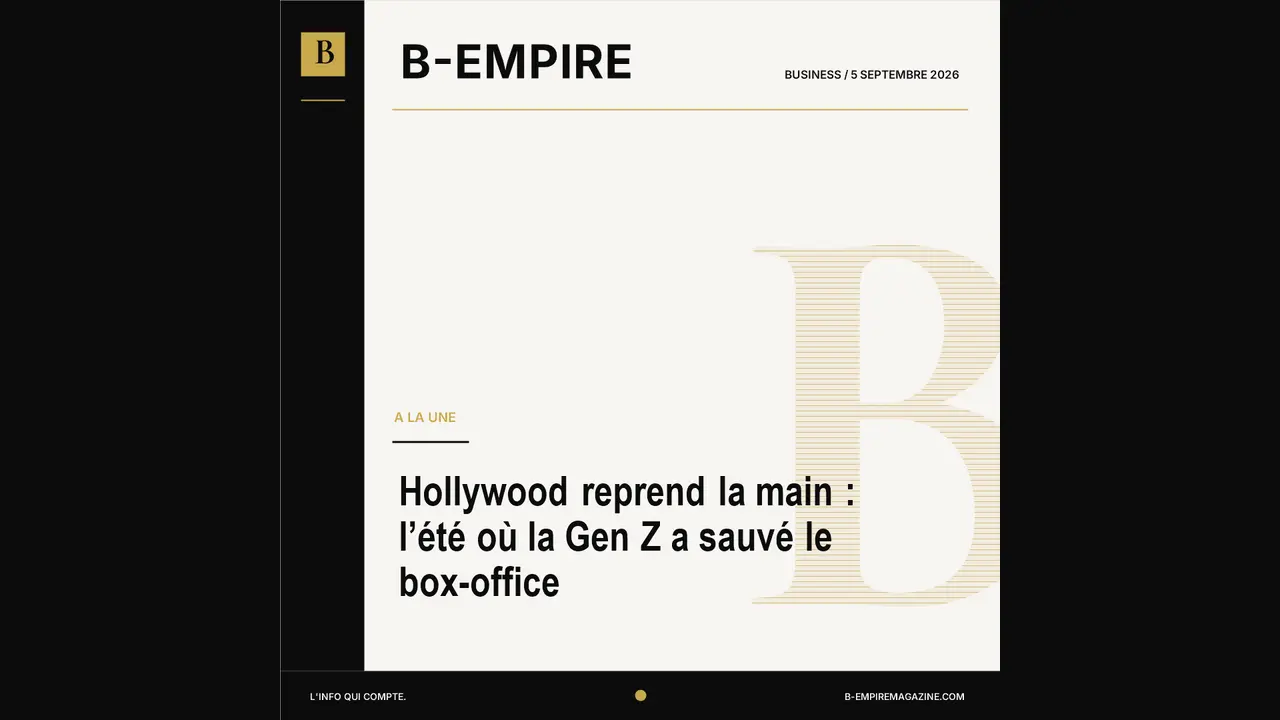
Hollywood has just had its most convincing summer in more than a decade, and it is not only a franchise story. According to Associated Press, the domestic box office reached 4.61 billion dollars between May 1 and August 31, 2026, up 26.1% year over year and marking the best summer since 2013. The number does not bring the industry back to its old world: admissions remain below pre-pandemic levels and inflation inflates revenue. But the signal is strong. Theatrical cinema is no longer only defending itself. It is again an attention battle Hollywood can win.
The rebound comes after several years of doubt. Streaming shifted habits, the pandemic broke the reflex, and studios sometimes answered with sequels that felt too mechanical. Summer 2026 tells a story of correction. Audiences are not rejecting theaters. They are rejecting ordinary theaters. They show up when the event promises more than content that may be available elsewhere a few weeks later.
Gen Z Changes the Market Reading
The most interesting element is generational. AP underlines the driving role of 14-to-29-year-olds in attendance, with Gen Z filling theaters for very different films: blockbusters, auteur events, low-budget horror and viral surprises. This audience grew up with platforms, but it does not confuse permanent access with a memorable experience. The theater is again becoming a social place, almost a proof of participation.
For studios, that is a severe lesson. Young moviegoers do not need cinema explained to them as a tradition to preserve. They need a clear reason to go now. A spectacular format, a collective conversation, an identifiable filmmaker, a phenomenon of fear or laughter, a premium screening, a visual promise: buying a ticket becomes an act of cultural presence.
IMAX Becomes a Strategy, Not a Bonus
The role of IMAX confirms this mutation. The company announced that Christopher Nolan‘s The Odyssey powered July 2026 to the best month in its history, with 257 million dollars in global box office. The film, the first production shot entirely with IMAX 70 mm cameras according to the company’s communications, turned format into a central argument. The sale was no longer only a film. It was a way of seeing it.
This may be the summer’s most strategic data point. The more comfortable the home screen becomes, the more different the theater must be. Sound, scale, the rarity of 70 mm, screening exclusivity and the feeling of participating in an event that cannot be reproduced become economic assets. Premium cinema is no longer merely extra margin on the ticket. It becomes the core of the proposition.
Franchise Is No Longer Enough
The success of the summer does not erase franchise fatigue. AP notes that some established titles dominated less than expected, while new or more distinctive films gained space. That nuance matters. Hollywood long believed known intellectual property could reduce risk. In 2026, the risk has shifted: audiences now distrust products that feel too much like an industrial obligation.
Powerful brands remain essential, but they must become promises again, not automatic routines. Spider-Man can create an event because it carries a popular mythology that is still alive. Nolan can fill screens because his name has become a brand of staging. Horror and genre films can explode because they offer immediate and shareable experience. What connects these successes is not budget size. It is the clarity of the appointment.
Streaming Did Not Kill Theaters, It Forced Them to Define Themselves
Streaming remains both rival and partner. It absorbs daily viewing, finances films, accustoms audiences to abundance and makes the exclusive window harder to defend. But it has also clarified the value of the theater: what deserves a trip must offer an intensity the home screen cannot replace. The theater wins when it becomes a destination, not just a stop before the platform.
That distinction explains why the box office can rebound without exactly returning to the past. The pre-2019 volume of admissions has not yet returned, as the data cited by AP reminds us. But the economy is changing composition: pricier tickets, premium formats, more concentrated events, faster social marketing, more selective audiences. Hollywood is not recovering its old model. It is learning to monetize a rarer one.
The New Power of Mid-Sized Movies
The other promise of 2026 lies in films that do not look like giant machines. When a genre film or a project driven by a specific voice beats expectations, it reminds studios that audiences are not only captive to Marvel, DC, Disney or Universal calendars. Less expensive films can produce spectacular returns because they do not need to conquer everyone. They only need to become indispensable to a community intense enough to spread the word.
This logic is similar to music and fashion: the era rewards phenomena that seem to start from an engaged core before widening. A box-office hit is no longer born only from a massive national campaign. It can begin with a format, a filmmaker, a fan scene, a meme, a collective fear or a recommendation that travels quickly. The theater becomes the place where that virality becomes physical.
December Will Be the Real Test
The next test comes with the major year-end titles, including Avengers: Doomsday and Dune: Part III. The point will not only be who wins the weekend. It will be whether Hollywood can sustain several forms of event at once: the franchise blockbuster, the premium experience, spectacular auteur cinema, viral genre, family film and international title. A strong market does not depend on one machine.
If summer 2026 marks a turning point, it is because it restores confidence without permitting laziness. Studios now know that theaters can become desirable again. But they also know audiences will not return out of duty. They will return for images that exceed the living room, stories that trigger conversation, formats that justify the price and films that give people the feeling they were there. Hollywood has recovered its momentum. The question now is whether it will deserve it.
Sources
- Associated Press, September 5, 2026, analysis of the 2026 summer box office and Gen Z’s role.
- NY1 / Associated Press, September 4, 2026, AP reporting on revenue, Rentrak and premium formats.
- IMAX Corporation, August 3, 2026, announcement of IMAX’s best month ever powered by The Odyssey.
- IMAX Corporation, August 10, 2026, record performance of The Odyssey across the IMAX network.
- Associated Press, September 2, 2026, guide to fall 2026 movie releases.
- Forbes, August 24, 2026, impact of The Odyssey on IMAX valuation and outlook.