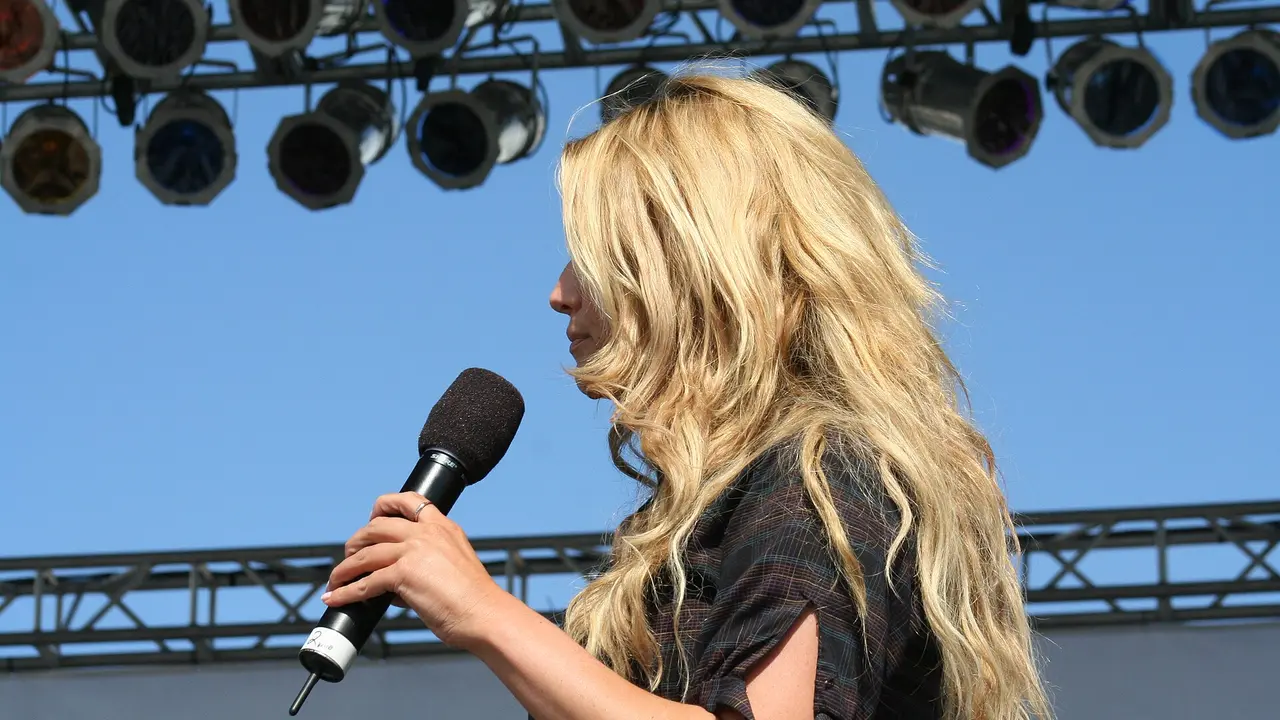
Jessica Simpson is returning to the cameras, but the era has changed: this time, she is not merely being watched, she is taking back the edit. Netflix has confirmed that a documentary about the singer, entrepreneur and major reality-TV figure of the 2000s will arrive in 2027. Directed by Joe Pearlman, the project promises to revisit a trajectory that has become far more complex than the light memory of Newlyweds. For B-EMPIRE, the subject goes beyond nostalgia: it tells the story of the new value of media lives in the streaming economy.
The documentary arrives at a precise moment. Simpson has already told part of her story in Open Book, the memoir published in 2020 that became a bestseller. She returned to music after a long pause with the Nashville Canyon EPs in 2025. She also built one of the most profitable celebrity brands of her generation. Netflix is not simply acquiring a star from the MTV years: the platform is buying a living archive about fame, commerce and personal reinvention.
From Reality TV to Narrative Control
More than twenty years ago, Jessica Simpson opened her private life to cameras with Newlyweds: Nick and Jessica. The show turned her marriage to Nick Lachey into a national serial, at a time when the line between authenticity and televised fabrication was still sold as innocent. Audiences laughed, commented and judged. Cable television imposed its gaze. The star became a character before she could become an author again.
The Netflix documentary can reverse that dynamic. The contemporary documentary format gives celebrities a chance to reclaim their chronology, correct caricatures and place wounds inside a narrative strategy. It is not always a neutral exercise. It is also a brand operation. But in Simpson’s case, the material is powerful because it touches several sensitive subjects: the female body scrutinized by the press, public marriages, the music industry, mass fashion, alcohol, motherhood and survival after media ridicule.
Netflix Understands the Value of Pop Confessions
The choice of Joe Pearlman is strategic. The filmmaker has already worked on intimate music stories, notably around Robbie Williams and Lewis Capaldi. Netflix knows these films do not merely document a career. They reactivate catalogs, shift a social conversation, transform a biography into a platform event and give the audience the sense of accessing a truth long hidden.
This model has become central to the music industry. The documentary is now a relaunch step as important as a single, a tour or a book. It allows an artist to speak to several audiences at once: historic fans, young viewers who mostly know viral fragments, brands, media and social platforms. In Simpson’s case, the film can connect an MTV generation with a TikTok generation rediscovering the 2000s with a mixture of fascination and critical distance.
The Real Simpson Empire Is Not Only Musical
Jessica Simpson’s career cannot be read only through record sales, even though Netflix notes that she has sold more than 20 million albums. Her case is fascinating because she converted mocked fame into durable commercial capital. Her fashion and licensing brand showed that a celebrity could become a retail engine long before influencers professionalized that mechanism.
That business dimension is essential. In the 2000s, many female stars were trapped in stories of scandal, naivety or physical transformation. Simpson was one of the most targeted. Yet she built a company capable of speaking to a broad audience, often female and often far from luxury runways. The documentary will therefore face a key challenge: showing how an image presumed fragile produced real commercial power.
Music as a Return to Self
The 2025 musical return with Nashville Canyon gives the film additional tension. After fifteen years without original music, Simpson did not simply attempt a nostalgic revival. She chose a more personal aesthetic, positioned between country, confession and American memory. That choice changes the reading of her journey: the teenage pop singer becomes an adult artist using voice as a tool of reconstruction.
Netflix has every reason to tell this transition. Music documentaries work best when they do not limit themselves to past triumphs. They need an active present, a risk, an open question. With Simpson, the question is clear: can she become an artist again in a landscape that long reduced her to an image? The 2027 film can answer by following the work, the doubts and the scenes where celebrity becomes discipline again.
Why the Public Is Ready to Rewatch the 2000s
The cultural rehabilitation of female pop figures from the 2000s is no accident. The public is rereading that period with different eyes. Yesterday’s jokes often look like televised violence. Magazine covers now appear as surveillance devices. Breakups, addictions and changing bodies are no longer only celebrity gossip stories: they become symptoms of an industry that sold intimacy while denying its costs.
Jessica Simpson occupies a central place in that rereading. She was famous enough to become a national mirror, mocked enough to embody the excesses of tabloids and entrepreneurial enough to survive the system. That mix is precisely what interests platforms today. Nostalgia attracts the click, but moral repair holds attention. The documentary can offer both.
One Risk: Storytelling That Is Too Clean
The danger, as always with celebrity documentaries produced close to their subjects, is excessive control. A story that is too polished, too promotional or too calibrated for a musical relaunch would lose the complexity that makes Simpson interesting. Audiences are no longer only looking for unseen footage. They want to understand power relationships, contracts, silences, difficult choices and contradictions.
The presence of experienced producers such as Van Toffler could give the film valuable industrial memory. It could also remind viewers that Newlyweds was not merely a cultural accident, but a highly effective product of the MTV age. If the documentary is willing to look that machine in the face, it will carry far more weight than an affectionate portrait.
A Second Life as a Cultural Asset
The Jessica Simpson documentary is shaping up as a maturity test for nostalgic pop. It can show how a star long commented on from the outside finally becomes owner of her story. It can also prove that platforms understand the value of hybrid trajectories: music, television, fashion, books, motherhood, fall and return.
In 2027, Netflix will not merely release a film about Jessica Simpson. The platform will circulate a larger question: what is a public life worth when the person who lived it can finally organize it herself? For an entire generation, the answer may be less light than the MTV memories. And much more powerful.
Sources
- Netflix Tudum, August 20, 2026, official announcement of the Jessica Simpson documentary planned for 2027.
- Variety, August 21, 2026, details on Joe Pearlman, Van Toffler and the project acquired by Netflix.
- Reuters Connect, August 24, 2026, video listing on the filming of the Jessica Simpson documentary.
- Hollywood Life, August 21, 2026, summary of known details on timing, content and production.
- The Beat 92.5, August 21, 2026, career context from Newlyweds to Nashville Canyon.