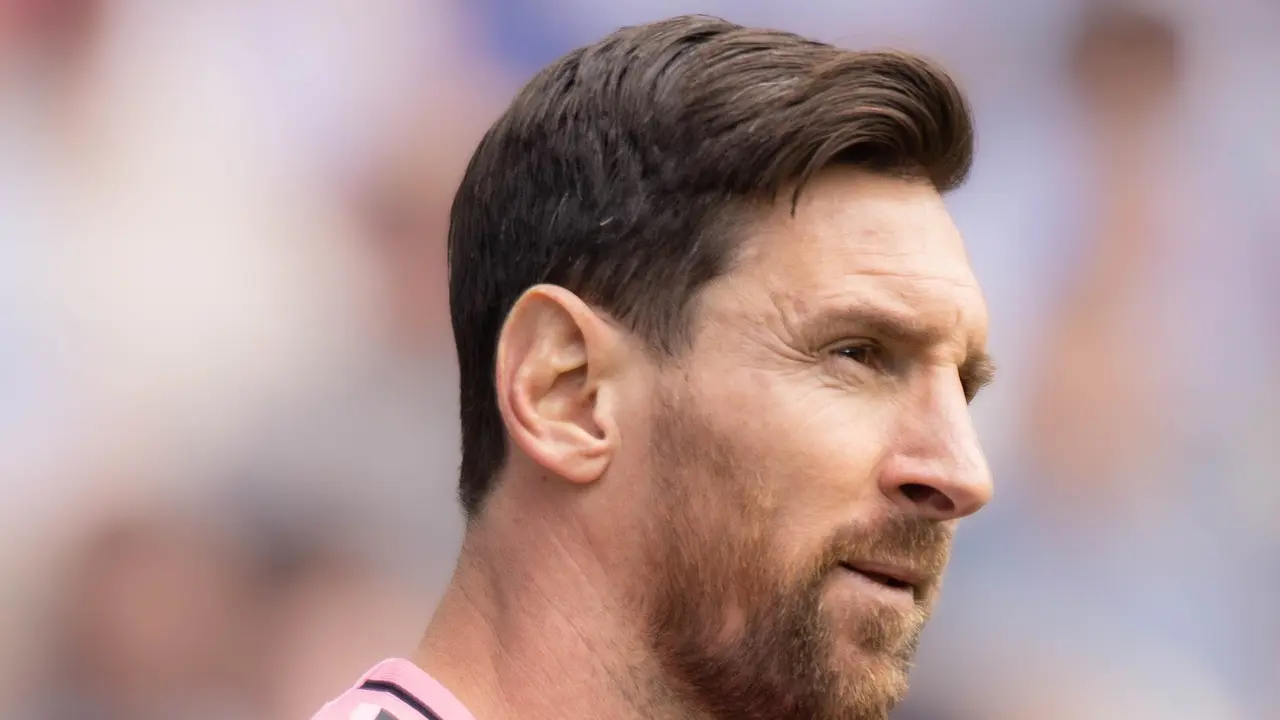
Lionel Messi is no longer preparing only for the final chapter of his playing career. He is already building a football empire. CD Eldense confirmed on September 9, 2026, that the Argentine star had reached a preliminary agreement to acquire the shares held by TH Soluciones and become the Spanish club’s majority shareholder. The proposed transaction must still clear final legal procedures, a due diligence review and mandatory authorization from Spain’s National Sports Council. Yet the signal is extraordinary: one of the most famous players in history is moving close to controlling a professional club in Spain.
The target is as surprising as the move itself. Messi is not buying into FC Barcelona, the institution with which his name will always be associated, or selecting an established European giant. He is turning toward Eldense, a club from Elda in Alicante province that competes in Spain’s second division and has endured a difficult start to the season. That contrast gives the story its power. A worldwide sporting brand could be paired with a local institution seeking stability, ambition and attention.
A major agreement, but not yet a completed sale
Precision matters. The information confirmed by Eldense and reported by Reuters describes a preliminary agreement covering 100 percent of the shares owned by Colombian investment group TH Soluciones, the club’s current majority shareholder. Completion remains subject to final legal and contractual steps, due diligence and approval from Spain’s National Sports Council, known as the CSD. Neither a purchase price nor a firm closing date has been disclosed.
It would therefore be premature to call Messi the official owner today. However, the talks have clearly advanced beyond rumor. Elda’s municipal government also confirmed the agreement in principle and welcomed what it called an important opportunity for the city. In a business where takeover plans frequently collapse before signatures are exchanged, those institutional confirmations give the proposal substantial weight.
Why Eldense suddenly became a global club
Eldense operates far outside the attention enjoyed by La Liga’s giants. Its opening to the 2026-27 campaign was difficult: the team sat 20th in the second tier with two points from four matches and no victories. A coaching change around the same period underlined the sporting urgency. For supporters, the prospect of Messi taking control is therefore about more than publicity. It creates hope for stronger structures, more attractive recruitment and a long-term project capable of climbing the table.
The visibility effect would be immediate. A club previously followed mostly inside Spain could attract new audiences in Argentina, the United States, Latin America, Asia and the Middle East. Sponsors, streaming platforms and broadcasters understand that reach. Every Eldense decision, from its next coach to its youth system, could be viewed through the Messi story. Elda itself would gain a tourism and economic showcase that no conventional advertising campaign could reproduce so quickly.
The second act of an ownership strategy
This would not be an isolated investment. In April 2026, Messi acquired UE Cornellà, a Catalan club competing at Spain’s fifth national level. He is also connected to Deportivo LSM, the Uruguayan project launched with Luis Suárez. Reuters has additionally reported that he is expected to receive an ownership stake in Inter Miami after the end of his playing contract. Together, these moves reveal a gradual transition from superstar footballer to builder and investor.
The plan reflects a wider trend. Leading players increasingly seek lasting positions in the sports economy after retirement. David Beckham helped create Inter Miami, Ronaldo Nazário invested in clubs, and other former stars have moved into academies, media or representation. Messi appears to be assembling complementary assets: player development in Catalonia, professional football in Spain, a South American project and a future interest in Major League Soccer.
A possible bridge between players, continents and brands
If the transaction closes, the sporting opportunity will lie partly in potential connections. Cornellà has a respected youth-development culture. Eldense provides a higher professional platform. Inter Miami offers access to the North American market, while Messi’s Argentine and Uruguayan network opens an enormous pool of talent. No partnership should be assumed before it is announced, but that geography creates obvious possibilities for the intelligent movement of players and expertise.
Messi’s commercial power could also transform off-field income through international sponsorships, digital content, tours, merchandise and new supporter communities. Fame, however, does not guarantee results. A professional club requires disciplined governance, controlled spending, coherent recruitment and a relationship of trust with its community. Eldense cannot become merely a promotional vehicle. Its local history and loyal following are precisely what give the institution authentic value.
The project carries genuine risks
Celebrity takeovers often create immediate excitement, but they can produce unrealistic expectations. Supporters may quickly imagine promotion to La Liga, famous signings and new facilities. Spain’s second tier is among Europe’s toughest and most unpredictable competitions. Promotion cannot be purchased through visibility alone. It requires time, a balanced squad and decisions that will not always please everyone.
Regulation adds another level of complexity. The CSD must authorize the deal, and Messi’s different interests in football could eventually be reviewed for conflicts if his clubs ever crossed paths in particular competitions. There is currently no public indication of an insurmountable obstacle. Still, the project’s success will depend as much on legal transparency and good governance as it does on sporting passion.
The signal football cannot ignore
At 39 and following his retirement from Argentina’s national team, Messi is visibly organizing the future before his club career has completely ended. His influence may soon rest on more than goals, trophies and endorsement contracts. It could reach player development, recruitment, governance and the value of entire organizations. Eldense would become the most ambitious test of this new identity.
For Elda, the announcement is already transformative. For Messi, it represents a full-scale experiment in European professional football ownership. For the industry, it confirms that modern superstars do not necessarily leave the game when they stop playing; they try to own part of it. If the final steps are completed, a modest club from Alicante could become the worldwide symbol of that shift.
Sources
- Reuters – Messi reaches an agreement to buy Eldense, September 9, 2026.
- Europa Press – Elda confirms the agreement in principle, September 9, 2026.
- Cadena SER – Messi moves toward becoming majority shareholder, September 8, 2026.
- El País – the deal’s conditions and Eldense’s sporting context, September 8, 2026.