


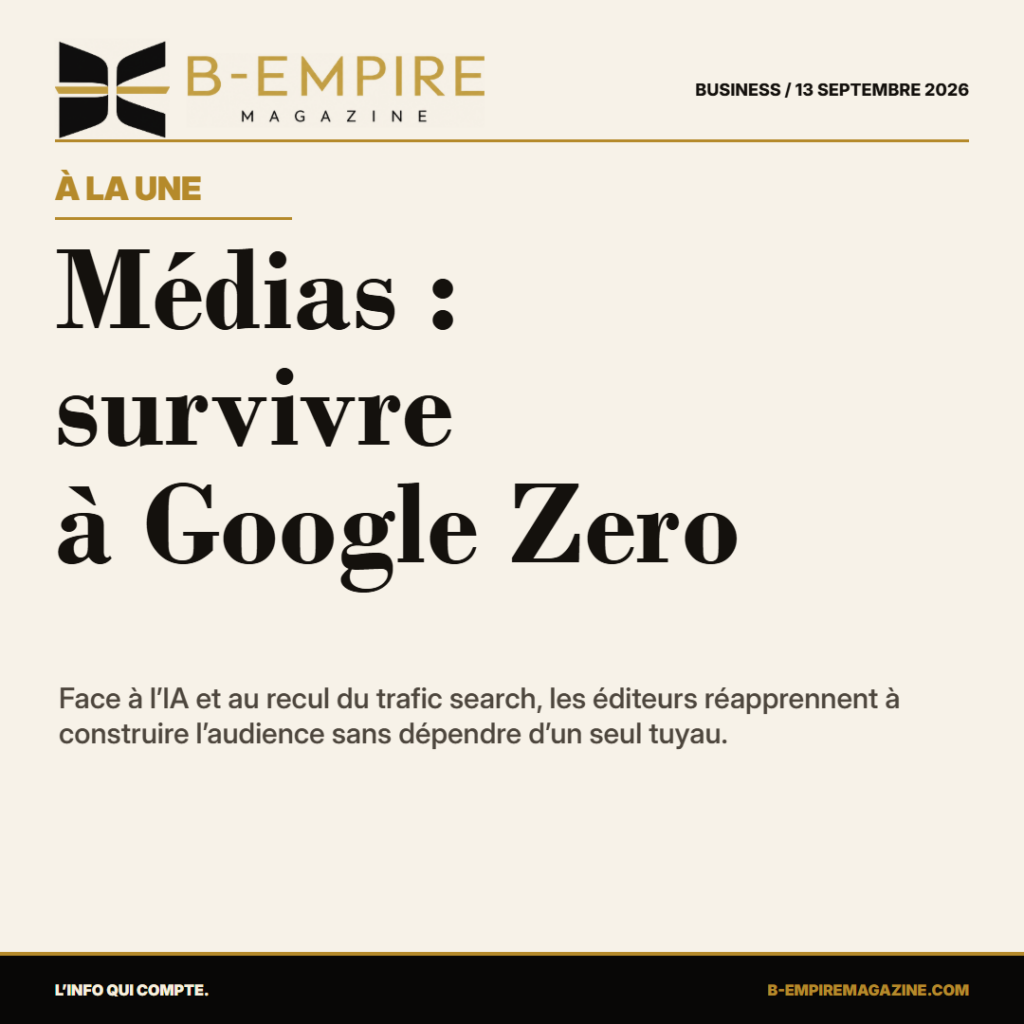
The old pact between media companies and platforms is cracking: publish, optimize, wait for Google traffic and monetize is no longer enough. In newsrooms and digital departments, one phrase keeps returning: Google Zero. It describes a world in which search engines send fewer readers to news sites because AI-generated answers, enriched summaries and social habits keep more attention at the source.
The Reuters Institute published on September 11, 2026 the takeaways from the Future of Media Technology Conference, organized in London by Press Gazette. Speakers described a sector that is no longer discussing only traffic, but relationship. Publishers know that audience can no longer be treated as volume captured by algorithmic chance. It is becoming a community to understand, segment, serve and retain with more direct products: newsletters, apps, events, video formats, podcasts, first-party data and personalized experiences.
Free Traffic Becomes Scarcer
For two decades, part of the digital media economy rested on an implicit promise: if content was indexed, optimized and reactive enough, major platforms would distribute the audience. That model was always fragile, but it had real power. Google served as a highway. Facebook, then other social platforms, added waves of readers. Newsrooms learned to write for search engines, test headlines and follow curves in real time.
AI changes the logic. When an interface answers a question directly, the reader may get enough information without clicking. When an assistant summarizes several sources, the original brand becomes less visible. When a social network pushes creators rather than links, the media site loses its role as a destination. Google Zero is therefore not only a technical fear. It is a crisis of distribution, brand and value.
Publishers Must Become Destinations Again
The strongest response is not to curse the platforms. It is to make the media brand useful enough that audiences choose to come directly. That requires a cultural change. Publishers can no longer think only in isolated articles. They must think in appointments, habits, services and communities. A well-written morning newsletter can be worth more than a hundred accidental clicks. A clear app can become a reflex. An event can turn an anonymous reader into an identified member.
This shift brings media companies closer to luxury brands, sports clubs and streaming platforms. All are seeking the same thing: a direct relationship with an audience that does not pass only through an intermediary. For publishers, that means better understanding reader needs, but also explaining why information is worth paying for, following and sharing.
AI as Threat and Workshop
Artificial intelligence sits at the center of the problem, but it is also part of the answer. Reuters Agency, in its communications around NAB 2026, highlights AI tools designed to optimize video workflows, enrich archives and accelerate media and sports organizations’ operations. Broadcast also reports that Reuters Imagen has launched a platform offering built around connected modules for content hubs, live, engagement and intelligence.
This movement reveals a fault line. Media companies that use AI only to produce more content risk worsening saturation. Those that use it to better organize archives, personalize distribution, detect audience signals, speed up video editing or make teams more efficient can strengthen their value. The goal is not to replace editorial judgment. It is to free time so that judgment can be used better.
Creators Force Media to Reinvent Itself
The Reuters Institute also notes the rise of creators in conversations about engagement. That is not a minor detail. Creators understood before many institutions that trust is built through presence, voice, rhythm and recognition. They do not sell only a topic. They sell an embodied relationship. Traditional media often viewed that logic from a distance, sometimes with contempt. They can no longer afford to do so.
The lesson is not that every journalist must become an influencer. It is subtler: media organizations must make their bylines, formats and values more recognizable. In a universe saturated with synthetic content, editorial personality becomes an asset. Rigor is not enough if it remains invisible. Brand is not enough if it has no face. The public wants to know who is sorting, who is explaining, who is taking responsibility and why they should return.
The Business Moves Toward Direct Data
The decline in search traffic also forces publishers to regain control of their data. A reader who arrives by chance from a search engine may leave without leaving any useful trace. A newsletter subscriber, logged-in member, event attendee or app user builds a more durable relationship. For commercial teams, this changes the conversation with advertisers. It is no longer only about selling impressions, but contexts, communities and trust.
This strategy requires discipline. Direct data can become intrusive if it is collected without visible value for the reader. The best publishers will therefore have to explain the exchange: more personalization, less noise, better formats and a smoother experience. Trust is quickly lost when the user feels like nothing more than an advertising ID.
What This Means for the Press
The next battle in media will not be fought only on the ability to publish quickly. It will be fought on the ability to be chosen voluntarily. That is a huge difference. In the old model, a publisher could survive with a large number of passing readers. In the new one, it must earn a place in daily habits. Newsrooms will therefore need to coordinate product, editorial, technology, marketing and events more closely.
For B-EMPIRE, Google Zero is less an ending than a warning. Media companies that depended on a single distribution pipe are entering a dangerous period. Those able to build a strong brand, clear expertise and a direct relationship can emerge stronger. AI will not automatically kill publishers. It will mostly kill lazy models, those that confused online presence with a real bond with the public.
The good news is that this crisis brings the profession back to an essential question: why would someone come back tomorrow? If a media brand can answer with a voice, usefulness, rigor and experience, it still has a chance. If it answers only with volume, the next algorithm will decide for it.