Strawberry Music Festival, a historic gathering for the Americana and bluegrass scene in Northern California, has canceled its fall 2026 edition, originally planned for October 15 to 18 at the Nevada County Fairgrounds in Grass Valley. The decision follows the death of co-founder Charlie Cran and a leadership transition to new family owners. For B-EMPIRE, this cancellation says much more than a simple postponement: it shows how legacy festivals have to protect a community, a memory and a business model at the same time.
The official Strawberry Music website explains that Charlie Cran’s family, now the new owners, wants to take time to recharge, reinvigorate and carry the festival’s spirit forward before returning in spring 2027. The San Francisco Chronicle reports that Cran, who died in November 2025 at 79, co-founded the festival in 1982 and left behind a community deeply attached to what regulars call the Strawberry Way. The chosen formula is therefore deliberately cautious: cancel now in order to avoid damaging the future.
A festival is not only a lineup
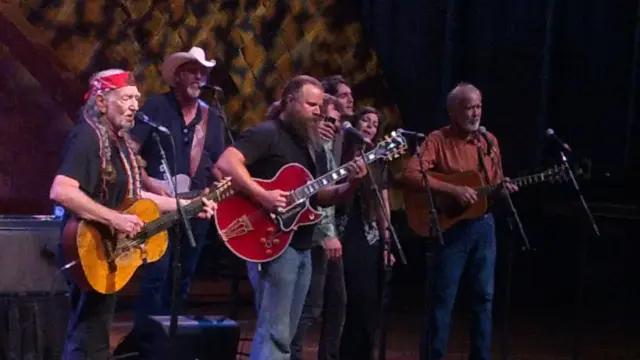
In today’s music industry, many events are described through their headliners. Strawberry works differently. Since 1982, the festival has been built as a family campout, a place of jams, workshops, multiple stages, late-night moments, internal radio, volunteers, artisan vendors and shared routines. Programming matters, but it does not fully explain the attachment. People return for an atmosphere, a way of living with music and a sense of belonging.
That is what makes the transition delicate. When a festival rests on a founding figure, the organization does not simply pass along contracts, files, site maps and venue relationships. It passes along a way of deciding, welcoming, solving problems and speaking to the community. That invisible part is often the hardest to replace.
Succession as cultural risk
The official statement emphasizes the responsibility of keeping Charlie Cran’s legacy alive. That sentence may sound emotional, but it also has a very concrete business dimension. In a legacy festival, trust is an asset. Festivalgoers agree to pay, camp, wait, volunteer or return year after year because they believe in the coherence of the event. If new leadership moves too fast, it can lose that trust before finding its own rhythm.
The decision to cancel fall 2026 therefore looks like a form of discipline. It recognizes that quality cannot be declared through nostalgia. Teams have to be rebuilt, finances reviewed, vendors consulted, artists reassured, ticketing processes clarified and an edition prepared that does not feel like a festival running on autopilot. The pause becomes a strategy of protection.
Tickets as a trust test
Strawberry is offering fall 2026 ticket holders two options: roll their tickets over to the Spring 2027 Strawberry Music Festival or request a full refund, minus shipping and handling fees. RV site reservations are to be refunded, and the organization says requests should take two to four weeks to process. This kind of detail may seem administrative, but it is central in the live economy.
Festivals sell a promise long before the experience. Audiences advance money, block dates, sometimes book accommodation and organize travel. In the event of cancellation, refund quality becomes part of the brand. A clear process preserves the relationship. An opaque process turns disappointment into rupture. Strawberry seems to understand that trust is also rebuilt through forms, timelines and customer-service emails.
The crisis of human-scale festivals
Strawberry’s cancellation arrives in a landscape where mid-sized festivals face growing pressure. Security, insurance, production, transportation, artist fees and labor costs keep rising. Audiences hesitate more before buying far in advance. Major festivals capture a great deal of attention, while independent events have to defend their uniqueness without the same margins.
Roots, folk, bluegrass and Americana festivals have a special strength: a loyal community. But that strength can also hide operational fragility. Loyalty does not replace cash flow, planning or the transmission of know-how. When a central figure disappears, the organization has to prove that it can become an institution without losing its soul.
California culture away from the spotlight
The Strawberry case also reminds us that a large part of California culture does not happen only in Los Angeles, Coachella or San Francisco. Grass Valley, Nevada County, local fairgrounds, campgrounds, community radio and roots scenes form another map. This California is less glamorous, but it has built audiences, musicians, festival families and a long musical memory.
The San Francisco Chronicle recalls that the festival has already faced major disruptions, including the impact of the Rim Fire in 2013. That matters: festivals that last are not those that avoid every crisis, but those that can turn crises into repositioning. Fall 2026 becomes a test of transmission before the May 2027 gathering.
Why this story matters
The cancellation of Strawberry Music Festival matters because it shows the human underside of the cultural economy. Festivals are often discussed in terms of lineups, ticket sales and tourism impact. But a living festival also rests on people, habits, volunteers, families, grief and difficult decisions. Here, the best commercial decision may be not to force the event.
For B-EMPIRE, the signal is clear. The value of a legacy festival does not lie only in its ability to book artists. It lies in its ability to protect a culture while modernizing its organization. If Strawberry returns in spring 2027 with a reassured community and solid leadership, this cancellation may be read not as weakness, but as an act of preservation.
Sources
- San Francisco Chronicle – cancellation of the fall 2026 edition
- Strawberry Music Festival – official fall 2026 cancellation message
- Strawberry Music Festival – spring 2027 information
- Strawberry Music Festival – festival description and the Strawberry Way
- Strawberry Music Festival – ticket terms and rules
- Strawberry Music Festival – Berry Blog and community context