The Black Bloc : A Controversial Ultra-Left Tactic in Current Protests
The Black Bloc, an ultra-left movement born in Germany, is known for its members dressed in black and masked, often involved in clashes with police and actions against state and capitalist symbols. This controversial movement is again in the spotlight ahead of a planned protest this Saturday.
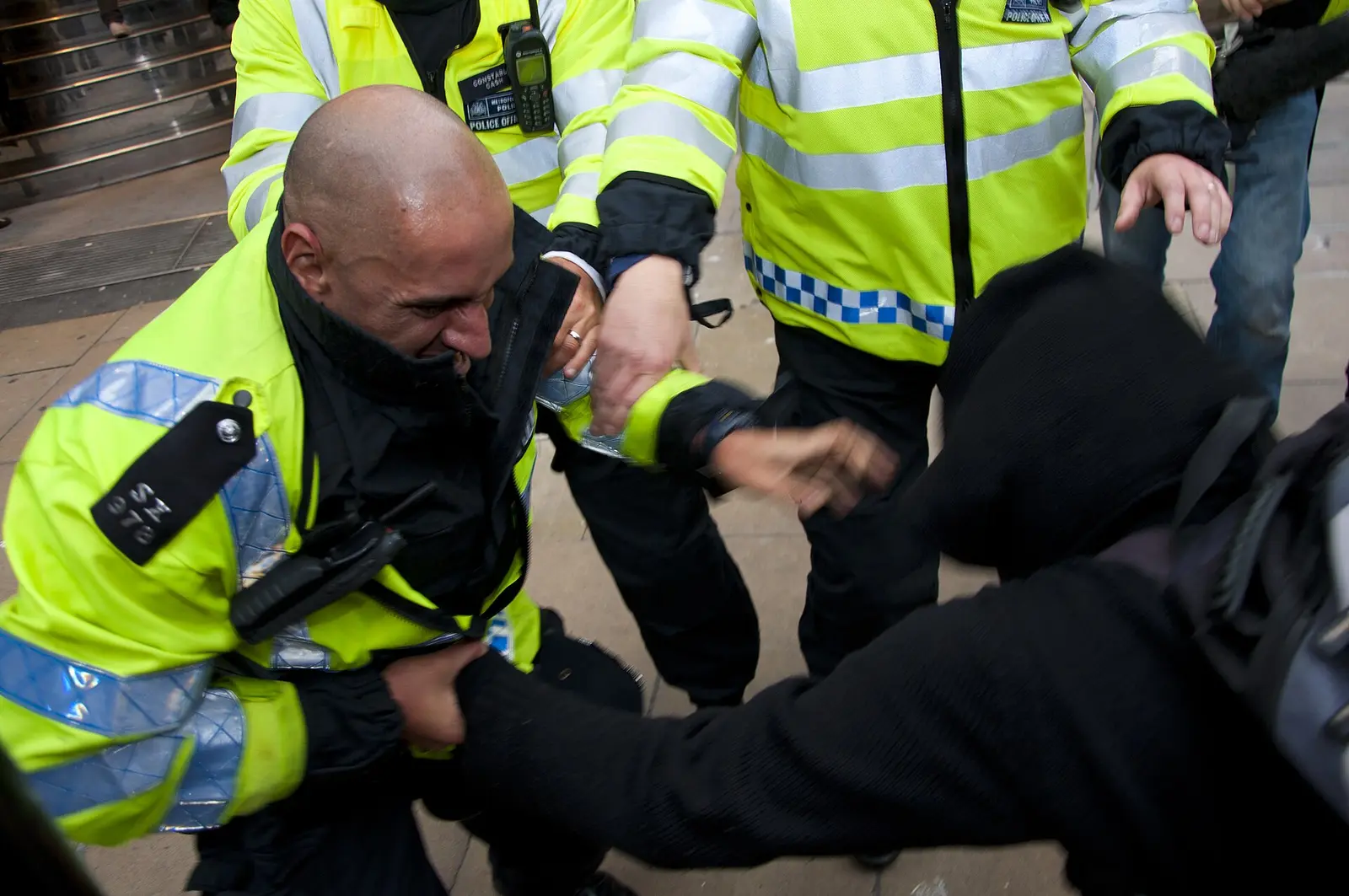
Originating from Germany, the black bloc is a collective action tactic that has established itself in the landscape of far-left protests. Currently, this method is particularly visible and sparks intense debates due to its role in recent social movements. France 24 reports that the black bloc, characterized by protesters dressed in black and often masked, continues to fuel controversy, especially ahead of a new demonstration scheduled for this Saturday.
An emblematic tactic of the far-left
The black bloc is a form of collective action that developed in Germany in the 1980s before spreading to several European countries. This tactic involves protesters dressing entirely in black and often wearing masks or balaclavas to preserve their anonymity and create a strong visual unity. This uniformity in clothing also facilitates the coordination of actions and complicates identification by law enforcement.
Members of the black bloc do not form a structured organization but rather adopt a mode of operation used occasionally during protests. Their action is marked by direct opposition to law enforcement and targeted attacks against institutional and economic symbols, such as government buildings, banks, or commercial outlets, perceived as representations of state power and capitalism.
A noted presence in recent protests
In the context of current social mobilizations, the black bloc has returned to the forefront. Recent protests have seen the emergence of groups dressed in black, engaged in clashes with law enforcement or in targeted acts of vandalism. This visibility has revived debates about the legitimacy and effectiveness of this tactic, both from the authorities and public opinion.
France 24 highlights that this news is reflected in a new call to demonstrate this Saturday, where the presence of the black bloc is expected. This prospect fuels concerns among public authorities, who fear an escalation of violence, but also discussions within social movements about the strategy to adopt in response to institutions.
A tactic source of controversy
The black bloc deeply divides opinion. For its supporters, this tactic is a means of radical resistance against a system perceived as oppressive. It allows militants to protect their anonymity and symbolically strike targets associated with social and economic injustice. For others, it represents a form of gratuitous violence that harms the cause it claims to defend and justifies increased repression.
Controversies surrounding the black bloc also concern its media impact. Images of violence and vandalism are often highlighted, sometimes overshadowing the political demands of the protesters. This focus can reinforce the stigmatization of social movements and complicate dialogue between protesters, authorities, and civil society.
A tactic still relevant today
While the debate over the black bloc continues to rage, this tactic remains an essential element of far-left protests. The call to demonstrate this Saturday, relayed by France 24, promises to prolong this controversy by once again highlighting issues related to political violence, freedom to protest, and the response of institutions to dissent.
In sum, the black bloc embodies a struggle strategy that, although contested, persists in the landscape of social mobilizations, reflecting the deep tensions that traverse contemporary society.