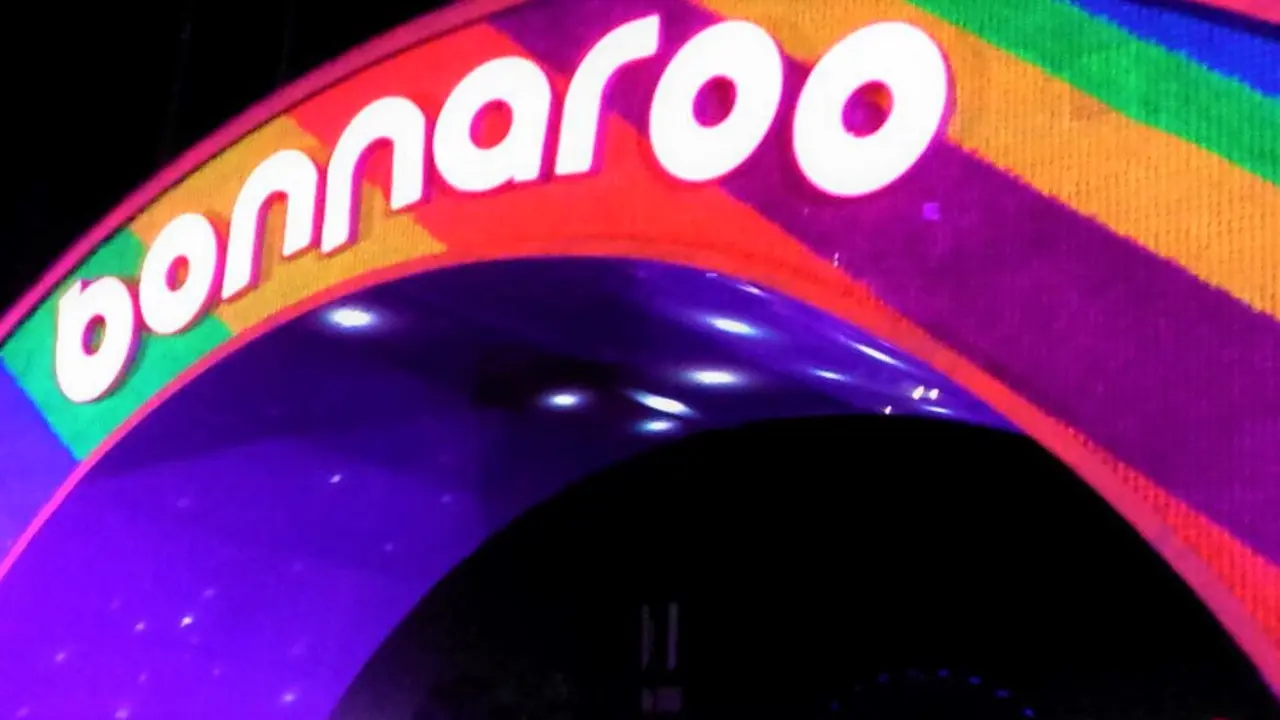
Bonnaroo will not simply be absent from the 2027 calendar. It will be one of the clearest symbols of a music industry entering the age of strategic weather. The Manchester, Tennessee festival announced on August 21 that it would take a year off so its site, The Farm, can recover after two consecutive years of storms. The official announcement points to investments already made in drainage, 4.5 miles of new roads and 135 acres of new grass. Yet after heavy rain hit the 2026 edition, the main venue needs rest.
The decision carries more weight than a simple cancellation. Bonnaroo is not an interchangeable event. Since 2002, it has built an identity around camping, community, duration and an experience that exceeds the lineup. Canceling 2027 means suspending a local economy, a fan ritual, a booking machine and a cultural brand. It also recognizes that live music can no longer pretend the ground beneath the stage is a secondary variable.
The Farm Becomes a Fragile Asset
Bonnaroo’s statement is striking because it begins with the place. Not the artists, not the tickets, not a marketing reset. The central subject is The Farm, the Manchester site where the festival’s identity is staged every year. Pitchfork notes that the 2026 edition was disrupted by flooding, canceled sets, area evacuations and shelter-in-place guidance. The previous year, weather had already forced a major interruption.
In the old model, a site was mostly a container: it held the stage, tents, parking and crowds. In the new model, it becomes a sensitive asset, almost a living one. Its ability to absorb water, keep roads usable, host tens of thousands of bodies and restart from one year to the next becomes as decisive as the headliner. The Farm is no longer only Bonnaroo’s address. It is its critical infrastructure.
Festival Business Meets Risk
The Los Angeles Times notes that Bonnaroo had already invested before 2026 to reinforce the site. That changes the interpretation: the 2027 pause is not proof of no effort, but proof that familiar efforts are not always enough anymore. Festivals now manage an equation in which production costs rise, insurance tightens, audience expectations remain high and weather windows become less predictable.
For promoters, the dilemma is brutal. Keeping an event alive despite a weakened site can threaten safety, fan experience and reputation. Canceling protects the future, but cuts off a year of revenue and weakens an entire ecosystem: vendors, technicians, hotels, restaurants, transport, emerging artists and local partners. The festival becomes a portfolio operation as much as a cultural appointment. Operators must know when to play, when to invest and when to let the asset breathe.
A New Definition of Live Luxury
The luxury of a festival is no longer limited to its lineup. It depends on the ability to guarantee drinking water, smooth movement, shelter, credible evacuation, clear communication and an experience that does not collapse at the first storm. Pollstar notes that Bonnaroo was coming off a 2026 edition featuring major names such as The Strokes, RUFUS DU SOL and Noah Kahan. The artistic content was there. The problem sits elsewhere: in the physical durability of the model.
That is a lesson for the whole sector. Audiences pay more and more for collective experiences, but they also demand more safety, comfort and trust. A festival that promises freedom cannot ignore muddy roads, inaccessible zones or confused emergency plans. In this new context, resilience becomes part of the show. It does not always appear on the poster, but it determines the memory of the weekend.
Climate Enters the Program
Bonnaroo is not alone. Desert, mountain, city and rural festivals are facing violent winds, extreme heat, sudden rain and saturated ground. This is not merely an abstract environmental issue. It is a question of scheduling, finance, site design and legal responsibility. Future programming will be built with artists, sponsors and weather data in the same room.
The most interesting part of Bonnaroo’s pause may be its refusal of short-termism. Taking a blank year means accepting the loss of a season in order to preserve the brand. It also admits that live music’s endless-growth logic needs a new discipline: letting places recover, reducing certain risks, rethinking ground, flows and the promise made to fans. In an industry that has long measured success by tickets sold, this logic looks like a cultural shift.
For B-EMPIRE, Bonnaroo 2027 is therefore more than an absence. It is a warning. Live music remains one of the last great spaces of cultural communion, but it will have to learn to work with harder, costlier and more visible constraints. The future of festivals will not be written only by headliners. It will also be written by drainage, roads, insurance and the ability of a field to survive its own legend.
Sources
- Bonnaroo – Bonnaroo 2027 official update, August 21, 2026
- Pitchfork – Bonnaroo Is Taking 2027 Off, August 21, 2026
- Los Angeles Times – Bonnaroo cancels 2027 edition as extreme weather pounds music festivals, August 21, 2026
- Pollstar – Bonnaroo Taking Much-Needed Time Off in 2027, August 21, 2026
- People – Bonnaroo Announces 2027 Hiatus After Back to Back Years of Storms, August 22, 2026