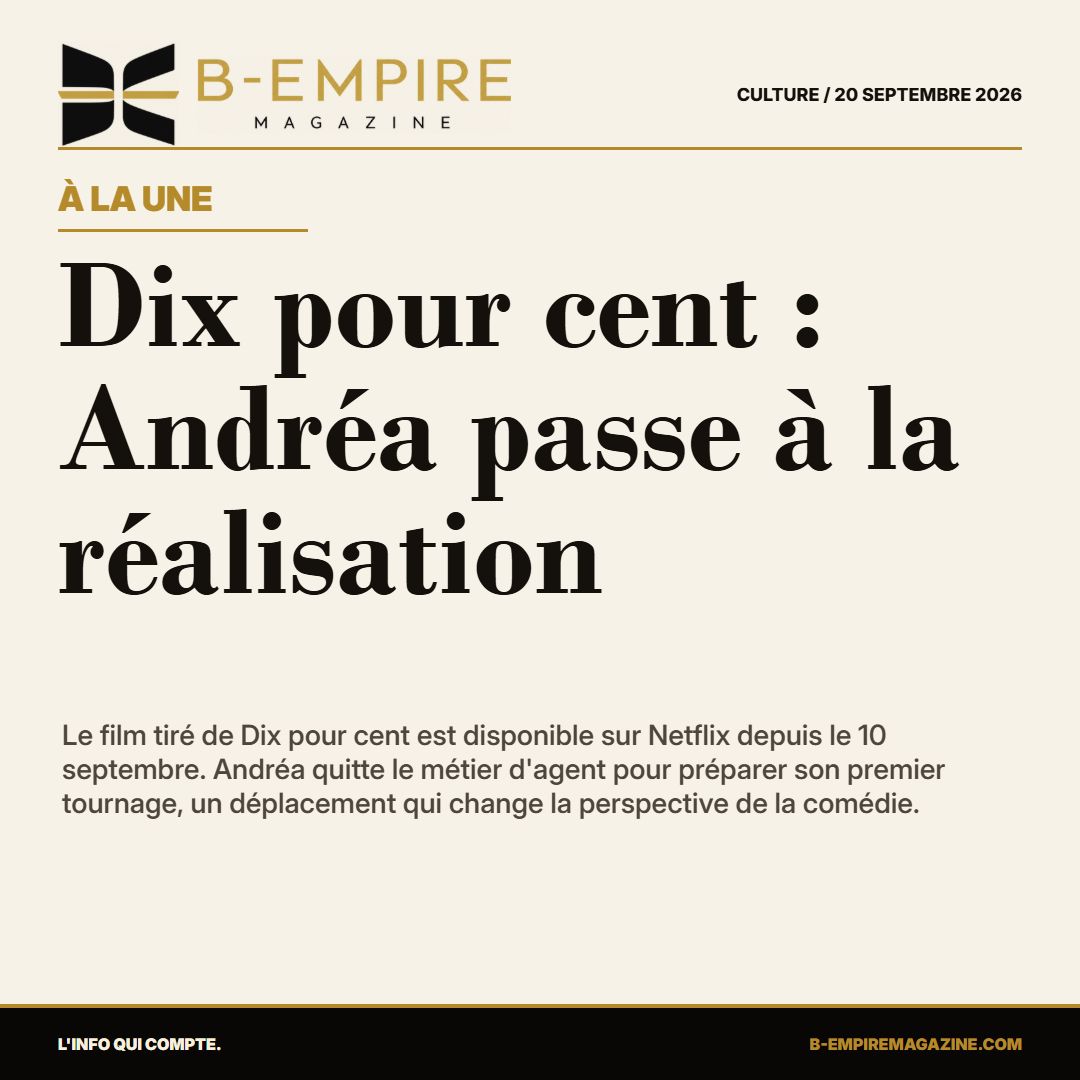
Returning to a beloved series takes more than reassembling its characters: they need a reason to exist in a different form. On September 10, 2026, Netflix released Call My Agent! The Movie, a feature-length continuation of the French series. Five years after the ASK agency shut its doors, Andréa, played by Camille Cottin, is preparing her first feature as a director. Her lead actor pulls out just days before filming, prompting her to call her old team back together. The premise promises a return to familiar chaos, but it also moves the viewpoint from the agents’ office to a film set.
A new job moves the story forward
The series followed professionals protecting other people’s careers, often at the expense of their own stability. As a director, Andréa is no longer merely positioned between a star and a project: she is carrying the work that may fall apart. The disappearance of a lead actor before the first shot creates an urgency anyone can understand. It also gives the team’s reunion a narrative purpose instead of turning it into a parade of familiar faces. The film can preserve the ensemble’s energy while placing a new responsibility on its central character.
This shift in position is more interesting than repeating the agency’s old routine. An agent tries to solve a production’s problems from outside; a director lives them from within and must decide what she is willing to lose to save her film. The same habit of negotiation can produce different comic situations when the negotiator personally depends on the outcome. That does not guarantee every scene succeeds. It does explain why the premise amounts to more than a commercial continuation of the show.
The challenge of a single film
A series has multiple episodes to give secondary characters room and return to a decision made too quickly. A film must choose its path more firmly. It cannot give every member of the old team an equally substantial story, especially when the starting point centers on Andréa’s first directing project. The challenge for this kind of adaptation is therefore one of priorities: which relationships drive the plot, and which exist mainly for the pleasure of recognition? Returning viewers may enjoy references, while newcomers need a situation that stands on its own.
Netflix presents the feature as an industry comedy and satire, following the series’ tradition. Its synopsis emphasizes the urgency of replacing the actor and reuniting a team. That setup offers a clear structure: a close deadline, competing interests and a production that cannot wait for everyone to reconcile. It also leaves a larger question open: can a comedy about entertainment workers show precarious work and unequal power without losing its pace? The compressed time of a feature makes that balance especially difficult.
Camille Cottin as the anchor
Camille Cottin’s return gives the project immediately recognizable continuity. Andréa was already defined by authority, speed and the ability to improvise when a plan collapsed. The film appears to put those qualities to a new test in a position where she can no longer delegate artistic responsibility. The audience knows the character, but the new profession may reveal a different way she uses power. That shift matters more to the life of the story than the mere presence of a familiar star.
The reunion of the ASK team serves a similar double purpose. It answers the wish to see a group whose tensions animated the series, and it may become a practical resource for a shoot in trouble. Nostalgia has limits, however: it rewards people who remember without necessarily building a scene for those discovering this world. The feature must quickly establish the old group’s alliances and disagreements. That is part of the cost of reaching an international audience that may not have watched every season.
A French comedy turned global brand
The English title Call My Agent! points to the French series’ international life. For Netflix, a film can bring back an established universe in a format that is easy to offer subscribers who do not want to begin a long show. For producers and performers, it offers a return to known characters without necessarily reopening several seasons. That business logic is understandable. It is not enough, though, to justify a story: the more a work returns as a brand, the more it must show what the new chapter adds to the old one.
The film industry is an especially coherent setting for this return. Call My Agent! made the hidden side of entertainment its subject; putting Andréa behind a camera continues that curiosity. Invisible work remains the engine of comedy: a schedule unraveling, reliance on a lead performer, decisions made too late and professional relationships tested by urgency. The movie therefore has a way to talk about creation without turning into an abstract lecture about it. Its events must carry that idea, not just lines of dialogue that explain it.
A return should be judged by what it invents
The film has been available since September 10, but its release alone settles neither its artistic success nor its audience. Official information establishes its premise; it cannot declare that every fan will be satisfied. What makes the project worth attention is its change of center: the former negotiator becomes responsible for a shoot. If that position truly transforms her relationships and choices, the team reunion has a dramatic reason to exist. If not, it may remain an agreeable memory. That is the difference between extending a world and simply repeating it.