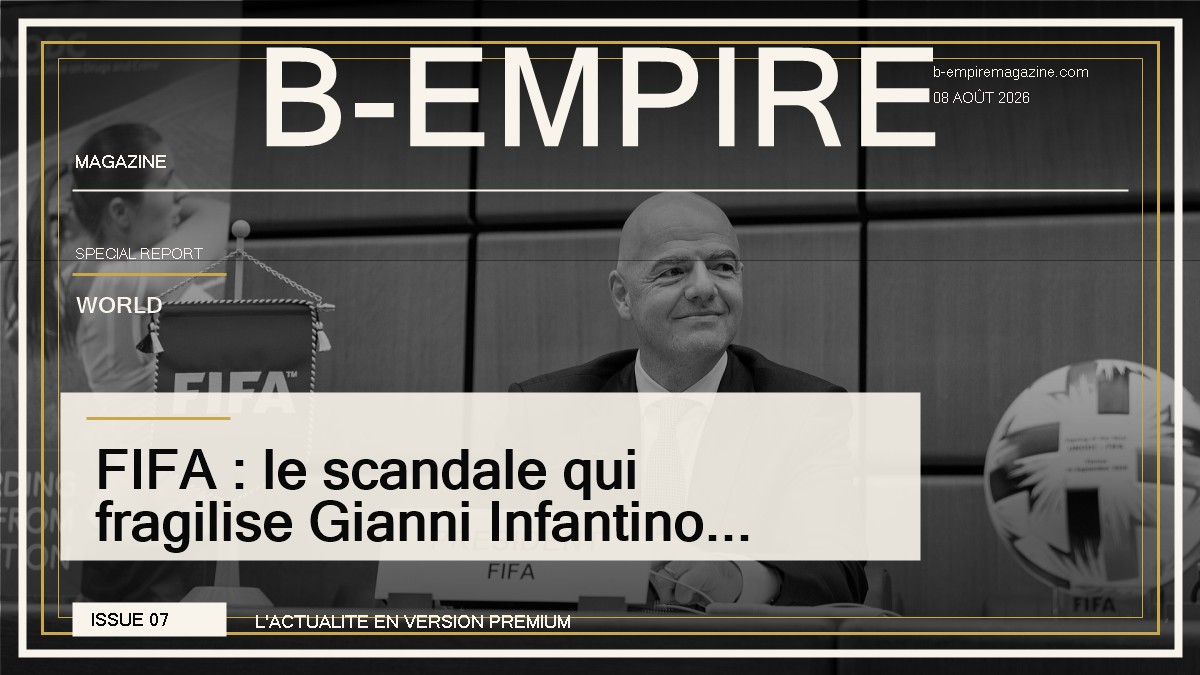
The 2026 World Cup was meant to be the absolute triumph of Gianni Infantino. Instead, it may ultimately be remembered as the prelude to the most serious crisis of his presidency. Less than three weeks after the final, the head of FIFA finds himself challenged even within his own administration. The issue at hand is a project aimed at opening a new commercial subsidiary to private investors, which was abandoned after an international revolt, but whose aftershocks continue to ripple through global football.
The matter has escalated beyond a mere dispute among leaders. UEFA has threatened FIFA with legal action and has requested that any potential evidence related to the project be preserved. At the same time, several employees of the organization have expressed their discomfort and anger to Le Monde. This episode raises an explosive question: who truly owns the future revenues of the World Cup, one of the most powerful spectacles on the planet?
A $20 Billion Project Stopped in Its Tracks
The mechanism envisioned by FIFA was named FIFA Forward Enterprise, or FFE. According to the official presentation still accessible on the organization’s website, this subsidiary was intended to consolidate commercial rightsâbroadcasting, sponsorship, ticketing, licensing, and hospitalityâas well as the management of its competitions. Its implied valuation reached $20 billion, based on an analysis by JPMorgan.
FIFA planned to raise up to $4.2 billion by selling minority stakes to long-term investors. It assured that it would retain control of the subsidiary and that private partners would have no power over the rules, format, or schedule of the World Cup. The funds were to finance stadiums and training centers across the 211 member federations.
On paper, the rhetoric combined commercial growth with football development. However, the method, timeline, and identity of some proposed investors triggered a fierce backlash. The Associated Press reports that the plan included the New York-based company of Joshua Kushner. The proposal was abandoned in early August, just days after its public revelation.
UEFA Turns Dissent into Legal Threat
The European rejection was not merely political. According to AP, UEFA warned FIFA that it was considering legal recourse, arbitration procedures, or regulatory complaints. The European confederation also requested that any documents potentially related to the project not be destroyed. This terminology changes the nature of the conflict: it is no longer just about denouncing a bad idea, but about verifying how it was conceived and whether the rules were followed.
The World Cup generates substantial revenue because it relies on a collective heritage: national teams, federations, players, supporters, and a history built over nearly a century. Opening up the capital of a structure controlling its commercial rights touches on a sensitive boundary. A majority of supporters accept that the tournament should be profitable; they do not automatically accept that a portion of its future value becomes a negotiable asset among investors.
Anger Now Grows Within FIFA
The most immediate danger for Gianni Infantino may come from within. On August 7, Le Monde described an administration plagued by deep unease. Employees, speaking anonymously, criticized the president for his refusal to step down and the manner in which the project was conducted. This internal anger is particularly destabilizing for a leader who has long made the strength of the institution and the support of federations the pillars of his power.
Mattias Grafström, FIFA’s Secretary General and the organization’s number two, had distanced himself in a message to staff on August 4. He referred to a series of regrettable events and confirmed that the FFE project had been definitively abandoned. However, subsequent reports indicating that he had previously approved the arrangement have further fueled questions about the decision-making chain.
This apparent contradiction feeds a crisis of confidence. Who precisely knew the conditions of the operation? What role was the FIFA Council supposed to play? Did the federations receive sufficiently complete information before voting? As long as these questions remain open, the abandonment of the project will not be enough to close the file.
Football Business Faces Its Red Line
The affair comes at a time when global sports are attracting increasing amounts of investment funds, billionaires, and sovereign capital. Clubs, leagues, broadcasting rights, and distribution platforms have become global assets. FIFA wanted to apply this logic to a commercial structure at the heart of its competitions. The reaction, however, shows that the World Cup remains a category apart.
FIFA itself announced that it aims for over $15 billion in revenue during the 2023-2026 cycle. It also estimated the economic impact of the World Cup at around $80 billion. These figures explain the interest of investors, but they also reinforce the demand for transparency. The higher the value of the tournament, the more decisions regarding its future must be understandable and accountable.
For France and Europe, the conflict transcends institutional rivalry. UEFA and its 55 associations defend their weight in the economy of international football, while FIFA seeks to exploit a market that has become global. European teams contribute a central part of the audience, stars, and commercial partners. A lasting rupture between the two blocs could affect schedules, competitions, and, ultimately, the relationship between clubs and national teams.
Infantino Now Plays for His Credibility
Gianni Infantino retains a considerable network of support among national federations. Before this crisis, he claimed that over 200 associations backed his future re-election. However, an electoral majority does not resolve a governance crisis. His challenge now is to demonstrate that the institution can document its decisions, respond to legal requests, and restore the trust of its employees as well as its partners.
The scandal arrives with brutal irony. FIFA wanted to convert the commercial success of the World Cup into sustainable financial power. Instead, it has opened a global debate on the ownership of football. If the organization does not respond clearly, the image of the most-watched tournament in the world risks remaining associated with a project prepared in the shadows, abandoned under pressure, and followed by an internal war.
The next step will therefore not take place on the field. It will unfold in documents, procedures, and the ability of officials to be accountable. After a World Cup presented as a demonstration of strength, Gianni Infantino discovers a rule that even the sports business cannot circumvent: economic value never replaces legitimacy.