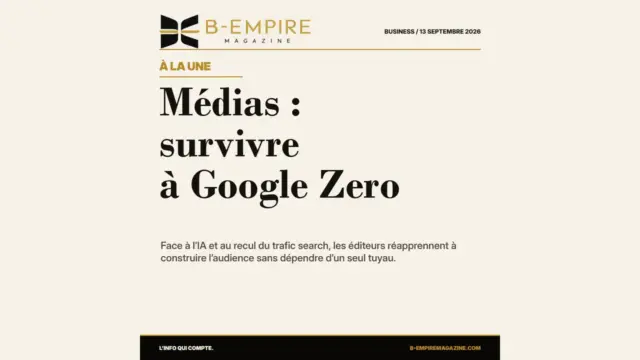

The fight between platforms and publishers is no longer only about subscriptions, paywalls or advertising. It now plays out in the most discreet and powerful place on the web: the search result. As search engines integrate more AI-generated answers, the news article risks becoming raw material that users consult without always clicking. Google is now trying to soften that tension with an apparently tiny tool: a button publishers can place on their own sites to invite readers to choose them as a “preferred source.”
On August 20, 2026, TechCrunch reported that Google was making its interactive Preferred Sources button available to online publishers. The idea is simple: when a reader marks a media outlet as a favorite source, Google can highlight its content more often in Search, Discover and Google News, as well as in some AI experiences such as AI Overviews and AI Mode. Google says readers are twice as likely to click through to a source they have selected when that source appears. For publishers, that number looks like a lifeline. For Google, it looks like a diplomatic answer to rising anger.
The Link Becomes a Privilege
The historic promise of Google Search was clear: organize the web and send people to the best pages. Publishers built part of their economy on that circulation. Search optimization, headlines, freshness, authority and technical speed formed an implicit pact: produce useful information, get indexed, receive readers. The arrival of AI answers changes that pact. If the answer is displayed directly inside Google’s interface, the click becomes less necessary. The link still exists, but it has to fight harder to be chosen.
Axios summarized the industry’s anxiety in late July by citing Chartbeat data: search traffic sent to publishers reportedly fell 34 percent year over year, with even steeper losses for small and medium-sized players. Even if every title lives a different situation, the trend is clear: dependence on search is becoming more dangerous. This is not only a pageview problem. It is a question of advertising revenue, subscriber conversion, brand awareness, first-party data and direct relationships with audiences.
The Preferred Sources button tries to reintroduce a little human intent into a largely algorithmic system. Instead of leaving the machine alone to decide which voices rise, Google proposes that readers signal their preferences. On paper, it is appealing. In practice, it is also an admission: when AI concentrates attention inside one interface, publishers must ask their own readers to reserve them a place inside that interface.
A Useful Tool, Not a Complete Repair
Google presents Preferred Sources as a way to personalize news and better rediscover the sites people trust. Official documents explain that selected sources may appear more often in Top Stories and be flagged inside AI Mode or AI Overviews. Regular publishing still matters: an inactive or poorly recognized source will not automatically benefit from the tool. The advantage will therefore first go to brands that already have loyal audiences capable of understanding and activating the preference.
This is where the promise becomes uneven. Large media groups can launch campaigns, integrate the button into newsletters, ask subscribers to support them and measure the effects. Independent publishers can also use it, but they will have to turn a technical gesture into a community reflex. In a world saturated with requests to subscribe, accept cookies, join a list, download an app or disable an ad blocker, asking for one more support click may become difficult.
The system also does not settle the fundamental question: who captures the value of information? If Google gives a preferred source more visibility, it still controls the environment, the presentation, the measurement and the moment when the link appears. The publisher may recover some lost traffic, but it remains dependent on an architecture that can change. In the new search economy, autonomy is not won with a button alone. It is won through a direct relationship strong enough to survive interface changes.
The Press Must Become a Chosen Brand Again
The real issue is cultural. For years, many readers consumed information by subject rather than by outlet: a query, a headline, a click, then a return to the feed. Preferred Sources slightly reverses that logic. It asks the reader to say: this voice matters to me. That relationship looks more like a subscription, a favorite, a followed podcast or a creator people intentionally return to. For media companies, it demands sharper brand discipline: why should someone choose this site rather than another?
Titles that simply republish the same generic news will struggle to create that reflex. Those with a tone, expertise, community, daily utility or editorial signature can turn Preferred Sources into a loyalty signal. In the AI era, interchangeable information is worth less. Identifiable information becomes more precious. The reader must be able to recognize not only the topic, but the way it is treated.
This transformation also concerns brands, creators, newsletters and specialized media. Search is not disappearing, but it is becoming personalized, vocalized, summarized and negotiated. Publishers must therefore think like destinations, not only like pages optimized for Google. Traffic that arrives by accident is fragile. Traffic that comes because a source has been chosen is rarer, but more strategic.
The Next Contract of the Web
Preferred Sources is not a revolution. It is a symptom. It shows that Google knows generative AI can damage the ecosystem on which it depends. A search engine without publishers, journalists, critics, specialized sites and original voices eventually recycles a poorer web. But it also shows that the proposed repair remains inside Google’s frame: the publisher must return to ask for visibility from the platform that helped move the value elsewhere.
The next contract of the web will therefore be fought on three fronts. Platforms will have to prove that they can integrate AI without draining the producers of content. Publishers will have to rebuild brands strong enough to be explicitly chosen. Readers will have to understand that the quality of information also depends on their own gestures: clicking, subscribing, marking a source, sharing an article, returning voluntarily. Google’s button is small. The battle it reveals is immense.