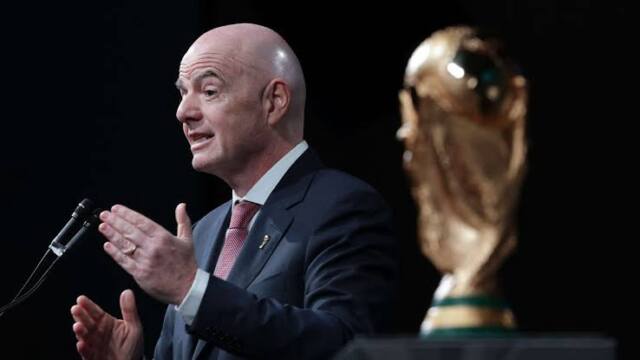
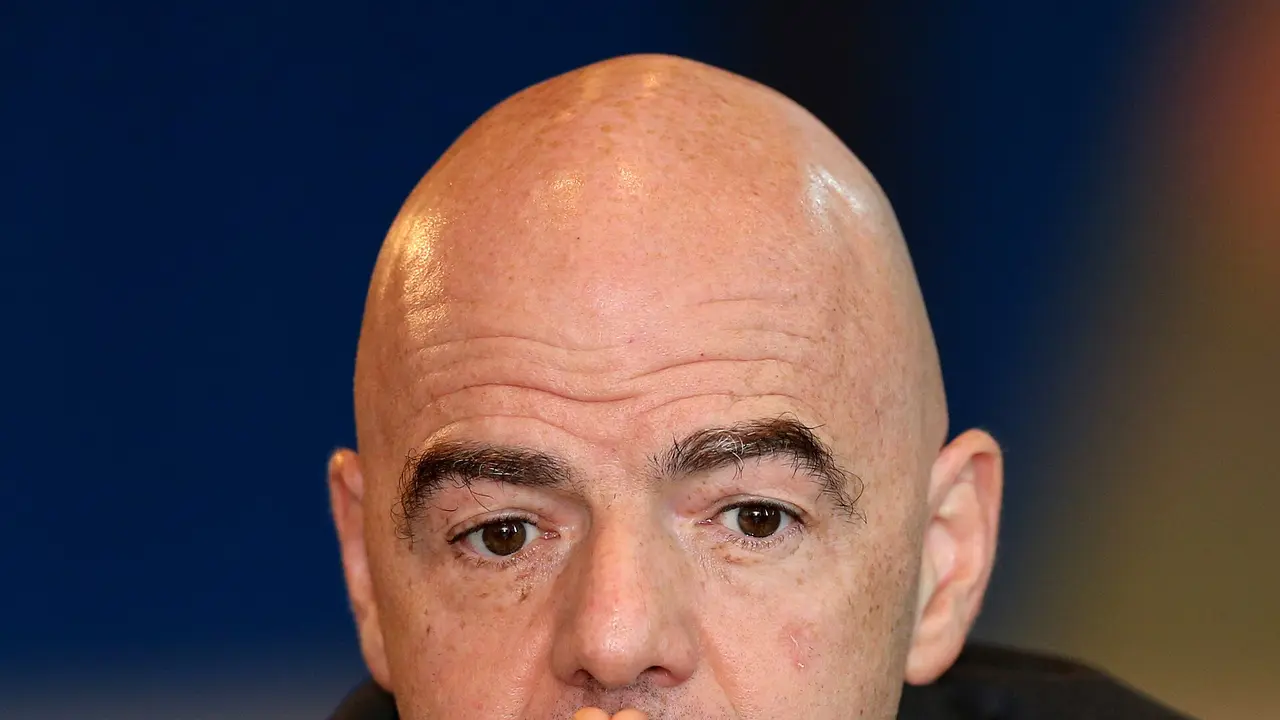
The world of football is no longer just watching the fields: it is observing a power struggle that spans from the Caribbean to Europe, through Africa and Asia. On August 22, 2026, Gianni Infantino chose to travel to Punta Cana, Dominican Republic, to appear at a U14 tournament organized by the Caribbean Football Union. The FIFA president had been asked to stay away by Victor Montagliani, president of Concacaf and FIFA vice president. The reason was explosive: his presence risked diverting attention from the young players to the governance crisis shaking the institution.
Infantino did not back down. According to Associated Press, he published images of meetings with Dominican political and sports officials on the sidelines of the competition. This gesture may seem ceremonial. In reality, it is deeply political. In an organization where each of the 211 federations has a voice, every trip, every photo, and every promise of development can become a message directed at allies, the undecided, and adversaries.
A Publicly Ignored Unprecedented Request
The letter from Montagliani, consulted by AP and reported by several media outlets, asked Infantino to reconsider his trip. The Canadian leader believed that the controversy surrounding the FIFA Forward Enterprise project would turn the youth tournament into a media spectacle. This project, ultimately abandoned, aimed to open a portion of future commercial revenues from the World Cup to private investors. Its estimated value of $20 billion and the idea of ceding a stake provoked rare opposition within football’s governing bodies.
The disagreement in Punta Cana is therefore not about a simple agenda. It raises a question of authority: what remains of collective discipline when the president ignores the request of a major member of his own leadership? Concacaf represents North America, Central America, and the Caribbean. It will be at the heart of the organization and legacy of the 2026 World Cup. Seeing its president openly oppose Infantino gives the fracture an institutional, geographical, and commercial dimension.
Punta Cana: A Small Tournament Becomes a Huge Symbol
The CFU U14 Challenge Series was initially meant to be a showcase for development. The Bahamas Football Federation, which announced its selection before the tournament, presents the event organized from August 16 to 23 as an opportunity for young players’ development. This mission remains essential. However, Infantino’s arrival shifted the narrative. Teenagers coming to play football find themselves indirectly at the center of a battle over the future of FIFA.
This is precisely the risk Montagliani said he wanted to avoid. A youth competition should not serve as a backdrop for a display of power. Yet, in football diplomacy, regional tournaments are also networking venues. The Caribbean Football Union comprises 31 associations, of which 25 are FIFA members according to AP. The weight of these voices can become decisive in a tight global vote. The trip thus has a dual interpretation: support for local development on one side, political legitimacy on the other.
The $20 Billion Project That Shattered Trust
The current crisis stems from the FIFA Forward Enterprise commercial subsidiary project. The stated goal was to find new capital and redistribute more resources to federations. For its opponents, the arrangement risked placing part of the World Cup’s economy under the influence of private investors and reducing the political control of the members. In the face of the backlash, Infantino withdrew the project, but the withdrawal did not erase the rupture.
Associated Press reported the departure of Kevin Lamour, FIFA’s operations director, following his criticisms of the plan. Other officials have distanced themselves. UEFA has mentioned retaliatory measures, and leaders from several confederations have coordinated their positions. An abandoned project can normally close a crisis. Here, it opened a more dangerous question: can federations still trust the decision-making process surrounding the most valuable revenues in global sport?
A Possible Rival Emerges Within FIFA Itself
On August 22, The Guardian revealed that officials from African federations had approached Mattias Grafstrom about a potential candidacy against Infantino in the next election. The FIFA Secretary General has made no public commitments. However, the mere fact that his name is circulating indicates that dissent is seeking faces, alliances, and an electoral path.
Africa is becoming central to this equation. It has 54 federations and has long constituted an important power base for Infantino. The Guardian reports that between ten and fifteen associations might be ready to switch sides, amid discontent over governance and the future of the Africa Cup of Nations. Nothing is certain, and these figures are based on anonymous sources. But an opposition uniting European, Asian, North American, and African voices would no longer be a regional protest. It could become a majority.
Why This Crisis Concerns All Supporters
Governance may sometimes seem abstract in the face of goals, transfers, and stadiums. Yet, it determines the calendar, the distribution of money, the organization of competitions, support for smaller federations, and the place of broadcasters or investment funds. If FIFA transforms its commercial assets, the consequences ripple down to clubs, teams, players, and fans. The current conflict revolves around the simplest yet most challenging question: who controls the value created by global football?
The Punta Cana tournament also illustrates a moral tension. The development of youth football requires funding, infrastructure, and visibility. It should not become a political currency. When a governance crisis invades a U14 event, the institution gives the impression that every space of play can be used to count support. This perception is dangerous, even if no evidence suggests that votes were negotiated during the trip.
The Signal That FIFA Can No Longer Ignore
Infantino retains the presidency, powerful allies, and exceptional knowledge of internal balances. His appearance in the Dominican Republic can even be read as proof that he refuses to let his opponents limit his movements. However, the image of a president publicly defying a vice president does not erase the crisis: it makes it visible. Authority is not only measured by the ability to enter a room. It is measured by the ability to maintain the trust of those who must vote, finance, and implement decisions.
For B-Empire Magazine, the signal is global. Football has just emerged from a World Cup, and its major European championships are restarting, but its most important battle may be fought far from the pitches. If Grafstrom or another candidate gathers the opposition, the next FIFA election will become a referendum on the Infantino model. If no credible rival emerges, the president may survive the storm, but with a more divided institution.
Punta Cana will then remain a turning point: the moment when a U14 tournament revealed to the world that the hierarchy of football no longer spoke with one voice. Infantino wanted to show that he was still in motion. His adversaries may see it as proof that he no longer listens. Between these two interpretations lies the future of power in the most-watched sport on the planet.
Sources
- Associated Press – Infantino defies FIFA vice president at Caribbean youth event, August 22, 2026.
- The Guardian – Mattias Grafstrom could stand against Infantino, August 22, 2026.
- The Guardian – Infantino eyes Dominican Republic tournament as route out of crisis, August 20, 2026.
- Associated Press – A top official leaves FIFA amid sell-off fallout, August 18, 2026.
- AS – Montagliani declares war on Infantino, August 22, 2026.
- Bahamas Football Association – CFU U14 Challenge Series Boys, August 11, 2026.