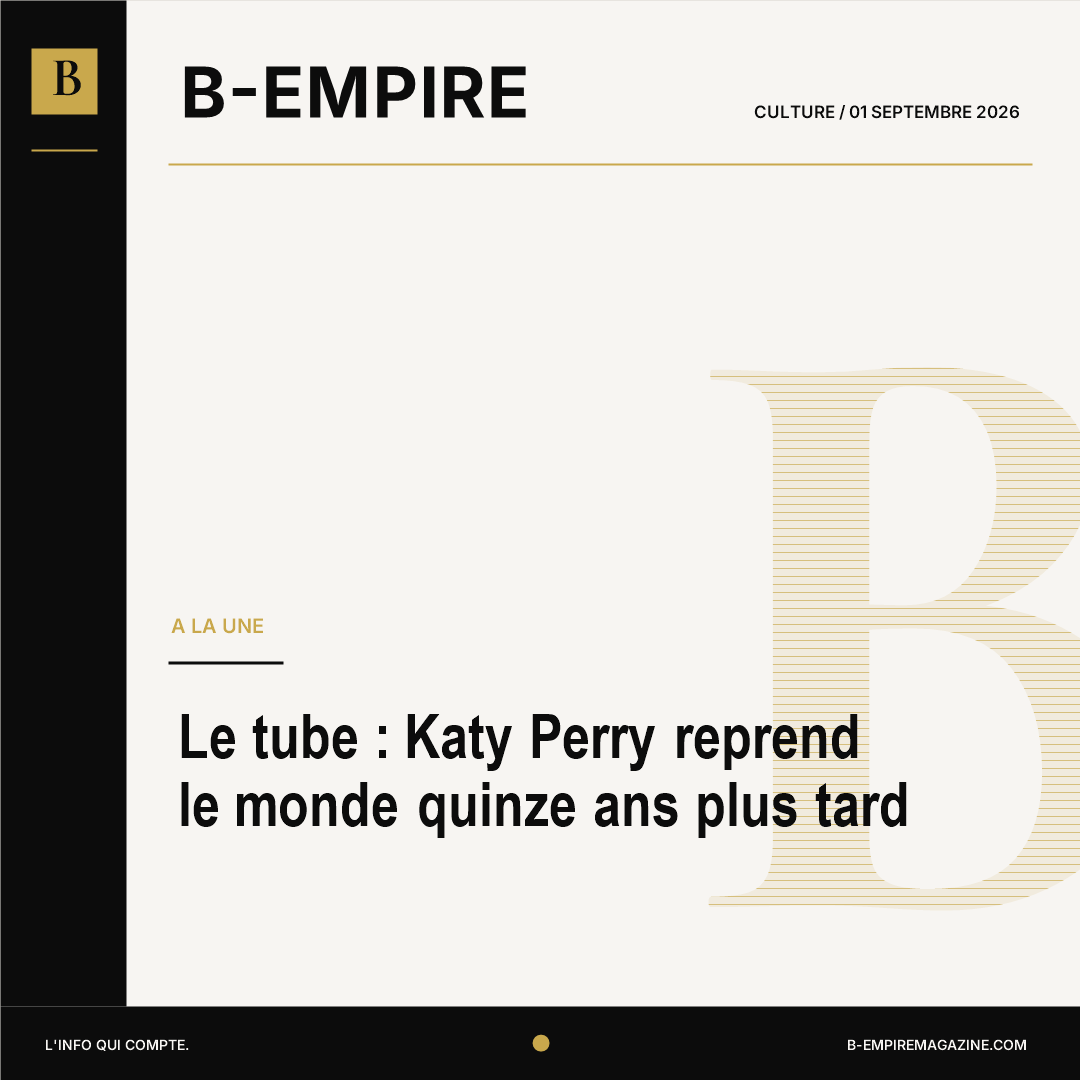
The biggest hit of summer 2026 is not a new release. It has been lying dormant for fifteen years within one of the most famous pop albums of the century. On September 1, TikTok designated The One That Got Away by Katy Perry as its global song of the summer, outpacing recent hits and artists propelled by the industry. The verdict resembles a perfect paradox: at a time when thousands of tracks emerge daily on platforms, the global audience has chosen a ballad released in 2011.
The numbers illustrate the phenomenon. According to TikTok, the track has accompanied over 42 million videos and generated more than 55 billion views on the platform during its resurgence. The song has also surpassed 1.8 billion streams on Spotify and spent 21 weeks on the Billboard Global 200. This is no longer just a memory rekindled by a few fans. It is a global cultural event, capable of connecting a generation that experienced the era of Teenage Dream with another that discovers the song through montages, heartfelt confessions, and video trends.
A 2011 Song Becomes the Sound of 2026
Upon its release, The One That Got Away was the sixth single from the album Teenage Dream. The song narrated the memory of a lost love and the obsession with another possible life. It had already achieved immense success, yet it never reached the number one spot in the U.S. that would have extended the album’s historic streak of number ones. Fifteen years later, this slight sense of incompleteness almost perfectly fuels its return: the track that spoke of what slipped away is precisely the one that refuses to disappear today.
The renaissance began well before TikTok’s announcement. In the spring, the track returned to the charts in numerous countries, gaining new intensity as users associated it with their own stories. Scenes from movies and series, breakups, ended friendships, abandoned dreams, or family memories transformed the song into a common language. The easily readable emotion of the chorus works without a manual and transcends borders. In the economy of short video, this immediacy is worth its weight in gold.
Why Nostalgia Still Wins
The success does not solely rely on the memory of the 2010s. It reveals a deeper mechanism. Platforms give old songs a second life that no longer adheres to the traditional calendar of record labels. A track is no longer doomed to follow the trajectory of release, promotion, charting, and forgetfulness. It can return fifteen years later because a phrase, a melody, or an emotion suddenly aligns with the practices of a new community.
This logic favors tracks capable of producing a narrative in a few seconds. The One That Got Away offers a universal tension: the person, choice, or future one wished to hold onto. Creators can project their own stories onto it while being instantly understood. The algorithm then amplifies videos that provoke reactions, but it does not solely create attachment. It encounters here a song that is already well-written, an identifiable voice, and an available emotional imagery.
Katy Perry Turns the Comeback into an Event
Katy Perry did not remain a spectator. In the face of the resurgence in popularity, she highlighted the music video and released an extended version directed by Floria Sigismondi, enriched with narration by Stevie Nicks. This decision provided longtime fans with a new archival piece and offered younger audiences a prestigious entry point. The singer also engaged in online conversations around the track, embracing humor and reinterpretations rather than attempting to control the phenomenon.
This is a lesson in cultural strategy. When an old track goes viral, the most effective reaction is not always to immediately launch an artificial remix or an overly visible campaign. It is first necessary to understand what the audience is seeking. Here, users wanted the original emotion, nostalgia, and the opportunity to share their own regrets. The director’s version and Stevie Nicks’ voice deepen this universe instead of replacing it.
The Music Catalog Becomes a Living Asset
For the industry, this triumph confirms that catalogs are no longer mere libraries exploited passively. They are reserves of future successes. Labels, publishers, and artists now monitor signals from TikTok, YouTube, Spotify, and fan communities as they once observed radio rotations. An old song can recreate listening, sales, editorial placements, synchronizations, and concert demand without the need for a new work.
This evolution also alters the competition. A young artist is not only competing against the weekâs releases but against the entire history of recorded music available at a click. Conversely, new practices can introduce a catalog to millions of listeners who were not born during its initial promotion. The boundary between novelty and heritage becomes blurred. For the audience, a song discovered today is psychologically new, regardless of the date printed on its cover.
A Global Summer with Very Different Accents
The TikTok charts also show that viral culture does not boil down to a single center. The platform has recognized Zara Larsson for the energy of âPop Girl Summer,â the K-pop group CORTIS, and other regional phenomena. In the UK, the garage track Do You Mind by Kyla and DJ Paleface, also dating back to 2008, topped the local summer chart. In Japan, the choice fell on Otsukare Summer by HALCALI. The common thread is clear: internet users move freely between eras, languages, and music scenes.
This diversity is a strength for an industry long organized by territories. A trend born in one country can now spread before an international campaign is even ready. But local charts remind us that the world does not listen to exactly the same thing everywhere. The true power of TikTok may be less about imposing a single hit than about making visible, side by side, an American pop resurrection, a UK garage comeback, a K-pop wave, and a Japanese song.
The Signal That No One Can Ignore
Katy Perry’s coronation sends a message to artists: no song is ever definitively over. A work can miss a peak during its first life and become, years later, the symbol of an entire season. This does not mean that every catalog contains a future phenomenon. Viral comebacks remain unpredictable, and the figures reported by platforms must be read within their own context. But when a strong emotion meets collective usage, time ceases to be an obstacle.
For B-EMPIRE, the story transcends the charming narrative of a rediscovered classic. It tells the new global battle for attention. In 2026, the song of the summer can be old, the campaign can begin with fans, and the chart can crown a title long after its official commercial cycle. The One That Got Away bore a title dedicated to loss. Fifteen years later, it becomes, on the contrary, the striking proof that in the age of platforms, some songs never really escape.
Sources
- TikTok Newsroom â Global and US Song of the Summer 2026
- Official Charts â The One That Got Away, history and return to the charts
- Forbes â Katy Perry’s New Global Chart Peak in 2026
- Universal Music Japan â Global Return of the Track and Progress on Spotify
- TikTok Japan â Songs of the Summer 2026 in Japan and Global Ranking