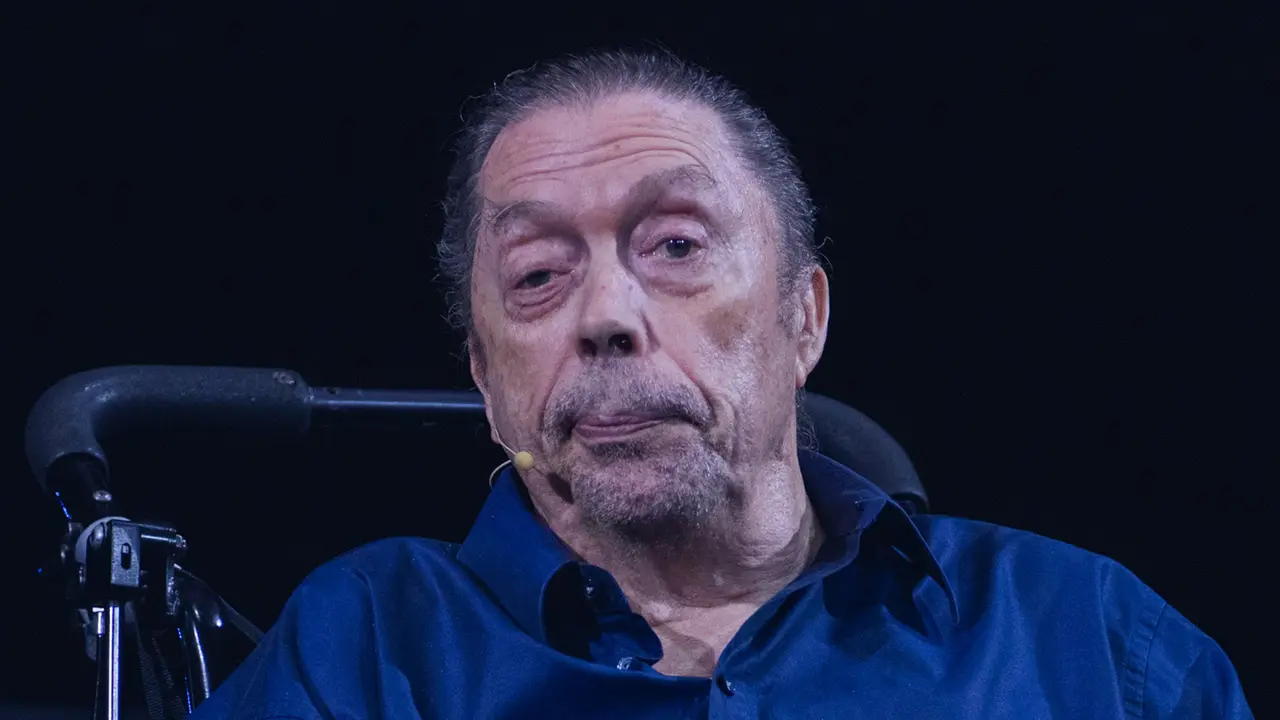
All it took for Tim Curry was a smile, a voice inflection, or a glance to shift a scene into another dimension. The British actor, who became a global icon thanks to The Rocky Horror Picture Show, has died at the age of 80. His long-time manager, Marcia Hurwitz, confirmed to the Associated Press and Variety that he passed away peacefully on Tuesday evening at his home in Los Angeles. The cause of death has not been disclosed.
The announcement triggered a wave of tributes far beyond cinema. For Tim Curry was not just Dr. Frank-N-Furter, Pennywise, or the electric butler in Clue. He belonged to that rare category of performers whose characters continue to live outside their works: in midnight screenings, costumes, memes, dubbing, conventions, and the collective memory of several generations.
A Death Confirmed by His Circle
According to the Associated Press, Tim Curry died on the evening of Tuesday, August 25, 2026, at his home in Los Angeles. Variety reported the same confirmation from Marcia Hurwitz, his friend and long-time manager. The actor had suffered a severe stroke in 2012, which led him to use a wheelchair, but he continued to make public appearances and work on various projects.
This detail matters, as the first hours following the death of a celebrity often produce conflicting narratives. The essential information here is corroborated: Curry was 80 years old, he died peacefully at home, and no official cause has been communicated. The rest now belongs to the history of a career that began on stage and became a global phenomenon.
Rocky Horror, the Role That Broke All the Rules
Tim Curry burst into popular imagination with the role of Dr. Frank-N-Furter in the musical The Rocky Horror Show, created in London in 1973, before reprising the character in the film The Rocky Horror Picture Show in 1975. The feature film did not immediately become a classic triumph. It built something stranger and more enduring: a collective ritual.
Through midnight screenings, audiences dress up, respond to dialogues, sing, and turn each showing into a performance. Frank-N-Furter becomes a figure of provocative freedom, theatricality, and joyful transgression. Curry does not merely portray an extravagant character. He imposes a presence that refuses to acknowledge the boundaries between horror, rock, comedy, desire, and cabaret.
More than fifty years after the film’s release, this creation remains his most famous role. However, to reduce it to a 1970s eccentricity would overlook its significance. In many countries, including France, Rocky Horror continues to gather communities around participatory screenings. The film has proven that a work can survive not only through its script but through what audiences choose to make of it.
Pennywise, Darkness, Clue: The Art of the Irresistible Villain
Tim Curry had a unique talent for dangerous characters that one could not take their eyes off. In the 1990 miniseries It, adapted from Stephen King’s novel, his Pennywise left a lasting mark on horror culture. Long before sophisticated digital effects, Curry created fear with his face, his pacing, and that ability to shift from childlike seduction to pure menace.
In Ridley Scott’s Legend, he disappeared under the monumental makeup of Darkness without losing his vocal authority. In Clue, he transformed Wadsworth into the comedic engine of a cult film. In Home Alone 2: Lost in New York, his suspicious concierge offered another version of his art: an outraged dignity, immediately funny, capable of stealing a scene in seconds.
This common thread explains the audience’s attachment. Curry never played his antagonists as mere obstacles. He gave them intelligence, musicality, and often a sense of enjoyment. His villains seemed to know they were at the center of the show. This silent complicity with the audience made his performances infinitely imitable but almost impossible to replicate.
A Voice Heard by Millions of Children
A significant part of his legacy also lies in animation and voice acting. Tim Curry lent his voice to numerous productions, including Peter Pan and the Pirates, The Wild Thornberrys, Star Wars: The Clone Wars, and several films aimed at young audiences. The Associated Press reminds us that he won a Daytime Emmy in 1991 for his portrayal of Captain Hook.
This vocal career reveals the essence of his technique. Even stripped of costumes, makeup, or gestures, Curry could build a world with a timbre. His deep voice could become elegant, unsettling, ironic, or warm. Many viewers discovered Tim Curry without knowing his face, only to later connect that familiar voice to his film roles.
Broadway Never Forgot the Actor
His journey was not limited to the screen. Trained in England, Tim Curry began in theater and maintained a deep connection to the stage. He received three Tony Award nominations, notably for Amadeus, My Favorite Year, and Spamalot. The latter role, that of King Arthur, reminded the general public that his sense of timing and absurdity worked just as well without cinematic effects.
This dual identity explains the precision of his performance. Curry had the range of theater and the instinct of the camera. He could enlarge a character to the grotesque and then slip in a tiny detail that made them human. This skill has become rare in an industry that often separates careers between stage, screen, and voice.
After the Stroke, a Presence Became a Symbol of Resilience
The stroke he suffered in 2012 profoundly changed his life and mobility. Yet, Tim Curry did not disappear. He continued to meet with fans, participate in readings, conventions, and take on certain roles. In 2024, he returned to live-action film with the horror movie Stream, a comeback celebrated as an event by genre enthusiasts.
His way of remaining visible without masking the consequences of his accident added another dimension to his public image. It reminded us that a career is not solely defined by youth, mobility, or physical perfection. For many fans, seeing him continue to engage and create was, in itself, a form of victory.
Why Tim Curry Will Remain Irreplaceable
The death of Tim Curry closes a career, but it does not close the phenomenon. Every participatory screening of Rocky Horror reactivates Frank-N-Furter. Every rerun of It awakens Pennywise. Every new generation discovering Clue encounters that butler caught in a mad race against time and secrets.
His influence is evident in much of contemporary culture: flamboyant villains, a taste for camp, performances that engage with the audience, and characters that refuse to be morally or aesthetically wise. Curry showed that an actor could be excessive without being imprecise, funny without defusing the threat, and cult without being confined to a single role.
The world is not just mourning a familiar face. It is losing one of its great character makers. Tim Curry understood that the most memorable monsters are not those that hide, but those that step into the light as if they already own the stage. That light, his films, and his audience will continue to reignite it.
Sources
- Associated Press â Tim Curry, iconic character actor and Rocky Horror star, dies at 80, August 26, 2026
- Variety â Tim Curry, Rocky Horror Picture Show star, dies at 80, August 27, 2026
- The Guardian â Tim Curry, star of Rocky Horror and It, dies aged 80, August 26, 2026
- ABC News Australia â Actor Tim Curry dies aged 80, August 27, 2026