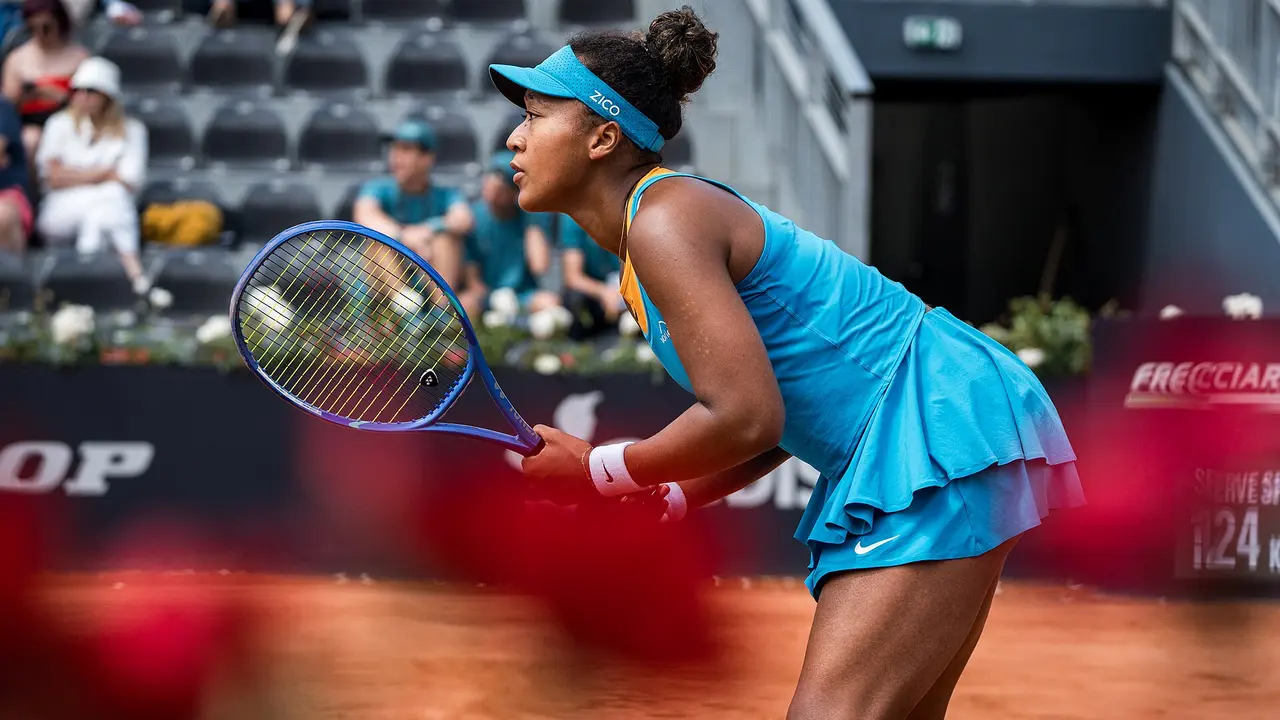
In New York, the light that disrupts the US Open no longer comes solely from the stadium’s spotlights. It also emanates from ring lights aimed at content creators in the midst of rallies. Following several filmed incidents in the stands of Arthur Ashe Stadium, Naomi Osaka has called on the tournament’s new guests to respect the basic rules of tennis. The controversy extends far beyond a spectator incident: it reveals the tension that now permeates all major sporting events, caught between the quest for a young audience and the preservation of live spectacle.
According to the Associated Press, the number of accredited content creators at the US Open has doubled compared to the previous year. This opening was intended to amplify the tournament’s presence on TikTok, Instagram, and other platforms. However, during Osaka’s first match, individuals in a suite filmed a sequence as a point was about to be played. Chair umpire Kader Nouni had to intervene. Another scene showing the use of a bright light for photography sparked a wave of online criticism.
The Moment Virality Entered the Court
Tennis has a unique culture of silence. The audience can erupt between points, cheer loudly, and turn an evening into a celebration, but movement and noise must cease at the moment of service. This collective choreography protects the players’ concentration and allows for a clear television experience. A ring light turned on in a player’s line of sight is therefore not just a decorative detail: it directly alters the conditions of play.
Osaka has taken a measured stance. She has not outright rejected influencers and acknowledges their ability to attract new audiences. However, she believes that interruptions during play are disrespectful. Her message resonates because it avoids the false duel between the old and the modern. The issue is not about filming, posting, or wearing a spectacular outfit. The problem begins when content creation becomes more important than the event that serves as its backdrop.
Why the US Open Invites More Creators
For the organizers, the strategy is understandable. Major tournaments are no longer just competing for television rights and ticket sales. They are fighting for minutes of attention on phones. A popular creator can introduce tennis to millions who would never watch a full match. A video focused on outfits, food, behind-the-scenes, or the atmosphere can transform a tournament into a cultural phenomenon.
The US Open is particularly suited to this logic. Held in New York, it blends sport, celebrity, fashion, music, and premium hospitality. Its night sessions are already designed as grand spectacles. Brands want to appear in this environment, and influencers provide immediate distribution. The tournament can thus renew its audience, enhance its partners, and extend each day well beyond the courts.
However, this model carries a contradiction. The more an event becomes desirable as a social backdrop, the more it attracts guests whose primary goal is not necessarily to watch the sport. The seat in the stands becomes a studio, the match becomes a backdrop, and the player risks becoming a mere figure in their own competition. The controversy in New York is the spectacular symptom of this inversion.
A Viral Reminder to Order
Images of the umpire asking spectators to sit have circulated because they encapsulate a broader irritation. In concerts, restaurants, museums, and fashion shows, the same question arises: how far can one transform a collective experience into an individual content production? The phone allows everyone to document a moment. It can also prevent others from experiencing it.
The players’ reactions have added another dimension to the debate. Coco Gauff and Jessica Pegula have also been questioned about the behavior of certain guests. The issue is no longer confined to an annoyed comment on social media. It concerns visual safety, concentration, the pace of matches, and fairness among athletes. A slight interruption may seem comical from a few seconds of video; in a tight point of a Grand Slam tournament, it can weigh heavily.
Sports Marketing Facing Its Own Success
Global sports have long dreamed of appealing to generations that consume less linear television. Content creators have become a central response: access to behind-the-scenes, lounges, exclusive products, athlete meet-and-greets, and easily shareable vertical formats. This strategy works. It gives competitions a daily presence in digital conversations.
However, the US Open is discovering that accreditation does not automatically convey the codes of a sport. A specialized journalist knows not to use flash during a point. A guest from the lifestyle universe may not grasp the impact of a portable light or moving at the wrong moment. As the number of accreditations increases, training and rules must follow. The welcome can include a clear briefing, designated creation areas, specific schedules, and unambiguous penalties.
A Lesson for Roland-Garros and Major French Events
The New York debate directly interests France. Roland-Garros, Paris Saint-Germain, the Tour de France, festivals, and Paris Fashion Week are also seeking to expand their reach through creators. All must solve the same equation: provide strong images without allowing the staging to disrupt the competition, concert, or show.
The answer is likely not to exclude influencers. Many are well-versed in the disciplines they cover and produce work capable of explaining the sport to a new audience. A blanket ban would confuse problematic behaviors with an entire profession. The most robust solution is to treat these guests as true professionals, with rights, spaces, but also specific obligations.
What the Tournament Must Protect
The value of the US Open rests on a simple promise: the best players in the world compete for points whose outcome is uncertain. All the commercial power of the tournament stems from this uncertainty. Brands, celebrities, and creators want to be present because the match matters. If the environment undermines the quality or credibility of that match, the marketing machine ultimately damages the product it sought to amplify.
Naomi Osaka has thus made more than just a polite request. She has reminded us of the fundamental hierarchy of sports spectacle: the content begins on the court. Social media can make it global, influencers can translate it into new languages, and sponsors can fund its growth. But at the moment of service, silence still belongs to the game.
A Signal That Cannot Be Ignored
This incident may remain a very New York anecdote, a blend of celebrity, technology, and poor etiquette. It could also become a turning point. As stadiums transform into content platforms, organizers will need to define a new boundary between participation and disruption. This boundary should not pit the digital audience against the traditional audience. It must protect the shared attention.
The message extends far beyond tennis: inviting new narrators is a strength, provided they do not erase the story they have come to tell. At Flushing Meadows, a simple ring light has made this tension visible to the entire world. Now, the US Open and other major events know that a successful influence strategy is not only measured by the number of views. It is also measured by its ability to respect the real moment.
Sources
- Associated Press, September 4, 2026, on the doubling of creator accreditations, incidents, and player reactions.
- Forbes, September 4, 2026, on the tournament’s influence strategy and the controversy surrounding ring lights.
- The Independent, September 4, 2026, on Naomi Osaka’s call for respect for tennis etiquette.
- Good Morning America, September 3, 2026, on viral videos and disruptions observed during matches.