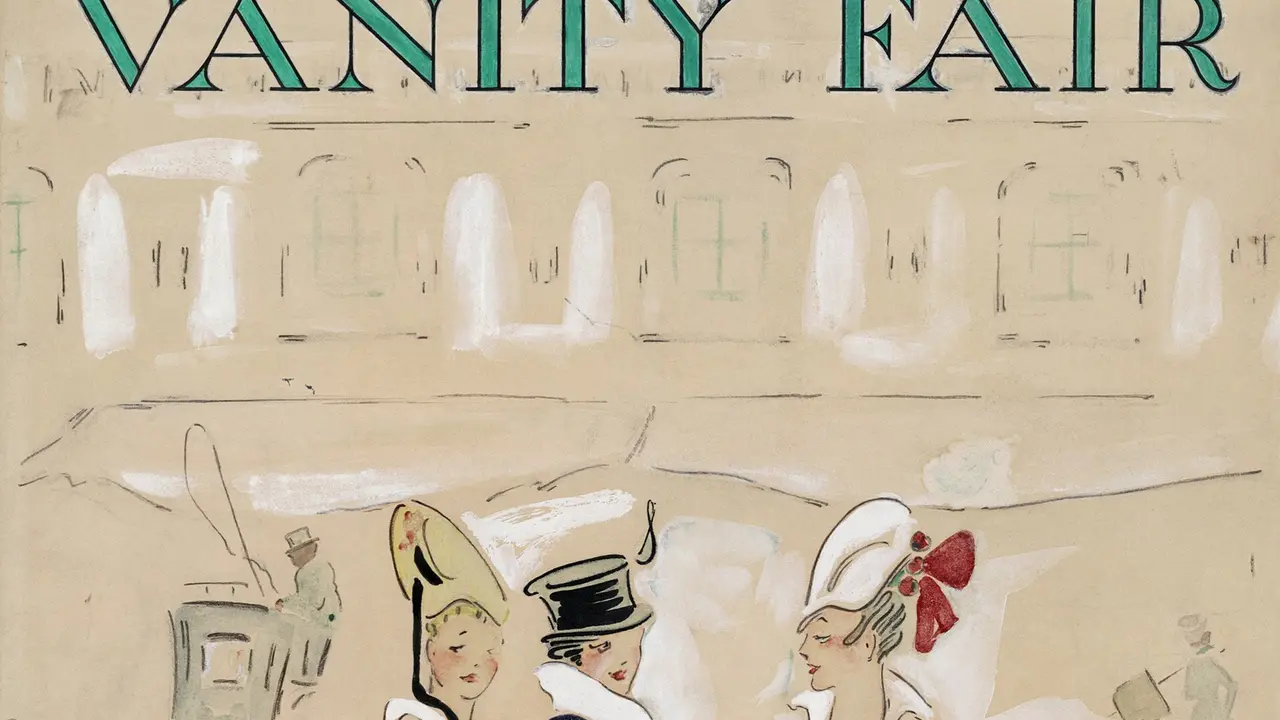
The return of a list can sometimes say more than a runway show. Vanity Fair relaunched its major Best Dressed list on August 25, 2026, after an absence that stretched back to the start of the decade, and the event feels less like a simple ranking of elegant celebrities than a map of contemporary cultural power. Teyana Taylor, Colman Domingo, Jacob Elordi, Michaela Coel, Harry Styles, Paloma Elsesser, Hunter Schafer and other figures appear as signals: style has once again become a language that is political, commercial and intimate at the same time.
The timing is sharp. After years dominated by quiet luxury, athleisure, nostalgia and microtrends swallowed by social platforms, Vanity Fair is not merely celebrating clothes. The magazine is celebrating people capable of making a garment readable as a position. In a landscape saturated with images, being well dressed no longer necessarily means wearing the rarest piece. It means building a silhouette that can be recognized before anyone reads a caption.
The End of Neutral Good Taste
Vanity Fair’s main list brings together very different profiles: actors, musicians, creators, artists and public-stage icons. That choice shows that fashion is no longer understood only through houses or seasons. It is understood through characters. Teyana Taylor is not simply a couture client. She is the editor of her own image. Colman Domingo has turned menswear tailoring into a narrative stage. Jacob Elordi has given vintage ease and luxury workwear global visibility. Michaela Coel reminds us that color, volume and presence can function as a manifesto.
This diversity contradicts the idea of a single taste. Neutral good taste, clean, smooth and acceptable everywhere, is no longer enough. The personalities that break through are the ones who dare to be coherent. They can be classic, extravagant, minimal or theatrical, but they create the impression of inhabiting their choices. Clothing does not come after celebrity. It helps manufacture it.
Five Categories to Explain the Moment
Vanity Fair did not stop at ten names. The package expands into categories: the perennials, the originals, the professionals, the duos and the future. That architecture matters. It avoids the old hierarchy in which a handful of stars monopolized the conversation. It recognizes that sartorial influence is now built through multiple channels: endurance, eccentricity, expertise, relationship and promise.
The perennials, including Tom Ford, Dapper Dan, Tracee Ellis Ross, Nicole Kidman, Chloë Sevigny, Grace Jones and Lenny Kravitz, embody duration. The originals, from Spike Lee to Björk through Rosalía, Sandy Powell, Yseult and Pope Leo XIV, defend style as surprise. The professionals remind us that stylists, critics, designers and models are no longer only workers of the image: they are also its protagonists. The duos, with Rihanna and A$AP Rocky, Zendaya and Law Roach, Mary-Kate and Ashley Olsen, Kim Kardashian and North West or Emmanuel and Brigitte Macron, show that fashion is also read in pairs.
Zendaya and Law Roach, the Business Model of Allure
The presence of Zendaya and Law Roach in the duos category is one of the most meaningful choices. Their collaboration has already redefined what an actress can do with a red carpet: turn every appearance into a chapter of a cultural strategy. The stylist is no longer hidden behind the star. He becomes co-author. That visibility changes the fashion business, because it makes process as important as result.
For fashion houses, the duo offers a lesson. A dress does not matter only because of its price, its archive status or its technical difficulty. It matters because of the story it enters. When Zendaya wears a silhouette at the right moment, with the right narrative and the right creative complicity, the garment becomes media. It circulates, is clipped, discussed and remembered. In the attention economy, the most powerful style is the one that generates its own context.
Pope Leo XIV, or the Collision of Codes
One of the names that sparked reaction is Pope Leo XIV, cited among the originals. The Times noted that Vanity Fair praised his mix of papal dress and more personal touches, even mentioning Nike sneakers and baseball caps. The choice may look anecdotal or provocative. It is mostly revealing: in 2026, even the oldest institutions are analyzed as producers of image.
The question is not whether a pope should appear on a fashion list. The question is why his presence becomes possible. Religious, political, sporting and pop codes now circulate in the same visual space. Every garment worn publicly is immediately interpreted as a sign. A cassock, a shoe, a color or a cap can become an element of language. Fashion has not simply infiltrated religion; public image has made every institution stylable.
Fashion as Personal Capital
The future category confirms another shift. Vanity Fair places names such as Olivia Dean, Chase Infiniti, Blue Ivy Carter, Lux Pascal, Tyla, Isha Ambani and Erling Haaland in that group. The message is clear: style is no longer a career supplement. It becomes launch capital. An actor, athlete or musician can accelerate the move into icon status if their image is immediately recognizable.
Erling Haaland is a particularly interesting case. The Norwegian footballer belongs to sport, but his interest in Hermès Birkin bags, highlighted in Vanity Fair’s coverage, pulls him into a luxury conversation. This is not mere vanity. It proves that athletes are no longer only performing bodies. They are complete cultural brands, able to connect stadium, dressing room, high leather goods and social networks.
Why the List Matters for Brands
For the industry, the return of Best Dressed is more than editorial content. It is a dashboard. Fashion houses can read which archetypes are capturing attention: the contemporary Black dandy, the experimental pop star, the creative duo, the heiress turned style signal, the actor refusing uniformity, the athlete taking control of luxury accessories. Each name becomes a commercial hypothesis.
Fashion is moving through a period of price fatigue and uncertainty around desire. Consumers see a lot, buy more carefully and compare more intensely. In that context, brands need people who can make fashion feel necessary again. Not necessary as material need, but as a tool of presence. A successful Best Dressed list reminds us why a garment can still start a conversation, sell a silhouette, relaunch an archive or transform a personality into brand territory.
Clothing as Proof of Existence
What may be most interesting in this 2026 edition is its implicit refusal of compulsory discretion. After years in which distinction was often narrated through sobriety, Vanity Fair puts expression back at the center. Not empty excess, but signature. Grace Jones, Björk, Colman Domingo, Zendaya, Teyana Taylor and Michaela Coel do not dress to disappear into good taste. They dress to assert a form of existence.
That is why the list deserves attention. It does not only say who is elegant. It says the age is looking for characters capable of carrying an image without being swallowed by it. In a world where everyone produces their own visual feed, true style consists in remaining identifiable. Vanity Fair is therefore not merely reviving a society tradition. The magazine reminds us that fashion, when it is inhabited, remains one of the fastest forms of cultural power.
Sources
- Vanity Fair – Vanity Fair’s 2026 Best Dressed List
- Vanity Fair – The 2026 Vanity Fair Best Dressed List
- Vanity Fair – Best-Dressed Duos of 2026
- Vanity Fair – Most Original Dressers of 2026
- Vanity Fair – Best-Dressed Breakout Stars of 2026
- Daily Front Row – Vanity Fair Relaunches the Best Dressed List for 2026
- The Times – Vanity Fair puts Pope Leo on its best dressed list