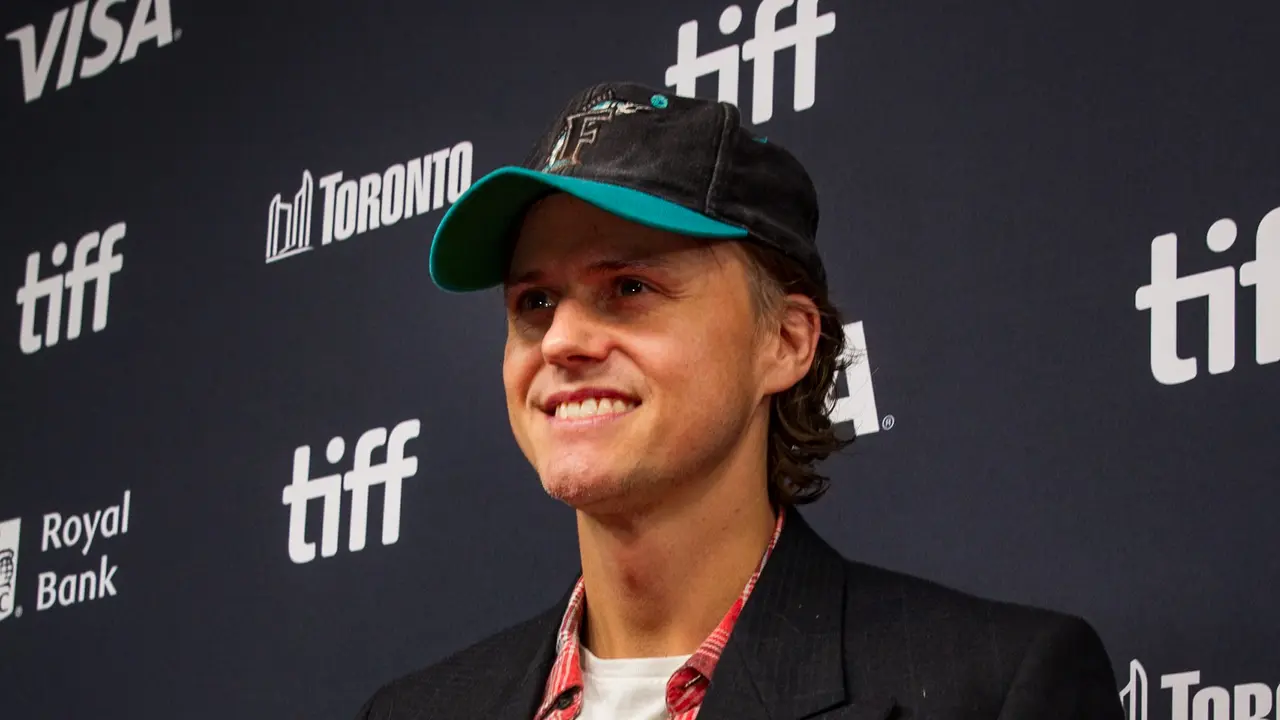
This Friday, August 14, HBO is putting forward a kind of performance that refuses to stay in one box. With Whitmer Thomas: Terminal Crew of Dudes, airing at 9 p.m. ET/PT on HBO and streaming on HBO Max, the American comedian, musician, actor, and filmmaker turns stand-up into a family album, a pocket concert, and a bittersweet chronicle of an adolescence spent trying to find a place.
The special marks Whitmer Thomas’ return to HBO after The Golden One, his previous show produced with A24 and Bo Burnham. This time, the artist comes back with his friends, musicians, and deeply personal material: the Alabama of his childhood, friend groups, ridiculous jokes, skateboarding, home videos, and that teenage obsession with seeming cool. Behind the laughter, HBO is selling a rarer idea: comedy as collective memory.
A Special Between Stand-Up, Songs, and Personal Film
Warner Bros. Discovery’s release presents Terminal Crew of Dudes as a show in which Whitmer Thomas is joined by Jeremy Ritchie, Clay Tatum, Budd Diaz, and his brother Johnny McCann. The setup matters as much as the punchlines. This is not only a microphone, a stage, and an hour of jokes: the artist blends stories, original songs, photos, and personal videos to create a narrative closer to collage than classic stand-up.
That hybrid quality explains why Whitmer Thomas occupies an interesting place in current American comedy. His work does not chase the cold perfection of a set calibrated for viral clips. It prefers accident, intimacy, awkwardness, and musical rhythm. The joke often emerges from an old image, a line that is too sincere, or an embarrassing memory. The result speaks to a generation that grew up with video archives of its own life and knows that ridicule can become a form of tenderness.
HBO Defends Another Economy of Laughter
HBO’s choice is strategic. In streaming, comedy specials often serve to quickly produce identifiable, exportable, easy-to-recommend appointments. But Terminal Crew of Dudes appears to play a more handmade card. Whitmer Thomas’ name does not rest on massive stardom; it rests on a community attentive to alternative comedy, independent cinema, music, and autobiographical forms.
In its August calendar, HBO Max places the special alongside films, series, documentaries, and franchises. That proximity shows how platforms now organize their value: they no longer sell only a catalog, but a succession of micro-events able to speak to different audiences. A special like this does not need to dominate the whole global conversation to be useful. It needs to give the service texture, voice, and singularity.
The Strength of Humor from the Margins
Whitmer Thomas comes from Gulf Shores, Alabama, and his comic imagination keeps that peripheral color. The special promises a return to pranks, youth memories, friend groups, and moments of family chaos. That territory is not only a backdrop; it is the engine of humor that transforms small humiliations into shared narrative. American provincial life, often caricatured, becomes emotional material here.
The connection with music further strengthens that signature. Thomas does not use songs as decorative interludes, but as another way of telling the story. Laughter can arrive through a melody, a tonal break, or the contrast between a very sincere emotion and an absurd image. In a market saturated with filmed stand-up, this musical dimension gives the special a more recognizable identity.
A Team That Also Describes a Scene
The project is co-directed by Clay Tatum and Whitmer Thomas, with Moses Goldfarb as director of photography. Executive producers include Tim Robinson, Matthew Vaughan, Josh Kessler, Olivia Gerke, and Ramy Katrib. Those names sketch a network of independent comedy, lo-fi cinema, and alternative television. The special therefore becomes a snapshot of a scene, not only the portrait of one artist.
That logic matters for the industry. Platforms are looking for signatures, but they are also looking for creative circles capable of making several formats: special, series, film, music video, podcast, live performance. Whitmer Thomas, positioned at the crossroads of music and independent cinema, fits that demand for creative flexibility. He can be performer, writer, director, actor, and composer without changing universes.
Why This August 14 Launch Matters
August 14 is not a neutral date in the platform calendar. In the heart of summer, as major film releases, festivals, and franchises compete for attention, HBO is choosing to give space to a more fragile and personal object. That reminds us that the streaming battle is not fought only through super-productions. It is also fought through the ability to keep singular artists within a brand’s orbit.
For B-EMPIRE, Terminal Crew of Dudes is interesting because it links three cultural economies: comedy, music, and intimate memory. The show talks about friendship, family, shame, and belonging, but it also talks about an industry that understands hybrid formats can create stronger loyalty than perfectly polished products. In this case, the real luxury is not the size of the production; it is the permission given to a voice to remain strange.
The Signal Sent by HBO
HBO has long built its prestige on series, documentaries, and major stand-up appointments. By programming Whitmer Thomas, the network reminds viewers that it can still welcome stranger objects, less easy to categorize, but capable of building a lasting relationship with their audience. At a time when so much content looks alike, that difference becomes an asset.
The launch of Terminal Crew of Dudes may not make the noise of a global franchise. It has something else: a way of transforming personal memories into collective performance. And in a pop culture often chasing the gigantic, that deliberate modesty may be the most modern gesture.