On the eve of the 2026 World Cup final, a detail that may look decorative is actually telling a far bigger story. The most coveted trophy in world football will not reach the pitch in a generic transport case. It will be presented in an official Louis Vuitton trunk, designed in the brand’s historic workshops in Asnieres-sur-Seine, just outside Paris. The move was made official by FIFA on July 14, 2026 and then detailed by Louis Vuitton, while press images released on July 16, 2026 already showed the trophy displayed inside the trunk in New York. As the football world turns toward the final on July 19, 2026, France is stepping into the heart of the ceremony without playing the match itself, but by capturing part of the symbol.
This is a strong story for B-EMPIRE Magazine because it sits at the intersection of several editorial priorities at once. There is world football, of course, with the single most watched sporting moment of the year. There is France, but not through politics or state power. Instead it enters through luxury, image and craftsmanship. And there is also a highly readable business and pop-culture angle: in modern sport, the battle no longer happens only on the field. It also happens in staging, in the brands able to dress prestige, and in the way an object can become a global message.
What FIFA actually announced before the final
The first hard fact comes from FIFA. In its statement published on Tuesday, July 14, 2026, the governing body announced that Louis Vuitton had been named an Official Supplier and Branded Licensee of the FIFA World Cup 2026 and that the French house would present the official trophy trunk during the final. FIFA specified that the trunk would be part of the ceremony program and would be brought onto the pitch by a Louis Vuitton ambassador and a FIFA legend, continuing a protocol in place since 2010. That matters. This is not just a side product or a secondary activation. It is a visible piece of the tournament’s most powerful ritual.
The second documented fact comes from Louis Vuitton. On its page dedicated to the 2026 World Cup, the house explains that the trunk was created to protect, transport and present the trophy, using the group’s familiar visual codes: monogram canvas, signature lozines, gold-tone brass details and a hand-painted golden V. Louis Vuitton also emphasizes the French origin of the trunk, stressing that it was made by its artisans in keeping with the house’s heritage. Finally, press images released on July 16, 2026 showed the trophy inside the Louis Vuitton trunk in New York, confirming that the object has already entered the final’s visual drama.
Why this trunk is much more than a luxury accessory
The most superficial reading would be to say this is just another beautiful object in a football industry that has become heavily commercialized. That misses the point. The Louis Vuitton trunk works as a concentration of symbols. It links the biggest sports event on the planet to a French house that has long sold far more than products: it sells heritage, status, desire and a certain idea of prestige. In other words, even before the match begins, the final is already sending a sharp cultural message: world football no longer wants to be seen only as a sport, it wants to be consumed as a total experience.
That matters in the current economics of spectacle. Major competitions live on TV rights, sponsors, ticketing and social platforms, but they also live on signature images. The arrival of the trophy on the pitch is one of those images. When that image comes through a Louis Vuitton trunk, the ceremony gains a layer of choreographed luxury. FIFA gains brand elevation. Louis Vuitton gains planetary exposure. And France, without issuing a single speech, reminds the world that it remains one of the great powers in the visual language of prestige.
The real France angle: soft power through luxury and craftsmanship
This is where the story becomes especially interesting for both French and international audiences. The 2026 World Cup is being played in North America, the final is staged in the New York-New Jersey area, and yet part of the event’s visual narrative passes through an object made near Paris. That is a textbook case of French soft power. France does not impose itself through force here. It does so through the desirability of its brands, through the symbolic value of its workshops, through the historical legitimacy of its luxury industry and through its ability to turn a global moment into a culturally coded scene.
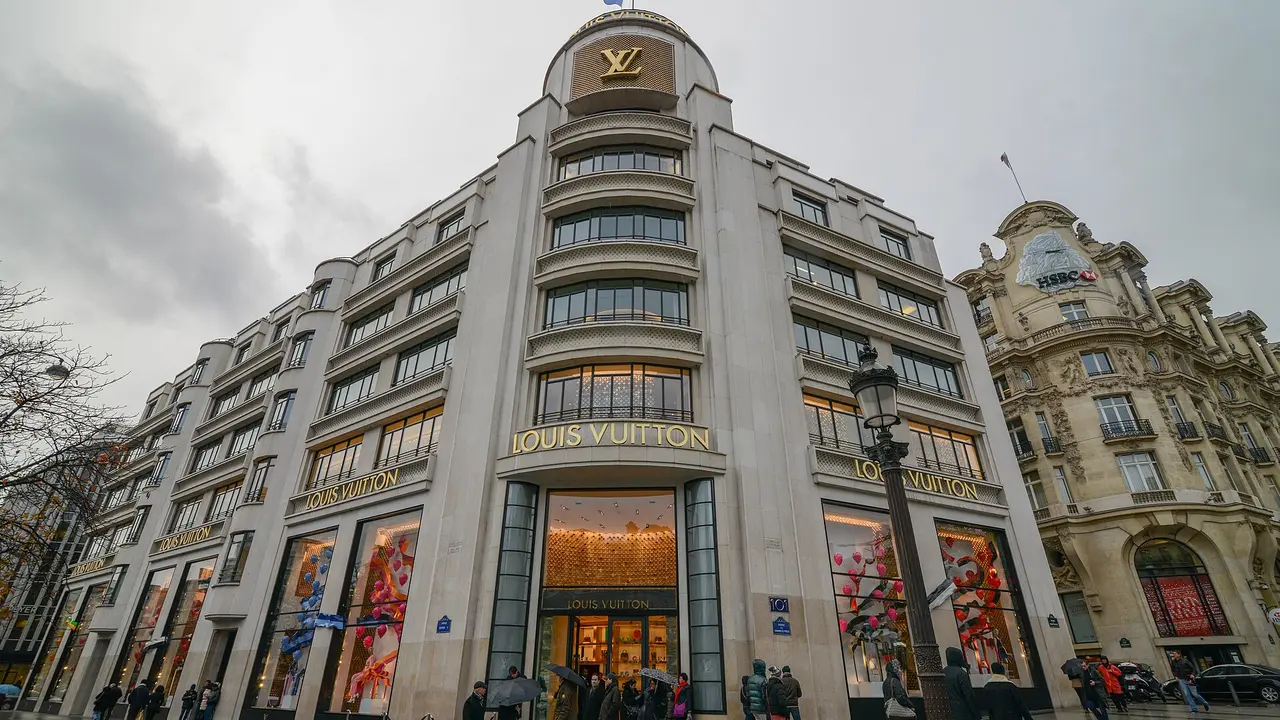
The place of manufacture is not a side detail. Both FIFA and Louis Vuitton stress that the trunk was created in Asnieres-sur-Seine, the brand’s historic site. That grounds the object in a very specific geography. It does not come from an anonymous production line. It comes from a French imagination of precision, elevated craft and transmission across generations. For the general public, that may sound secondary. For brands and for organizers of global events, it is central. Louis Vuitton is not chosen simply to protect a trophy. It is chosen for what the name alone communicates in front of hundreds of millions of viewers.
Why world football loves this kind of alliance
For years now, football has gone far beyond the field itself. Players have become fashion figures, clubs think of themselves as global brands, stadiums are turning into full entertainment stages, and governing bodies keep searching for partnerships that can further raise the perceived value of their competitions. The Louis Vuitton trunk fits that logic perfectly. It turns the presentation of the trophy into a premium, shareable, photogenic sequence that works seamlessly with the social codes of digital luxury.
There is also a simpler reason. The trophy itself is already an absolute icon. Once an object reaches that level of recognition, everything around it gains immediate value. World football therefore loves partners that can amplify that aura without stripping it of gravity. Louis Vuitton does that effectively because the house is not built on a mass-market product logic. It offers a logic of rarity, ceremony and heritage. That aligns almost perfectly with how FIFA wants to stage its ultimate prize.
A final that also becomes a runway for cultural power
The World Cup final remains, first of all, a match. But in 2026 it has also become a platform where sport, music, politics, technology, marketing and luxury intersect. The Louis Vuitton trunk confirms that transformation. It says the show does not begin at kickoff. It begins the moment the trophy appears. For broadcasters, for social networks and for brands, that sequence matters enormously because it concentrates emotion, projection and the promise of the ultimate moment.
It is also worth noting that the object arrives in a tournament already marked by the heavy aestheticization of football: shows, premium experiences, global content circulation, image dominance and an ever clearer fusion between sport and entertainment. In that context, the Louis Vuitton trunk is not an anecdote. It is a signal. It shows that organizers understand that a modern final is also won in the details that will travel fastest across Instagram, TikTok, YouTube and the next day’s media cycle.
What France gains from the image
For France, the benefit is twofold. In the short term, Louis Vuitton captures enormous visibility during the most watched weekend of the sporting summer. Over the longer term, that presence strengthens a broader narrative: even when the geographic center of the event shifts elsewhere, the architecture of global prestige still often runs through French brands. It is a very concrete way of staying inside the core of the global story without needing to control everything around it.
That may sound abstract, but it is economically real. Image feeds desire, desire feeds value, and value then supports an entire chain of products, experiences, collaborations and influence. When the World Cup final is visually framed by an object made in France, the country does not score goals. It gains something more diffuse but very powerful: a place in the global imagination of success, elegance and exception.
The signal no one can ignore before the final
As of July 18, 2026, the story therefore cannot be reduced to a luxury trunk spotted before the final. It tells a larger story about the transformation of global sport and about France’s singular place inside the economy of symbols. FIFA confirms that the Louis Vuitton trunk will stand at the center of the ceremony on July 19, 2026. Louis Vuitton confirms that it was born in Asnieres-sur-Seine. And the images released in New York prove that the object has already entered the theater of the biggest football event on the planet.
The clearest reading is straightforward: the 2026 World Cup final is not only about a title. It also stages a cultural hierarchy. And on that stage, France still holds rare strength. Not necessarily through political leaders, and not even through sporting performance this time, but through the ability of its houses to build the case around the moment the whole world is about to watch.