The 2026 World Cup suddenly holds one of its most meaning-laden fixtures. On the night of July 4 to 5, 2026, France ground out a 1-0 win over Paraguay in a rough, physical match, while Morocco brushed aside Canada 3-0 with cold authority and remarkable tactical reading. Result: the two sides now meet in the quarterfinals, and this duel already goes far beyond pure sporting logic. There are Les Bleus, perennial favourites, with their status, their depth and their pressure. And there is Morocco, now far more than an underdog, with a rare ability to shift the tournament’s centre of gravity and force big nations out of their comfort zone.
For a media outlet like B-Empire Magazine, the editorial interest is huge. The story is simultaneously worldwide, emotional, highly shareable and perfectly suited to Google Discover. It carries a strong France angle, yet it doesn’t lock itself into a purely domestic narrative. France is advancing, yes. But it’s advancing toward the team that today symbolises one of the deepest shocks in world football. According to The Guardian, Les Bleus had to abandon their usual elegance to beat a highly physical Paraguay thanks to a Kylian Mbappe penalty. Meanwhile, the British paper’s live coverage notes that Morocco, 3-0 winners over Canada, has become the first African nation to reach the World Cup quarterfinals twice. The stage is set: this quarterfinal isn’t just another match — it’s a status test for France and a test of symbolic power for Morocco.
France went through, but without the comfort of an easy night
The scoreline against Paraguay could give the illusion of a clean qualification. That’s not really what the facts tell us. According to the report published on July 5, 2026 by The Guardian, France had to accept a messy, choppy, jagged match that was far more nerve-wracking than brilliant. Les Bleus dominated possession but long lacked bite in the final third. Desire Doue’s introduction changed the tone of the match and led to the penalty converted by Mbappe. This detail matters enormously. It says France still has deep resources, but also that it can be pushed to its limits when tempo, officiating and the opponent break its control-based football.
For Les Bleus, this qualification therefore carries a double reading. On one hand, it reinforces the idea of a team able to win differently, even without flair. On the other, it immediately raises a question: if France struggled against a Paraguay side that came to close down space and multiply duels, what happens against an even more compact, disciplined and dangerous-on-the-counter Morocco? The next round won’t look like a simple continuation. It will likely demand even more emotional control.
Morocco is no longer a nice story, it’s a structural force
The biggest risk, seen from Europe, would be to keep talking about Morocco as a romantic surprise. That time is over. The 3-0 win over Canada doesn’t tell the story of an accident. It tells the story of a team that knows when to absorb pressure, when to press, when to counter and when to shut the door. The Guardian’s coverage stresses that this quarterfinal berth makes Morocco the first African side to reach that stage twice. That historical detail changes everything. It places the Atlas Lions in a different category: nations no longer chasing a one-off feat, but building a lasting presence among the teams that matter at major tournaments.
This should also be placed in a wider context. For several years now, Morocco has been building a football project, a brand image and a continental ambition that go well beyond ninety minutes of play. In a World Cup hosted by the United States, Canada and Mexico, seeing Morocco knock out one of the host nations by such a clear score only reinforces the power of the symbol. This isn’t just a qualification. It’s a global signal about the place an African team now holds in football’s new hierarchy.
Why France-Morocco becomes one of the tournament’s true global matches
The upcoming quarterfinal concentrates everything a great tournament looks for: a major favourite, an underdog that no longer is one, huge emotional capital, a transnational audience and a symbolic weight that goes beyond the pitch. France remains one of the most watched machines in world football. It has Mbappe, bench depth and a habit of big occasions that many other nations lack. But Morocco arrives with something else: the momentum of history, a readable tactical structure, immense confidence and the sense of embodying a shift bigger than its own run.
This is exactly the kind of fixture that can explode on social media, in Google searches and in diaspora conversations. The match speaks to French supporters, of course, but also to Africa, the Maghreb, Europe, the Middle East and everyone who follows the tournament as a reading of the world as much as a sporting competition. In terms of global attention, few quarterfinals combine this many narrative layers at once.
The France angle: Mbappe, pressure and the obligation to respond
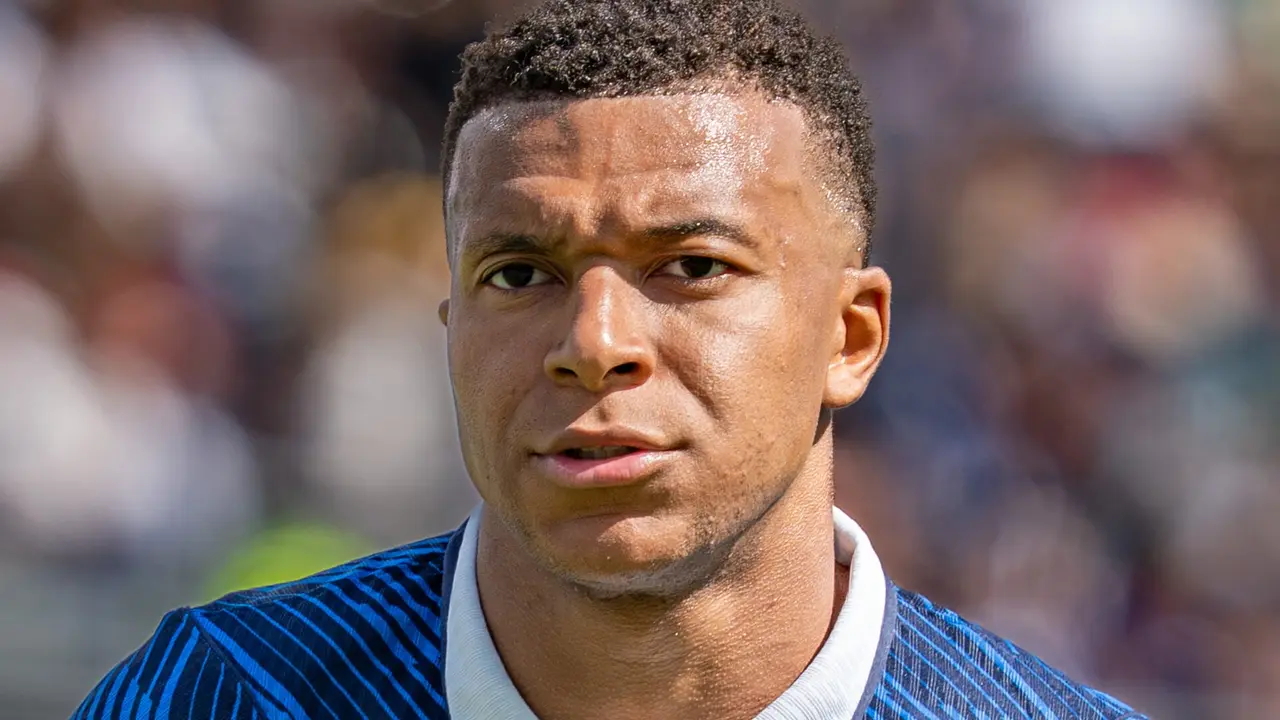
For France, the stakes are heavier than just another qualification. Les Bleus advance under the structural pressure of favourites: every round validates the idea that they must go all the way, yet every closed or scrappy match reopens the debate about their real level. Mbappe’s goal against Paraguay is enough to keep the tournament on track, but it isn’t enough to silence every question. France will likely need to produce more, or at least produce it more clearly, against an opponent that gives away almost nothing for free.
There’s also an image stake. A win over Morocco would reinforce Les Bleus’ place in the tournament’s expected order. An elimination, on the other hand, would turn this quarterfinal into one of the great upsets of the 2026 World Cup. It’s this contrast that makes the match so powerful. France isn’t just playing for its semifinal ticket. It’s also playing for its ability to regain full control of a narrative that, in recent days, has gone global well beyond its own dressing room.
The global context: a more political, more sensitive, more exposed tournament
This fixture also arrives in a climate tenser than one might imagine. The Associated Press reported on July 5, 2026 that FIFPro was calling for greater protection for players against the racist and discriminatory abuse observed during this World Cup, with a specific mention of the treatment aimed at Dutch players after their elimination against Morocco. This point shouldn’t be exploited, but it can’t be ignored either. It shows that the tournament doesn’t live in pure celebration of the spectacle alone. It also lives in tension, polarisation and image stakes that quickly spill beyond the pitch.
In this context, France-Morocco carries extra intensity. The match will be read as a clash of styles, statuses and trajectories, but also as a moment when institutions will need to protect players and hold a clear line against abuse. It’s one more reality of contemporary world football: big fixtures are sporting, cultural and reputational events all at once.
What this quarterfinal will really say about the 2026 World Cup
At its core, the real stakes of the match may lie in the reading it imposes on the tournament. If France wins clearly, the World Cup will confirm the authority of big nations able to absorb surprises. If Morocco goes through again, the message will become far more radical: the old order no longer holds as firmly as before, and teams once labelled underdogs have learned to become lasting competitive powers. Either way, the quarterfinal promises a powerful truth.
The world is watching France-Morocco because this match tells more than a simple qualification story. It tells how France handles pressure, how Morocco turns history into concrete strength, and how the 2026 World Cup keeps producing fixtures that blend football, identity, power and global attention. For B-Empire Magazine, this is exactly the kind of story that deserves front-page placement: immediate global news, a clear France angle, and a symbolic reach nobody can ignore.